Korea's Chip Titans Just Defied the Utility That Powers Them
Samsung and SK Hynix rejected KEPCO's request to prepay five years of electricity bills. The refusal exposes a fault line between Korea's semiconductor strategy and its energy infrastructure—and why the world should pay attention.
The Quiet Rebellion at Yeongtong
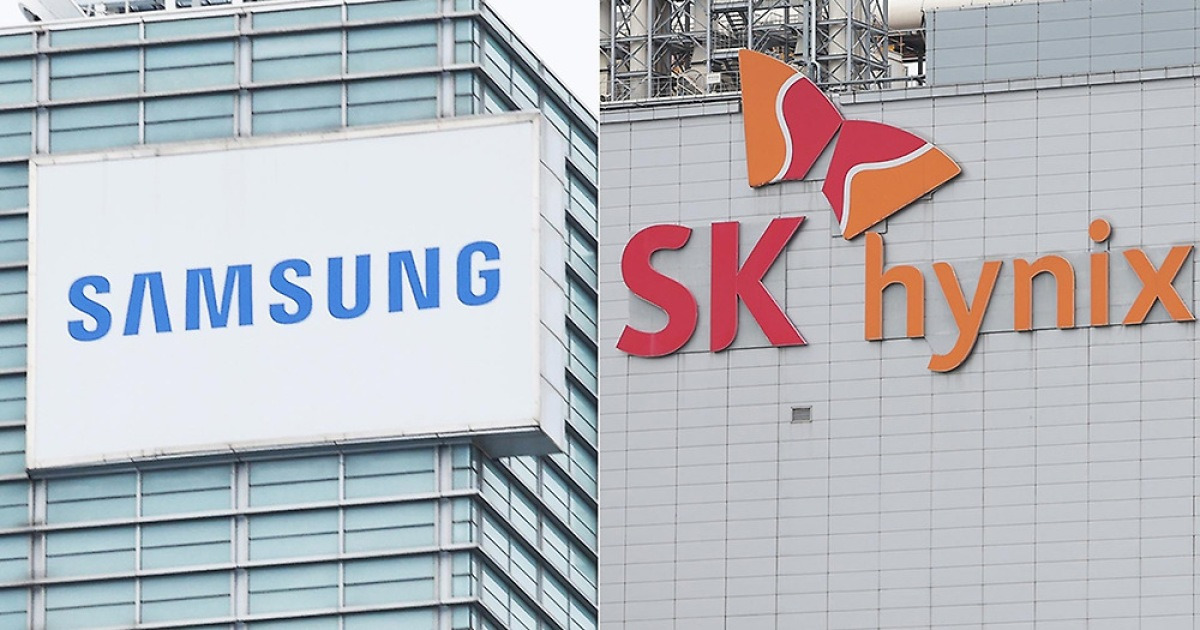
Samsung Electronics and SK Hynix just said no to Korea Electric Power Corporation — the state utility that controls roughly 95 percent of South Korea’s electricity grid. The ask was straightforward: prepay five years of power bills upfront. For Samsung, that meant wiring over 20 trillion won (roughly $14 billion) into KEPCO’s coffers. For SK Hynix, about 5 trillion won. The money would have gone directly into upgrading the national grid, which is straining under the weight of an AI-driven semiconductor boom that is pushing Korea’s power consumption to levels not seen in decades.
The chipmakers refused. And the refusal tells you something important about where South Korea’s industrial policy and its energy infrastructure are heading — and why the rest of the world, especially the United States and Europe, should be watching.
Why Prepay?
KEPCO’s proposal was not a negotiation about rates. It was a structural bet. The utility needed capital to reinforce transmission lines, build new substations, and upgrade infrastructure around the massive fab complexes in Pyeongtaek and Hwaseong — facilities that consume more electricity per square meter than almost any other industrial site on Earth. A single advanced logic fab can draw as much power as a small city.
The premise was that pre-collected fees would de-risk those infrastructure investments. KEPCO would lock in revenue early; the chipmakers would secure long-term supply certainty. On paper, it was a symmetric deal.
But the asymmetry is in the risk profile.
The Boom Is Not Forever
Industry analysts in Seoul have noted that both companies likely concluded the current semiconductor supercycle could reverse before the five-year window expires. Memory prices — the backbone of SK Hynix’s revenue — are historically volatile. DRAM and NANDFlash spot prices peaked in 2024–2025 on insatiable AI demand, but they have already shown signs of softening as capacity comes online and hyperscaler orders face scrutiny.
Prepaying 20 trillion won would have been a direct hit to Samsung’s balance sheet flexibility at a moment when it is simultaneously building a $170 billion fabrication campus in Taylor, Texas, and pouring capital into its new integrated memory facility in Hwaseong. SK Hynix faces the same calculus, plus the added pressure of funding its own expansion in Icheon and its China joint venture, which is facing regulatory headwinds.
In other words: the chipmakers are spending aggressively whether or not the AI cycle continues. Locking a third of their annual free cash flow into a prepaid utility bill that assumes revenue stability is a bet they are unwilling to make right now.
The State’s Bargain Is Changing
For decades, South Korea’s electronics giants operated under an implicit compact with the state. They would concentrate manufacturing on Korean soil, employ thousands, export relentlessly, and in return, the government would ensure cheap electricity, favorable zoning, and protection from foreign competition where possible. KEPCO’s prepaid power proposal represents a renegotiation of that compact — a signal that the state no longer sees energy as a subsidized input for strategic industry, but as a scarce resource that requires investment.
That shift is real and, in some ways, unavoidable. Korea’s power grid is already experiencing shortages during peak summer months, and the government has acknowledged that semiconductor fab expansion will require roughly 6.3 gigawatts of additional capacity by 2030 — equivalent to adding a new coal-fired power plant every year for the next four years.
But the timing and the method matter. Asking two companies to front-load the cost of a national infrastructure problem, rather than spreading it across ratepayers or financing it through sovereign bonds, feels less like partnership and more like extraction. The chipmakers may be uncomfortable saying so publicly, but their refusal is a message: we will invest where the margins justify it, but we are not your bank.
What This Means for the World
The implications extend well beyond Seoul. South Korea produces roughly one-third of the world’s memory chips. Any disruption to that production — whether from power shortages, cost shocks, or investment hesitation — ripples through every device, data center, and AI training run on the planet.
The United States CHIPS Act is funneling tens of billions into domestic fabrication, but most of that capacity is in logic, not memory. The EU’s push for chip self-sufficiency faces the same gap. If Samsung and SK Hynix slow their Korean expansions because energy costs become unpredictable, the global memory supply becomes more concentrated and more fragile.
KEPCO’s proposal also signals a broader trend: utilities in countries with heavy industrial loads are experimenting with prepayment models to manage capital intensity. Japan’s Chubu Electric and Taiwan’s Taipower have both floated similar ideas in recent years. If this model spreads, the cost structure of chip manufacturing shifts from variable (pay as you use) toward fixed (pre-commit and hope demand holds). That is a fundamental change for an industry that has always thrived on capital efficiency.
Who Wins, Who Loses
KEPCO loses face and misses an opportunity to secure low-cost capital for grid upgrades it desperately needs. Samsung and SK Hynix preserve liquidity and signal that they will not subsidize infrastructure they did not request — a stance that may encourage other energy-intensive industries to push back.
The South Korean government is caught in the middle. It wants both energy security and semiconductor competitiveness, and those goals are increasingly at odds. The Ministry of Trade, Industry and Energy will face pressure to mediate — but mediation requires承认ing that the old model of subsidized energy for strategic industry is no longer viable.
Global customers of Korean memory chips may ultimately win if the standoff forces a transparent restructuring of how semiconductor energy costs are allocated — or lose if it triggers delays in capacity expansion that tighten an already constrained supply.
What Happens Next
Expect KEPCO to pivot. The utility will likely propose alternative arrangements — perhaps phased payments, power purchase agreements tied to production output, or co-investment structures that share both risk and upside. Samsung and SK Hynix will engage, but from a position of strength: they know the grid cannot function without their presence, and the government cannot afford to lose them to Texas or Japan.
The real question is whether Korea can rebuild the industrial-energy compact on terms that neither side views as Extraction. The current refusal is not the end of the negotiation. It is the opening move.