Korea Just Offered Chipmakers a $18 Billion Power Deal — and It Could Redraw Global Semis
KEPCO's proposal for Samsung and SK Hynix to prepay 25 trillion won in electricity fees reveals how semiconductor power demands are reshaping utility-factory relationships — and what it means for the rest of the world.
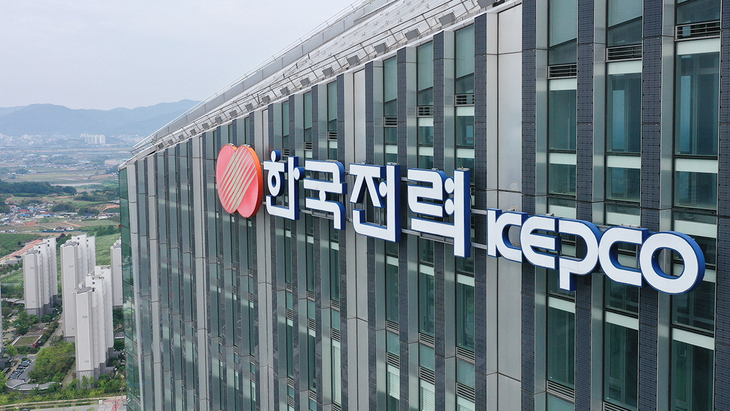
The Deal That Isn’t Really About Electricity
Korea Electric Power Corp., the state-run utility that powers much of the Korean Peninsula, has done something quietly transformative: it asked two of the world’s most valuable chipmakers to hand over cash upfront. The figure is 25 trillion won — roughly $18.5 billion at current rates. In exchange, Samsung Electronics would prepay about 20 trillion won and SK Hynix about 5 trillion, covering five years of electricity bills at rates slightly above government bond yields.
On its face, this is a financing arrangement. Behind it sits a reality that every major economy will soon confront: building leading-edge semiconductors requires staggering amounts of power, and the infrastructure to deliver it does not yet exist in adequate scale.
KEPCO’s annual electricity revenue is approximately 96 trillion won. Samsung alone accounts for nearly 4 trillion of that each year. SK Hynix contributes roughly 900 billion. Together, a five-year advance secures money KEPCO can deploy immediately toward the transmission lines, substations, and generation capacity those fabs will consume.
The Numbers Behind the Power Crunch
The context matters more than most readers outside Korea will grasp. Korea’s 11th power supply and demand plan alone requires about 72.8 trillion won in transmission grid investment. The next plan — the 12th — could exceed 100 trillion won. A significant portion of that spending goes toward serving advanced industrial clusters like the Yongin semiconductor zone, where Samsung is expanding capacity.
These are not projections for distant futures. They are capital requirements that must be met while the utilities that would fund them are simultaneously grappling with balance sheet constraints.
KEPCO is legally capped at issuing debt equal to twice its capital and reserves. The Russia-Ukraine war pushed Korea into large utility deficits, and the cap was temporarily expanded to five times through the end of next year. When that sunset expires, KEPCO will need alternative financing mechanisms — or it simply cannot build the grids these factories depend on.
The advance payment proposal solves both problems at once. It gives KEPCO immediate liquidity at lower cost than corporate bonds, and it locks in the financing needed for grid expansion without waiting for budget cycles or bond market conditions to align.
Who Wins, Who Loses
Samsung is the clear heavyweight in this negotiation. Its 20 trillion won commitment is substantial, and sources familiar with the talks indicate the company is pushing for higher interest rates — closer to what KEPCO would pay on its own corporate bonds — and a smaller prepayment amount. SK Hynix faces less scrutiny on size but likely shares the same instinct: why pay above-market rates for access to power you are already obligated to buy?
KEPCO wins on timing. Rather than issuing bonds when market conditions may be unfavorable, it secures funding now from customers who have every incentive to ensure those funds are spent on reliable supply. The utility also gains a structural advantage: the 0.15 percentage point premium over treasury yields is meaningfully cheaper than the roughly 0.3 percentage point spread KEPCO typically pays on corporate debt.
The broader Korean economy may win, too. KEPCO’s own analysis argues that reducing the utility’s debt issuance frees up private capital for中小·중견기업 — small and medium enterprises that currently compete with state-backed utilities for bond market attention. Less public utility borrowing means more room for private borrowers.
But there is a risk of distortion. The Climate Ministry’s Power Market Division explicitly warned that if the interest rate applied to advance payments is set too high, the arrangement could become a financial burden on KEPCO rather than a relief. The ministry also flagged the appearance of favoritism — treating two companies as special cases rather than part of a generalizable framework.
What This Signals for the World
Korea is not unique in facing semiconductor power constraints. TSMC’s expansion in Kumamoto, Japan, has triggered disputes over regional grid capacity. Intel’s new fabs in Ohio and Ireland face similar questions about whether local utilities can deliver the megawatts these facilities require. Texas and Arizona in the United States are already debating whether data centers and chip plants should compete for the same limited generation capacity.
The KEPCO model — where utilities and chipmakers co-finance grid expansion through forward payment arrangements — offers a template. It is not perfect. It requires regulatory flexibility, credible legal frameworks, and interest rate structures that balance affordability against fairness. But it represents a shift in how the industry thinks about the relationship between power providers and power consumers.
For decades, the assumption was that utilities would build grids first and that industrial customers would connect when ready. Semiconductor expansion has broken that sequence. Fabs must be planned around power availability, not the other way around. Advance payment agreements invert the traditional risk allocation: instead of utilities bearing the full cost of infrastructure that may take years to repay, customers share the upfront burden in exchange for guaranteed capacity.
What Happens Next
KEPCO and the two companies are in active technical discussions. Neither side has announced final terms. The proposed legislation to formalize advance payment regimes — introduced by Rep. Park Jung — is still in committee. If enacted, it would create a legal basis for these arrangements beyond the current limited framework that applies mainly to government agencies and military installations.
The most likely outcome is a scaled-down version of the original proposal: perhaps 10 to 15 trillion won rather than 25 trillion, at rates closer to KEPCO’s own borrowing costs. Samsung’s size gives it leverage to negotiate harder terms. SK Hynix, with a smaller exposure, may accept conditions more quickly.
What is significant is not the final number but the direction of travel. Korea has identified a mechanism to align utility investment with semiconductor growth — and it is testing that mechanism at the largest possible scale. When the next wave of chip construction begins in Europe, India, and the United States, the Korean precedent will be visible.
The global semiconductor industry runs on silicon. But it also runs on electrons. Whoever figures out how to finance the latter at the scale the former requires will hold structural advantage. Korea is making a bet that this deal — whatever its final shape — strengthens that position.
Whether other countries adopt similar models will determine how evenly distributed the next generation of chip capacity becomes — and how much competition there is for the power that makes it possible.