Korea's Ebola Test Negatives Hide a Bigger Story
Three suspected Ebola cases in Korea tested negative — but the real story is the genomic surveillance system that made that speed possible. It could become an export model for the Global South.
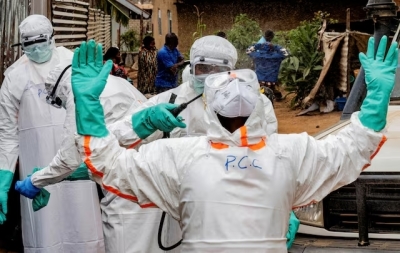
The Three Negatives That Speak Louder Than the Cases
Three people in South Korea showed up with fevers after visiting Uganda. They were classified as suspected Ebola cases. Within days, all three tested negative.
Western headlines will report those three numbers and move on. What they will miss is the system that produced those results in days rather than weeks — and why that system matters far more than any single test outcome.
South Korea’s Centers for Disease Control and Prevention (KCDC) announced on August 27 that it had completed a 100-day sector-by-sector response exercise ahead of the ongoing Ebola outbreak in the Democratic Republic of Congo. The exercise was not theoretical. It was triggered by the World Health Organization’s PHEIC declaration on May 17 and responded to a outbreak that has now reached 5,514 confirmed cases and 2,642 deaths in DRC alone — a case fatality rate of 48 percent.
The speed at which Korea processed those three suspected cases is the kind of infrastructure most countries in the Global South are still trying to build.
Who Is Losing in this Outbreak
The answer is obvious: the people of DRC’s Ituri Province and the six affected provinces. But the deeper answer is the world’s preparedness architecture — the same architecture that failed to prevent the 2014 West Africa epidemic from killing more than 11,000 people before the world mobilized.
This current outbreak is the largest in DRC’s history and the second-largest globally. It has spread beyond DRC’s borders into Uganda, where 20 cases and 2 deaths have been recorded, and even to France, where one case was confirmed. The virus — the Bundibugyo subtype — is less commonly discussed than the Morena subtype that dominated the 2014 outbreak, but its 48 percent fatality rate in this outbreak makes it equally lethal.
DRC’s health infrastructure in the affected regions remains fragile. Armed conflict in Ituri Province has repeatedly disrupted vaccination campaigns and contact tracing. The WHO and partners have administered thousands of vaccine doses, but reaching every contact in a region where militias control territory is a logistical impossibility that no amount of genomic sequencing can solve.
That is the first layer of the problem. The second layer is who benefits from Korea’s response model.
The Exportable Piece
South Korea did not wait for the virus to arrive. After the PHEIC declaration, KCDC convened an interagency situation assessment, raised the domestic threat level to “Watch,” and established a dedicated response headquarters. It conducted six rapid risk assessments. It designated five countries — DRC, Uganda, South Sudan, Rwanda, and Ethiopia — as priority quarantine management zones. Travelers from those countries must submit a Q-CODE health questionnaire. Koreans returning from DRC and Uganda are monitored for 21 days.
The genomic surveillance piece is what English-language coverage almost never highlights. Korea has invested heavily in pathogen sequencing capacity since the COVID-19 pandemic. When a suspected Ebola case arrives at an airport or hospital, the sample goes to a national reference laboratory where real-time PCR and, where needed, genomic sequencing can confirm or rule out the virus within hours. The three suspected cases in Korea — all with travel history to Uganda — were processed through this system and cleared quickly.
Most countries in central and eastern Africa do not have that capacity. Diagnostic samples from DRC’s outbreak zones often travel to institutes in South Africa, Senegal, or Europe for confirmation. The delay between sampling and result can stretch from days to weeks — long enough for secondary transmission to occur in healthcare settings or households.
Korea’s model is not simply faster testing. It is the integration of surveillance, quarantine policy, public communication, and laboratory capacity into a single operational framework. That integration is what is hard to export. The laboratories can be built. The sequencing machines can be shipped. The policy templates can be shared. But the institutional coordination between ministries — health, foreign affairs, defense, quarantine — requires a level of bureaucratic integration that most countries do not possess.
Who Wins if This Model Spreads
The winner would be any country in the Global South that can deploy rapid diagnostic and genomic surveillance capacity before a outbreak crosses its border. That means earlier detection. That means contained clusters instead of community spread. That means lower fatality rates and lower economic disruption.
South Korea would win diplomatically. The country has positioned itself as a middle power in global health security since the MERS outbreak in 2015 and the COVID-19 pandemic. Exporting a response framework — not just vaccines or PPE, but the operating system behind them — strengthens Korea’s influence in multilateral health forums and in partnerships with African nations.
The loser, implicitly, is the current architecture of global health response, which still treats outbreak containment as something that happens after the WHO declares an emergency rather than before. The 100-day exercise Korea conducted was proactive. Most donor-funded outbreak responses in Africa remain reactive.
What Happens Next
The three negative results in Korea will not appear in most international reporting as a story. They are the absence of news. But the system that produced them is worth tracking.
KCDC Director General Lim Seung-op noted that while no domestic cases have been detected, the outbreak in DRC continues and nearly half of those infected are dying. He said the government would continue monitoring closely and strengthen public-private cooperation for future crises.
What that cooperation looks like in practice remains to be seen. Will Korea share its surveillance protocol with African health ministries? Will it fund sequencing capacity in the region? Will the Q-CODE model — a digital health declaration system — be adapted for use in countries with fewer digital infrastructure resources?
These are the questions Western media tends to skip. The headline is always the death toll in DRC or the number of cases in a capital city. The machinery behind the numbers — the laboratories, the coordination frameworks, the policy decisions made 100 days before a single case arrives — is invisible unless someone makes it visible.
Korea just made it visible. Whether the world pays attention is another question.