Korea's Electric Grid Is the Real Bottleneck in the Chip Boom
KEPCO's proposed 25-trillion-won prepayment to Samsung and SK Hynix exposes a grinding collision between Korea's semiconductor ambitions and its creaking national grid. With electricity price hikes politically impossible before 2028 elections, the state utility is turning to bond markets — crowding out private borrowers at a time when global chip supply chains depend on Korea delivering.
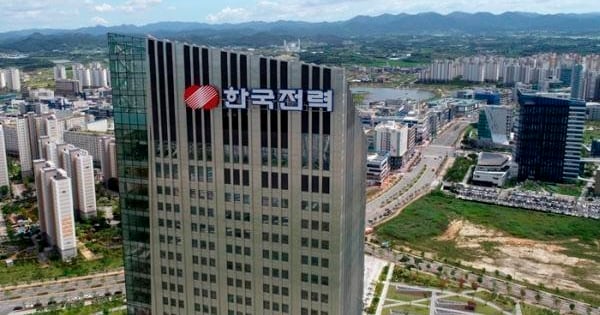
The 25 Trillion Won Deal That Says Everything
Korea Electric Power Corporation recently proposed handing Samsung Electronics 20 trillion won and SK Hynix 5 trillion won — upfront, before the companies even draw the power. The money would be repaid in monthly installments of 2 trillion won through the end of next year, with KEPCO offering a modest discount of 15 basis points above the national treasury bond rate as sweetener over five years.
On its face, this is a financing arrangement. In reality, it is a distress signal from the utility that powers the world’s most critical node in the semiconductor supply chain.
KEPCO needs the cash because its balance sheet is underwater. Total debt stood at 210.7 trillion won as of late June. Daily interest payments alone amount to 11.5 billion won — roughly $8.5 million a day burning through revenue before a single kilowatt-hour is sold. The utility is effectively running on borrowed time and borrowed money, trying to build transmission infrastructure that will cost between 100 trillion and 124.3 trillion won to expand, all while its primary customers — the very chipmakers the world depends on — demand more power than the grid can reliably deliver.
Why Prepayment Is the Only Option Left
The 25 trillion won proposal did not emerge from imagination. It is calculated directly from the electricity bills Samsung and SK Hynix paid last year. KEPCO is essentially asking the two companies to lend it money so it can build the substations and transmission lines those same companies will plug into.
This circular arrangement only makes sense if you understand what is happening to Korea’s grid. Semiconductor fabrication is extraordinarily power-intensive. A single advanced chip fab can consume as much electricity as a mid-sized city. Samsung and SK Hynix are expanding capacity to meet demand for AI chips, memory, and foundry services that the entire global technology sector relies on. KEPCO knows this. It also knows it cannot finance the buildout on its own.
The prepayment deal is an acknowledgment that KEPCO’s traditional funding mechanisms are insufficient. The utility’s bond issuance limit was temporarily expanded from two times its capital plus retained earnings to five or six times that amount after the Russia-Ukraine war sent international fuel prices soaring and KEPCO’s finances deteriorated. That emergency measure expires at the end of next year. KEPCO says it does not plan to ask for an extension — but market observers are deeply skeptical.
The Political Math That Traps Everyone
Here is what English-language coverage of Korea’s energy situation consistently misses: the 2028 general election is reshaping fiscal policy in real time, and electricity pricing is the most explosive issue on the table.
Raising household electricity rates before an election is political suicide for any party. The government has responded by offering KEPCO a one-time 8.5 trillion won support package — 5 trillion won in cash contributions and 3.5 trillion won in welfare subsidy offsets — but that is a drop in the ocean relative to the utility’s needs. Even if that capital contribution is recorded as paid-in capital, it would only increase KEPCO’s bond issuance limit by approximately 2.5 trillion won.
Add the 25 trillion won in prepayments from Samsung and SK Hynix, and KEPCO believes it can operate within the old two-times limit. The math appears to work on paper. But paper does not wire a new substation in Hwaseong or support a third fabrication line in Giheung.
Academics who follow energy policy are blunt about this. Professor Kim Jin-soo of Hanyang University’s Resource and Environmental Engineering department told reporters that while electricity rate reform remains the fundamental solution, it is politically unachievable. Professor Jung Yeon-je of Seoul Science and Technology University’s Energy Policy program predicted that the government and opposition will reach a consensus next year to revise the KEPCO Act and adjust bond issuance limits — in other words, the emergency expansion will likely return, just renamed.
The Crowding-Out Problem No One Is Discussing
KEPCO bonds carry AAA credit ratings and explicit government guarantees. They are the safest instruments in the Korean fixed-income market. When a utility with 210 trillion won in debt floods the market with new issuance, something has to give.
The mechanism is straightforward and well-documented. Institutional investors — pension funds, insurance companies, mutual funds — have finite allocations to high-quality fixed income. KEPCO bonds absorb that allocation first because they are risk-free in practice if not in name. As KEPCO’s issuance grows, corporate borrowers compete for the same pool of capital at higher yields. Company bonds issued by mid-tier Korean firms face rising borrowing costs precisely when those companies need cheap capital to invest.
This is not a hypothetical risk. It is happening now. The current outstanding KEPCO bond issuance stands at 12.21 trillion won, and that number is heading higher regardless of which legal structure the government chooses to authorize it through.
What This Means for the Global Chip Supply Chain
Korea produces roughly 60 percent of the world’s memory chips and a significant share of advanced foundry output. Samsung and SK Hynix are not optional players in the AI hardware economy. Every major cloud provider, every autonomous vehicle company, every smartphone manufacturer depends on their output.
When KEPCO struggles to finance grid expansion, the bottleneck is not just Korean. It is global. Power shortages or delayed infrastructure have already forced chipmakers worldwide — including in the United States and Japan — to reconsider expansion timelines. Korea faces the same constraint with less fiscal flexibility because its utility is state-owned and its electricity prices are politically capped.
The 25 trillion won prepayment deal is a temporary bridge. It delays the moment when KEPCO must either ask for another bond limit expansion, push for electricity rate increases it cannot politically afford, or find a funding mechanism that has not yet been invented. The next critical date is the end of next year, when the current emergency provisions expire and the government must decide whether to extend them, replace them, or let KEPCO face its funding gap on its own terms.
Global buyers of Korean semiconductors should watch that date closely. The grid is the quiet constraint on the chip boom, and it is running out of room.