Korea's hypersonic test reshapes East Asian deterrence
South Korea's successful first test of a domestically developed hypersonic glide vehicle marks a strategic inflection point. What it means for regional deterrence and the coming arms-race dynamic.
A quiet revolution in Korean skies
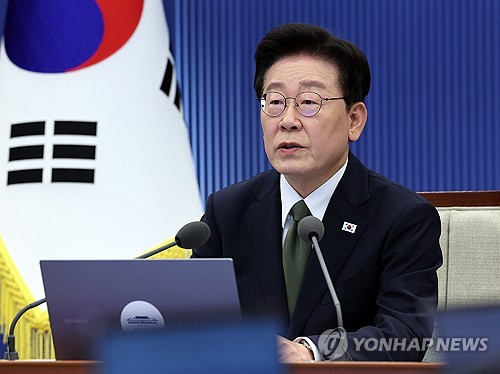
South Korea flew its first indigenously developed hypersonic glide vehicle on October 8, and the implications extend far beyond the test range. President Lee Jae-myung watched from the ground. By the time the vehicle struck its target — after climbing to the upper atmosphere, separating from its booster, and carving an unpredictable low-altitude trajectory — the country had quietly crossed a threshold most analysts had not expected to see met for years.
The Hyunmoo program is no longer just a credible deterrent. It is now a platform capable of delivering kinetic strikes at Mach 5 and beyond, with flight paths that existing missile-defense architectures were not designed to track or intercept.
How the test actually unfolded
According to the Blue House, the glide vehicle rose to a predetermined altitude before separating from its propulsion stage. What followed was the critical phase: a low-altitude descent marked by irregular vertical and horizontal maneuvers — exactly the kind of flight profile that makes terminal-phase defense nearly impossible for today’s layered systems.
The White House briefing emphasized three technical milestones validated in a single flight: the performance of ultra-high-temperature heat-resistant materials, the accuracy of guidance and control under hypersonic conditions, and the vehicle’s ability to execute unpredictable low-altitude gliding. The payload struck its designated target precisely.
That this was achieved by Korean engineers, on Korean soil, with Korean supply chains — rather than through import or joint development — is the part that should alarm Beijing and signal a fundamental shift in Seoul’s strategic posture.
Why self-reliance changes everything
President Lee did not mince words. “Our security must be secured by our own strength,” he said after the test, vowing government support for rapid development and fielding. He then toured a battery of Hyunmoo-5 high-power missiles and called them proof that “self-reliant defense capability” would guard South Korea’s peace.
This language matters. Seoul has long walked a diplomatic tightrope between its alliance with Washington and the need to deter Pyongyang without provoking Beijing. A homegrown hypersonic system blurs those lines. It gives the South independent strike options that do not require American approval — and it cannot be off-the-shelf purchased from any traditional ally.
The message to Washington is unmistakable: South Korea is building a defense posture that assumes reduced reliance on US extended deterrence, at least in the nuclear and strategic-strike domains. That is both a practical response to uncertainty in US political commitment and a statement of strategic adulthood.
The regional domino effect
Hypersonic weapons are the new currency of great-power competition. China has already deployed DF-ZF glide vehicles. Russia has Fielded Avangard systems. North Korea claims operational hypersonic capabilities, though independent verification remains scarce. Japan is racing toward its own deployment. India and Pakistan are not far behind.
South Korea’s entry into this club closes a gap that once complicated US regional strategy. For years, Washington could argue that Tokyo and Seoul depended on American conventional and nuclear umbrellas for deep-strike deterrence. That argument weakens when both allies field delivery systems that can penetrate defended airspace with minimal warning.
The uncomfortable reality for Beijing is that Seoul’s new capability strikes at the heart of China’s anti-access/area-denial calculus. The same technologies that make a glide vehicle hard to intercept also make it hard to deter — meaning Chinese military planners must now account for a Korean strike option they cannot reliably neutralize on the ground or in flight.
Who wins, who loses, who panics
South Korea wins the ability to threaten high-value North Korean and, by extension, Chinese targets with near impunity. The Hyunmoo-5 combined with a hypersonic glide vehicle creates a strike envelope that Pyongyang’s air defenses cannot credibly cover and Beijing must take seriously in any conflict scenario.
The United States loses some leverage over its ally’s strategic choices. When Seoul fields independent strike capabilities, Washington’s ability to constrain escalation dynamics — particularly around strikes on Chinese or North Korean soil — diminishes. That complicates contingency planning for the Pacific.
China loses the ability to treat the Korean Peninsula as a one-dimensional extension of its periphery. A hypersonic-armed South Korea changes the cost calculus for any aggressive posture.
Japan and Taiwan watch closely. Both have reason to hope — and to worry. Hope that an allied hypersonic capability strengthens the broader deterrent architecture. Worry that Beijing will accelerate its own programs in response, raising the temperature across the region.
What comes next
The Blue House made clear that this test was only the beginning. “The government will not rest on today’s success,” Lee said, calling for further refinement and faster deployment. The logical next steps are an operational configuration, integration with existing command-and-control systems, and fielding decisions that will likely come within the next few years.
The question every capital in the region is asking now is simple: what does a Korean hypersonic weapon look like when it is pointed? Seoul’s current doctrine frames the system as defensive — a countermeasure against North Korean threats. But capabilities have a way of defining their own logic once they exist.
The test also invites a harder conversation about escalation control. Hypersonic glide vehicles compress decision time to minutes. In a crisis, the very speed that makes them effective also raises the risk of miscalculation — a trajectory misread as a first strike, a response launched in panic. That is a challenge not just for Seoul, but for every nation in the Pacific.
What is certain is that the era of South Korea depending exclusively on imported strategic strike systems is over. The region will adjust. The question is whether it adjusts toward stability or toward something more dangerous.