Korea Just Asked Its Chipmakers to Fund Their Own Power Grid
KEPCO's proposal for Samsung and SK Hynix to prepay 25 trillion won in electricity bills reveals how desperate South Korea's utility has become. The move could reshape how semiconductor booms fund their own infrastructure.
The Utility Is Asking the Chipmakers to Pay First
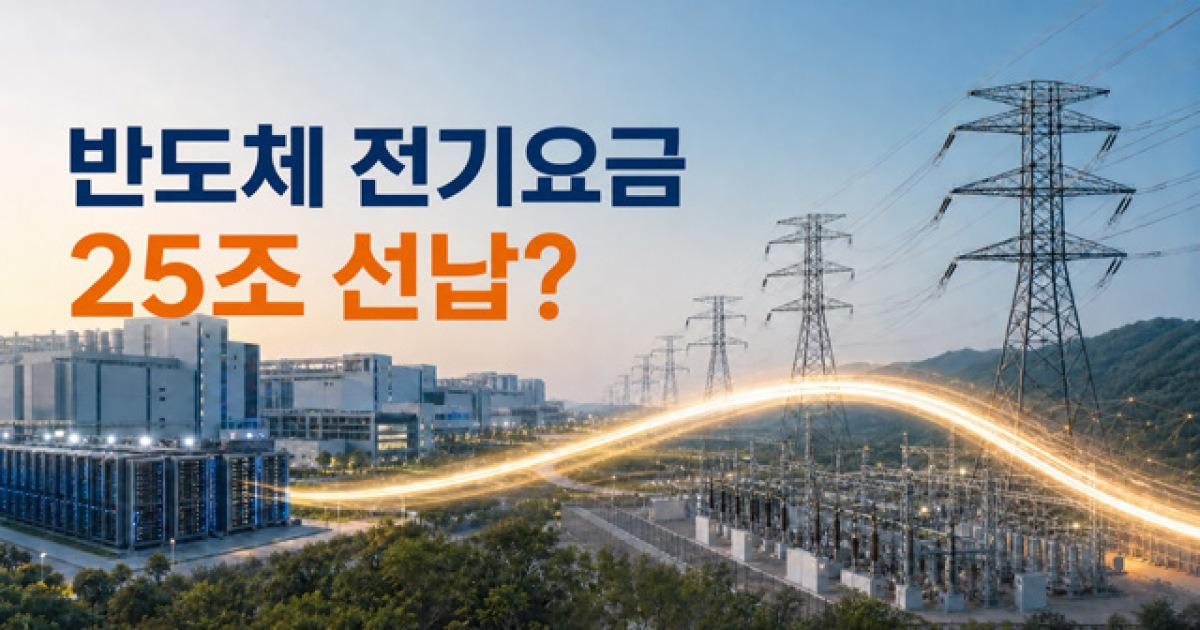
South Korea’s national power utility, KEPCO, recently proposed that Samsung Electronics and SK Hynix prepay five years of electricity bills — a combined 25 trillion won — up front. Samsung’s share would be 20 trillion won. SK Hynix’s, 5 trillion won. In return, KEPCO would pay interest above the two-year government bond rate, settling it semiannually as credits against future bills.
The proposal is unusual in scale but perfectly logical in design. KEPCO needs new money to build power infrastructure for the Yongin and Honam semiconductor clusters. It cannot raise that money easily. Samsung and SK Hynix can. The utility is effectively asking the companies to fund the very grid they depend on.
The arrangement rests on an existing clause in KEPCO’s basic supply agreement — Article 78 — which permits long-term prepayment and interest to customers. Until now, however, that provision was used almost exclusively by government entities for short periods. A five-year, multi-trillion-won prepayment from two private corporations has no precedent. The Electricity Business Act and the KEPCO Act amendment related to this structure was referred to a subcommittee on September 1, signaling the government recognizes the legal gap.
KEPCO’s Balance Sheet Told You This Was Coming
KEPCO’s debt situation makes the proposal almost unavoidable. Total liabilities reached 210.7 trillion won as of late June. Daily interest payments alone sit at roughly 11.5 billion won. The utility is drowning in obligations.
Government support for KEPCO’s borrowing capacity also faces its own deadline. A special exemption allowing the utility to issue corporate bonds up to five times its capital and reserves is set to expire at the end of next year. Whether it gets extended remains unresolved. Either way, KEPCO cannot rely on continued regulatory arbitrage to fund grid expansion.
The utility’s own framing makes clear how it sees the deal. It described a structure where “large-scale electricity-demand companies, mainly semiconductor firms, prepay a significant portion of future electricity bills, and KEPCO invests in advanced industrial zone power grid construction.” The transaction is not a subsidy. It is a loan from the buyers to the supplier, secured against future service.
Who Wins, Who Loses
KEPCO wins immediately. It gains access to capital it cannot raise conventionally without worsening its balance sheet. It gains a ready funding source for infrastructure that the government has promised but not fully financed. It converts a future revenue stream into present liquidity.
Samsung and SK Hynix face a tougher calculus. On paper, the deal offers a safe investment yield above the two-year government bond rate. On paper, locking up 20 trillion won in a low-risk instrument looks reasonable. In practice, both companies are in the middle of some of the largest capital expenditure programs in Korean corporate history. Samsung is building advanced fabrication capacity in Pyeongtaek and planning new lines. SK Hynix is expanding its Icheon facility and investing heavily in memory technology. Every won deployed to KEPCO is a won not spent on capacity that could determine market position over the next decade.
The opportunity cost is the real objection. Semiconductor fabrication is a capital-intensive game where timing matters. A month of delay in a new fab line can mean missing a product cycle or ceding ground to a competitor. Locking billions into a utility deposit, even with interest, carries a tangible cost.
There is also a reputational dimension. The South Korean government announced the West-South Region semiconductor cluster with promises of full support for power, water, and other resources. Critics have noted the irony: the state makes the promise, then asks the companies to finance the infrastructure themselves. The narrative is hard to defend publicly.
What Happens Next
Several outcomes are possible. The most likely is a modified version of the proposal — smaller prepayment amounts, shorter terms, or a structure that spreads risk across more players. KEPCO acknowledged that details on participation, interest rates, amount, and term remain undecided.
If Samsung and SK Hynix decline or negotiate down the request, KEPCO will face a choices problem. It can slow grid expansion, which delays cluster development and risks losing investor confidence. It can push harder for the government extension on bond issuance limits. Or it can seek alternative financing, potentially through green bonds or public-private partnerships — though those options also take time.
The geopolitical angle matters too. The United States and Japan have been pushing allies to secure semiconductor supply chains. Korea’s Yongin and Honam clusters are central to that strategy. If power grid delays slow those projects, Washington will notice. That political pressure could tip the calculation in favor of the prepayment deal, or it could force the government to step in with direct funding rather than relying on KEPCO’s balance sheet.
A Blueprint or a Warning?
The KEPCO proposal is notable because it could become a template for other countries facing similar problems. As AI data centers and semiconductor fabs proliferate globally, utilities in Europe, the Middle East, and North America will confront the same gap between infrastructure demand and public funding capacity. The question is whether private industry will be asked to fill it — and on what terms.
Korea’s experiment will reveal whether this model works at scale. If Samsung and SK Hynix accept a version of the deal, other utilities may copy it. If they resist successfully, the government may have to intervene with direct investment, establishing a different precedent.
Either outcome reshapes the relationship between heavy industry and public infrastructure. The assumption that states fund grids and companies consume power is breaking down. In its place is a more transactional arrangement: you pay for your power, and you also pay for the wires that deliver it. The 25 trillion won prepayment is a signal that this shift has begun.
What remains unclear is whether the companies will treat it as a fair exchange or an unreasonable burden. The answer will shape not only Korea’s semiconductor ambitions but also how the rest of the world finances the energy demands of the next technological wave.