Koreas Modular Data Center Bet on Building AI Faster
LG U+ and GS Construction are betting that prefabricated modular data centers can shrink AI build timelines and cut costs — a model that could reshape how emerging markets compete in the global race for compute infrastructure.
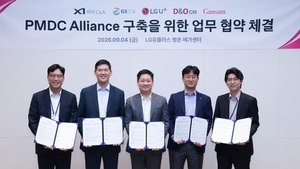
Korea is trying to build the future of AI — one module at a time
LG U+ has long been known as a telecom operator. But on April 4, the company signed a memorandum of understanding with GS Construction, ZAI C&A, Gamssam Architecture, and D&O Construction Management that signals something more ambitious: it wants to become a builder of AI data center infrastructure at scale.
The partnership focuses on prefabricated modular data centers, or PMDC — a construction method that shifts the heavy lifting from chaotic building sites to controlled factory environments. Structural elements, power systems, and cooling equipment are standardized and pre-built offsite, then shipped and assembled on location. The result is a data center that goes live faster, with more consistent quality and the flexibility to scale incrementally as demand grows.
This is not a small experiment. The alliance is already working on a 100-megawatt hyper-scale PMDC model for new builds, alongside a retrofit model designed to convert existing structures into AI-grade facilities. That second track matters especially in a market like Korea, where empty commercial real estate exists alongside desperate demand for computing capacity.
Who does what in the alliance
The division of labor reveals how each partner brings something specific to the table.
LG U+ contributes its operational DNA — decades of running data centers and understanding what AI workloads actually demand in terms of power density, cooling requirements, and uptime. It will define the technical specifications, validate the model, and shape the business direction.
GS Construction brings EPC capability — the ability to design, procure, and build at industrial scale. Its involvement signals that this is not just a tech play but a serious construction undertaking, one that requires engineering rigor.
ZAI C&A specializes in MEP systems — mechanical, electrical, and plumbing — and will focus on optimizing power and cooling, particularly for the retrofit path where existing buildings must be re-engineered for AI clusters.
Gamssam Architecture handles the standardization of the design itself, while D&O CM manages project execution and construction oversight.
Taken together, this is a remarkably complete stack for delivering a data center from concept to commissioning in a fraction of the time traditional methods would allow.
Why this matters beyond Korea
Korea faces a familiar problem: AI investment is surging, but the country lacks the physical infrastructure to host the workloads that model training and inference require. Power grid constraints, land scarcity, and the sheer pace of AI deployment create a bottleneck. Traditional data center construction — which can take three to five years from groundbreaking to operation — simply cannot keep up.
PMDC addresses this directly. By shifting construction to factories, projects that would normally take years can theoretically be compressed into months. Modular units also allow operators to add capacity in increments rather than committing to a massive build all at once, which matters enormously in a market where AI demand is still being discovered.
But the implications reach further than Korea.
Many countries are now racing to build AI infrastructure without the financial cushion of the United States or China. The modular approach — lower upfront capital, shorter timelines, flexible scaling — offers a template that could appeal to governments and operators in Southeast Asia, the Middle East, and parts of Europe where speed and cost are more binding constraints than raw performance.
The retrofit question
The retrofit model deserves particular attention. Not every region can greenfield-build a 100-megawatt facility. Many have older industrial or commercial buildings sitting vacant, waiting for a new purpose. Converting those structures into AI data centers requires solving different problems — reinforcing floors, upgrading power feeds, redesigning cooling loops — and that is precisely where ZAI C&A MEP expertise becomes relevant.
If the retrofit path proves viable at scale, it could unlock a whole segment of existing real estate for AI use, reducing the pressure to find new land and draw new power connections. That is a quieter innovation than the hyper-scale new build, but it may ultimately matter more for markets with limited options.
What happens next
The alliance has been active since April in developing its standard models. The next milestone will be validation — proving that a modular AIDC can meet the performance and reliability thresholds that hyperscalers and enterprise AI operators demand. Power density per rack, cooling efficiency, fault tolerance, and deployment speed will all be scrutinized.
If LG U+ and GS Construction deliver on their promise, the model could accelerate Korea’s domestic AI buildout and position Korean engineering firms as exporters of a construction methodology rather than just components.
There are risks. Modular construction requires precision that some contractors may not yet possess. Retrofit projects can hide surprises — structural deficiencies, outdated electrical systems, zoning restrictions. And the alliance still needs to demonstrate that its 100-megawatt target is achievable within the timelines that make modular attractive in the first place.
But the direction is clear. Korea is trying to solve an AI infrastructure problem with a construction solution, and the modular approach could be the most practical answer available. If it works, other capital-conscious markets will be watching closely.
The global AI race is often described in terms of chips and models. But the physical layer — where the servers actually live — is where many of these ambitions either take off or stall. Korea’s PMDC bet suggests it intends to stop being a spectator in that domain.