Korea's Petrochemical Cartel Shows How War Exposes Supply Chain Weakness
Seoul prosecutes seven chemical firms and 37 executives for a 16-trillion-won price-fixing ring that operated for five years. The case reveals how cartel behavior intensifies during geopolitical disruptions—and what it means for global chemical supply chains.
A Cartel That Hid in Plain Sight
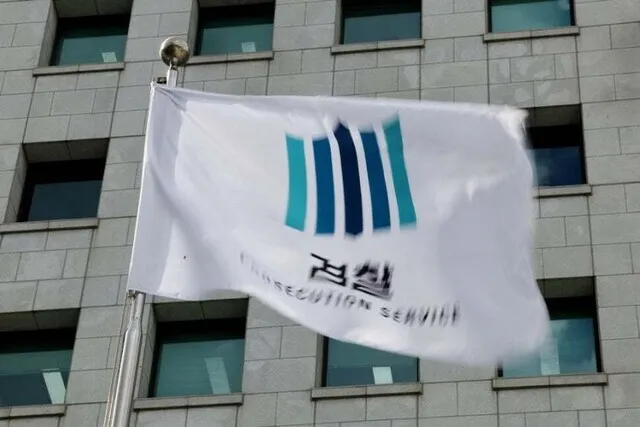
South Korea’s Central District Prosecutors’ Office handed down indictments on June 1 against 43 people tied to a 16-trillion-won ($10.6 billion) petrochemical price-fixing conspiracy spanning five years. Seven companies were named; two executives remain in custody.
The scale alone is staggering. But the details of how the cartel operated are what make this case worth watching—not just for Seoul, but for any country dependent on Korean chemical output.
How It Worked
The probe, led by the Fair Trade Investigation Department under Chief Prosecutor Na Hee-seok, found that the six indicted chemical firms colluded on eight product categories from January 2021 through April 2026. The coordinated price increases were not spontaneous reactions to market forces. They were agreed upon in team-level meetings between competitors, with timing and magnitude pre-negotiated.
What prosecutor Nay more revealing is the operational discipline involved. Firms synchronized the sequence of their price-increase notices to avoid arousing suspicion. In large-client bidding processes, they pre-arranged winning bids and bid prices. Some companies even appointed dedicated liaisons whose sole job was to communicate with rival firms about cartel coordination.
This was not a loose understanding or parallel pricing behavior. It was a structured, disciplined operation with clear lines of communication—run at the management level, not just by mid-tier sales staff.
The Companies Named
The seven firms identified are Hanwha Solutions, LG Chem, Aekyung Chemical, OCI, Lotte Chemical, PKC, and Unide. These are not obscure players. They are among Korea’s largest petrochemical producers, with significant export operations and deep integration into global supply chains.
LG Chem and Hanwha Solutions in particular are major suppliers to the semiconductor, automotive, and construction sectors—industries that are already under severe strain from Middle East conflict disruptions.
Why the Timing Matters
The cartel operated from early 2021 through April 2026. This period coincides with — and in its final months, overlaps with — the escalating Middle East conflict that has disrupted shipping routes, refined fuel costs, and chemical feedstock availability.
Wartime conditions create perfect friction for cartels. Supply squeezes generate panic buying. Manufacturers point to “cost pressures” to justify price hikes. Buyers, desperate to secure supply, have less bandwidth to scrutinize whether pricing anomalies reflect genuine scarcity or coordinated manipulation.
That is exactly when cartels thrive. The Korean case suggests the operators understood this instinctively—they were coordinating price moves on critical inputs like PVC, plasticizers, and caustic soda throughout a period of escalating global instability.
The downstream damage
Prosecutors determined that the inflated input costs were passed through to end consumers across multiple industries. The eight targeted products are foundational inputs for semiconductors, water treatment, furniture, and coatings. The harm did not stop at B2B transactions—it reached households and smaller manufacturers who had no visibility into the coordination behind the prices they were paying.
This is the silent tax of petrochemical cartels. Unlike consumer-goods price-fixing, where shoppers might notice a branded product getting more expensive, chemical cartels operate upstream, embedded in multi-tier supply chains where the origin of cost increases is nearly impossible for downstream buyers to trace.
What this means globally
South Korea is the world’s third-largest petrochemical producer. Its firms are deeply embedded in Asian and global supply chains, particularly for materials used in electronics manufacturing and automotive production.
If Korean petrochemical firms can coordinate pricing on eight product categories across five years without detection—amid wartime disruption and amid the scrutiny of the Fair Trade Commission—the same vulnerability almost certainly exists elsewhere. Markets with concentrated producer bases, complex upstream supply chains, and periods of geopolitical stress are natural breeding grounds for this behavior.
The EU has spent years investigating chemical cartels. The US has prosecuted similar cases in the specialty chemicals space. Korea’s enforcement this year signals that authorities are beginning to take a harder look at exactly this kind of coordination.
But enforcement after the fact does not protect buyers who were caught in the net during those five years. The real question is whether the indictment will prompt structural change—stronger monitoring of bidding processes, tighter oversight of trade associations, earlier detection of coordinated pricing patterns—or whether it will be treated as an isolated scandal.
Who wins, who loses
The indicted firms and executives lose immediately: criminal records, potential fines, reputational damage. Two are already in custody. The Fair Trade Commission’s referral to prosecutors indicates regulators are moving from administrative penalties to criminal enforcement—a meaningful escalation.
Downstream manufacturers and consumers absorbed the cost over years they cannot get back.
Competitors outside the cartel—who may have resisted joining or been excluded—gain a temporary pricing advantage, though not enough to offset the broader market distortion.
Global buyers of Korean petrochemicals face a new variable: supply confidence. If price coordination was this systematic, the assumption that market pricing reflects genuine supply-demand balance is weakened.
What happens next
The case moves to trial. Prosecutors indicated the corporate entities and 37 individuals were formally charged after the Fair Trade Commission referred the matter for criminal prosecution—a process that requires evidence of willful, organized violation rather than incidental parallel conduct.
Legal proceedings will take months, possibly years. Sentences for cartel offenses in Korea can include imprisonment and substantial fines, though the exact penalties depend on the court’s assessment of each defendant’s role.
More immediately, the indictment should prompt Korean regulators to examine whether oversight mechanisms for the petrochemical sector are adequate. Trade associations, industry groups, and bidding processes in this space need structural safeguards—not just reactive prosecution.
For global supply chain managers, the lesson is blunt: in periods of geopolitical stress, price spikes in critical inputs may not reflect market fundamentals. Verification matters. And in an industry as concentrated as petrochemicals, the risk of coordination is not theoretical—it is documented, sentenced, and now on public record.