Korea's President Is Redesigning Police Power — And It Changes Everything
President Lee Jae-myung has moved from rhetoric to institutional action on police reform, signaling a major shift in how civilian authority governs one of Asia's most powerful law enforcement bodies. The stakes extend far beyond disciplinary fixes — they redefine the relationship between state and citizen in South Korea.
The Moment the Government Stopped Talking and Started Structuring
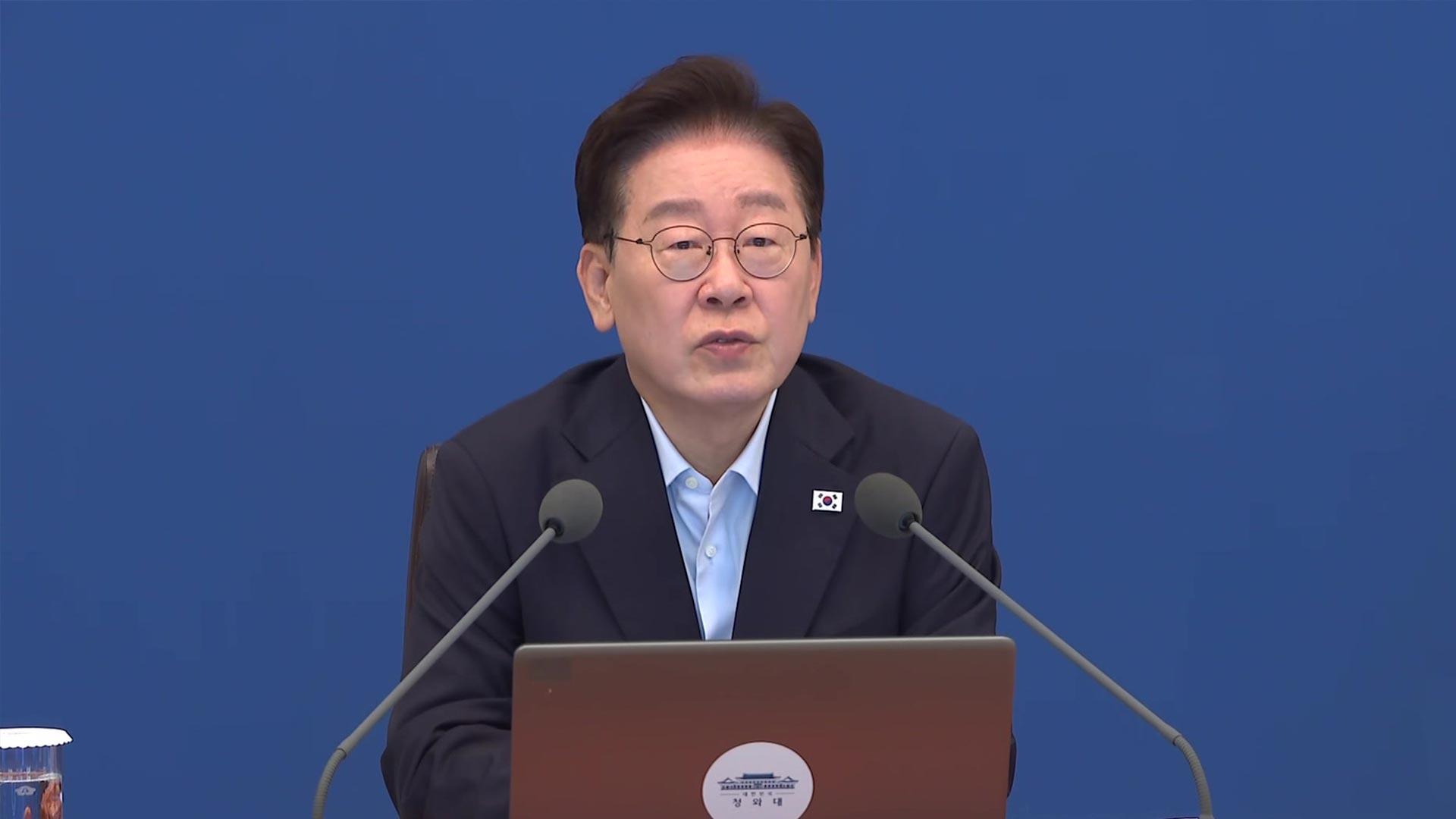
President Lee Jae-myung did not announce police reform as a policy proposal last week. He ordered a deliberative body into existence — direct, unadorned, and deliberately institutional. At an August 25 State Council meeting, he told his cabinet: think through the structure. The difference matters.
For years, South Korea has treated police reform as a moral question — a matter of lost discipline and broken accountability. Lee’s framing shifts it into architecture. He wants an organizational vessel to process it. That is not small talk. It is the executive branch building a machine to fix a machine.
What He Actually Said — And What It Means
The full remarks were broader than police. Lee used the same session to address regional development imbalances, semiconductor technology security, and fiscal strategy. But the police segment carried a different weight, and not just because of the content.
He called police discipline deterioration and security irresponsibility “serious,” insisted on reinforcing the chain of command (사랍하박 지흐체곍), and made a point that few Western observers catch: “With greater authority must come greater responsibility.” Then came the line that changes everything:
“I want you to think through a police reform body.”
The phrase “think through” is deliberate. He did not prescribe the shape of the reform. He prescribed the process. That is how you avoid the trap of top-down solutions that look decisive on paper and collapse under implementation. You build a mechanism that survives beyond the announcement.
He also stressed that “broad public opinion must be gathered” to develop the plan. In a country where policing has long been both feared and revered, that is a significant pivot. It signals that the legitimacy of reform depends on perception as much as policy.
The Bigger Picture: Police Power Is National Security Now
The context Lee embedded this in tells the real story. He linked police accountability to the same discourse he used on semiconductor technology export controls, foreign corporate attempts to extract domestic tech, and national economic security. The thread is clear: institutions that wield coercive power must be locked inside a framework of civilian oversight, or they become liabilities.
South Korea’s police force has historically operated with extraordinary autonomy. The National Police Agency reports to the Ministry of the Interior and Safety, but its operational independence has long been a defining feature — sometimes a virtue, sometimes a problem. Past administrations have tried to impose oversight. None produced durable structures.
Lee’s move is different because it is process-driven rather than mandate-driven. A reform body gives the institution time to absorb pressure. More importantly, it externalizes ownership of the solution.
Who Wins and Who Loses
The short answer: civilians win. Police lose the privilege of self-definition.
But the real losers may be the institutional intermediaries — the ministry officials, parliamentary committees, and advisory panels that have historically managed police reform in silos. A body charged with broad consultation and structural design cannot be easily contained within existing bureaucratic lanes. It will force collisions between agencies that prefer distance.
The police union, predictably, will resist. Past reform efforts have met organized pushback. But the current administration’s framing — linking accountability to national economic security — may blunt the traditional argument that police autonomy is essential for operational effectiveness. If the narrative becomes “responsible power is secure power,” the union loses its oldest shield.
Why This Matters Beyond Korea
South Korea does not police in a vacuum. It polices one of the world’s most surveilled, digitized, and densely monitored societies. The structural questions it faces — how much authority should a policing institution hold, how civilian oversight actually functions, how reform survives political turnover — are mirror questions for every democracy trying to manage escalating security demands without surrendering institutional checks.
China watches. Japan watches. Taiwan watches. All three have their own debates about policing, civil liberties, and executive authority. Korea’s approach — institutionalizing reform rather than legislating it into stagnation — offers a template worth tracking.
What Happens Next
Three scenarios are plausible.
First, the reform body produces a credible, consultative proposal within six months. That path requires the cabinet to resist the urge to fast-track results. Lee’s emphasis on broad opinion gathering suggests he understands this risk. If the body moves too fast, it becomes another performative exercise.
Second, the body stalls under institutional friction. This is the historical default. Ministries protect turf. Police resist restructuring. Parliament debates without acting. Without a political trigger — an incident that forces public urgency — paralysis is the probable outcome.
Third, and least expected: the body produces something genuinely novel. A restructured oversight mechanism that integrates civilian review, performance metrics, and accountability pathways into a single framework. This would require both political courage and administrative competence — a combination that is rare but not impossible in Korean governance.
The Bottom Line
Lee Jae-myung’s August 25 remarks were not a speech. They were a launch sequence.
By shifting police reform from rhetoric to institutional design, he changed the terms of the debate. The question is no longer whether reform is needed. It is who gets to build the thing that will make it happen.
That is a shift most foreign correspondents covering Korea will miss if they are only counting votes. The real story is in the architecture. And right now, the architecture is still empty. What gets built inside it will define Korea’s civilian-military balance for a generation.
The signal was sent. The mechanism is forming. Everyone waiting for the next move should watch the body being designed, not the statements being made.