Korea's Quiet Bet: Why Precision Robots Beat China's Showy Ones
Korean robotics leaders are arguing that the real AI competition will be won by robots that can fold a thin towel cleanly—not by those that can sprint. The strategy hinges on precision, tactile sensing, and a data-sharing model China hasn't matched.
The Towel Test
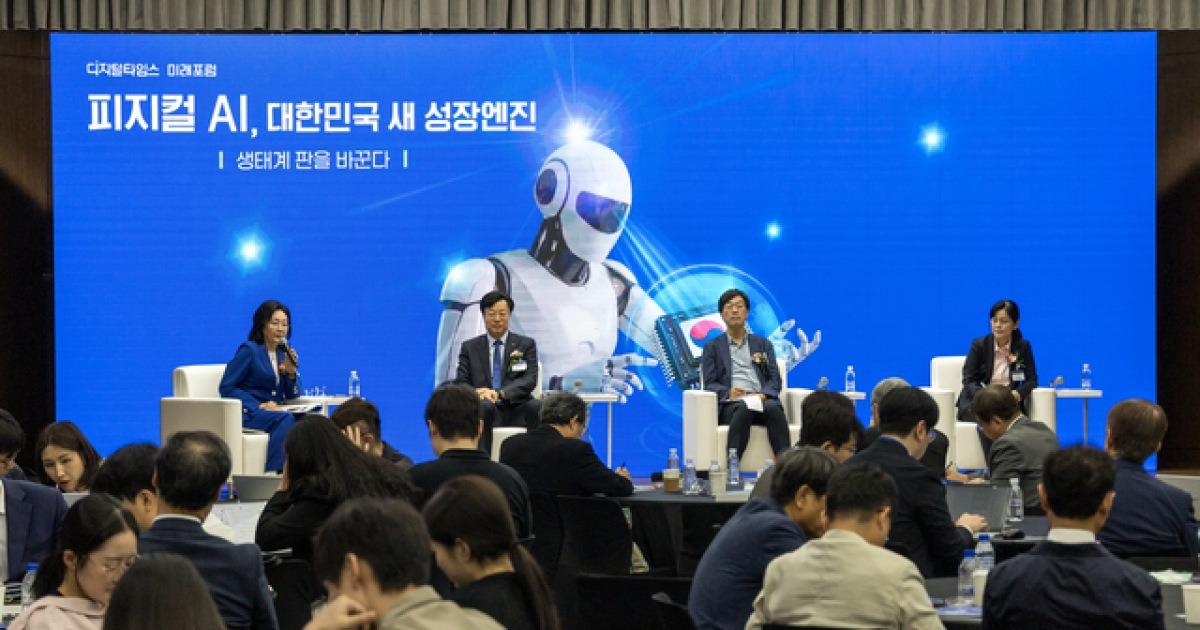
At a September 14 forum in Seoul, a group of Korea’s leading robotics voices laid out a proposition that sounds almost contrarian: China’s robots may look better on stage, but they’ll lose in the real world.
The proof, they argued, isn’t a sprint. It’s a thin cloth. Folding a delicate handkerchief cleanly—without crumpling it, without tearing, with consistent crease placement—is, in their view, the single clearest demonstration of whether a physical AI system has actually arrived.
Running is dynamic. It makes headlines. It also hides a simpler truth: most commercially useful robot work isn’t about speed or acrobatics. It’s about touch.
Park Young-sun, chair of the forum and former minister of SMEs and Startups, framed it bluntly. The competition for physical AI, he said, would be decided by how well a robot folds that towel—because the task demands high-precision components, haptic feedback, and robotic skin. Exactly the areas where Korea already holds structural advantage.
What China Is Showing Off
China has spent the last two years dazzling at robotics demos. Humanoid bots from companies like Unitree, Fourier Intelligence, and Xiaomi’s CyberOne have been shown trotting, jumping, even doing cartwheels. The imagery is effective. It builds narrative. And it has attracted funding.
But the Korean panelists flagged a deeper question: what happens when you ask those same machines to handle something fragile? To thread a needle? To pack electronics without crushing them? To fold laundry the way a hotel housekeeper can—rhythmically, efficiently, without ever dropping a sheet?
These are harder problems than they look. They require sensors that can distinguish silk from cotton. Actuators that can apply exactly the right pressure. Control systems that learn from tactile data, not just vision.
That’s where Korea thinks it has its opening.
The Data Bottleneck
The more interesting part of the discussion wasn’t about hardware. It was about data—and why Korea’s data problem is different from China’s.
China has volume. Its manufacturing base is enormous, and every factory produces sensor streams that could train a robot. The problem, as panelists noted, is that much of that data never leaves the factory floor. Companies treat production data as trade secrets. Yield rates, defect patterns, cycle times—they reveal margins. No one wants to share that.
Korea faces the same confidentiality problem. But it also has something China doesn’t: a cohort of highly skilled 50- to 60-year-old craftsmen who are about to retire, taking decades of tacit knowledge with them.
Kim Jeong, a professor at KAIST, put it directly. Korea’s advantage isn’t data volume. It’s data quality—specifically, the digitization of human know-how. Those experienced workers understand tolerances, material behaviors, and edge cases that no simulation can capture. Capturing that knowledge before it walks out the door is, in Kim’s view, time-critical.
The Federated Learning Answer
How do you get competing companies to share proprietary data? The panel pointed to a technique called federated learning—where each company keeps its data on-site, trains local models, and only shares the model updates, not the raw data. The aggregated result is a stronger shared model without anyone revealing their secrets.
Kim Hyung-chul, director of the Korea Information Society Development Institute (NIA), said Korea already launched a data space initiative this year, with a government-funded physical AI data factory platform expected to begin operations next year. The plan is to standardize sensor formats across companies, create shared training environments, and let smaller firms access the same data infrastructure as the giants.
LG Electronics has already started building its own data factory. Jeon Hye-jeong, a researcher at LG’s AI lab, said her team is manually creating and digitizing robot-relevant data with domain experts—essentially replicating the judgment of a veteran engineer in a dataset.
The approach is labor-intensive. That may be the point.
The Actuator Problem
There is one area where Korea still lags, and the panel didn’t shy away from it: actuators. The three core hardware pillars of physical AI—actuators, sensors, and batteries—all matter. But actuators alone account for roughly half the cost of a robot.
China has standardized its actuator supply chain at a national level, producing fewer types at lower cost. Korea’s approach is more fragmented: different companies, different researchers, different specifications. That diversity is valuable for innovation, but it raises production costs.
Kim Jeong argued that Korea should standardize around a common actuator platform while simultaneously nurturing high-end players—comparing the strategy to how Germany supports both mass-market and luxury automotive segments. LG’s Jeon added a sharper note: Chinese actuators, she said, break frequently.
Quality over quantity, then. A strategy built on reliability rather than price competitiveness alone.
What This Means Globally
The Korea-China split on robotics strategy reflects a deeper divergence in how the two countries approach AI itself. China bets big on scale, speed, and public demonstration. Korea is betting on precision, tactile intelligence, and the digitization of human craft.
Neither approach is guaranteed to win. China’s volume advantage in data and manufacturing is real. Korea’s narrower focus could look like hesitation to outside observers.
But the towel test matters because it maps onto what actually happens in factories, hospitals, hotels, and homes. Robots that run are impressive. Robots that handle—carefully, adaptively, reliably—are profitable.
The Korean panelists believe their country’s strengths in precision components, tactile sensing, and experienced human capital make it better positioned for the latter. Whether they’re right will depend on whether Korea can move from forum conviction to platform execution—fast, before China’s own precision programs catch up.