Korea's Chip Boom Is Rewiring Its Economy — and the Geopolitics
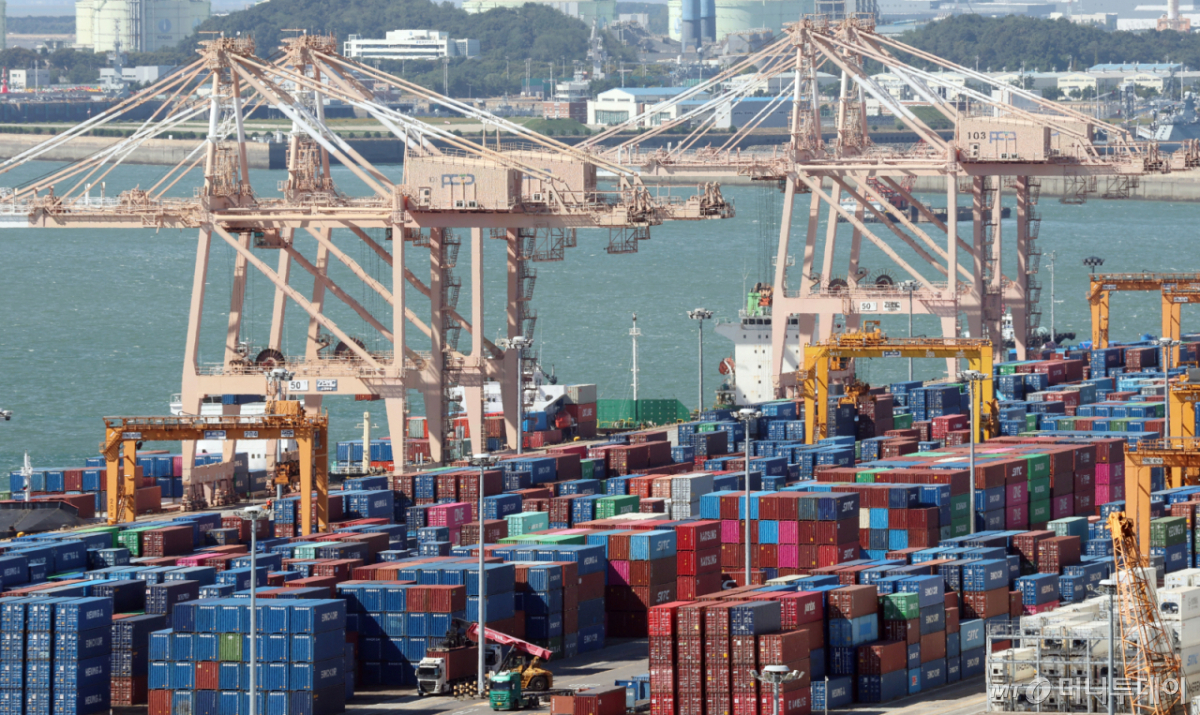
South Korea's mid-October exports hit a record $61.6 billion, driven by $27.5 billion in semiconductor sales. The data reveals how deeply the AI investment cycle has restructured Korea's trade — and why Seoul is now a frontline player in the chip rivalry.
The Numbers That Matter
South Korea’s customs service released its latest mid-month trade data on October 21, and the headline number is hard to ignore. From October 1 to 20, exports totaled $61.6 billion — a 105.4 percent increase compared to the same period last year. It is the highest mid-October figure in the country’s recorded history.
But the real story sits inside that total. Semiconductor exports alone reached $27.5 billion, up 222.5 percent from a year ago. That single category now accounts for 44.7 percent of all Korean exports — a share that has swollen by 16.2 percentage points since October 2025. In other words, nearly half of everything Korea sells abroad is now flowing through chip fabrication and packaging lines.
To put this in perspective, the daily average export rate during the period hit $474 million, up 65.9 percent year over year. That is not a cyclical blip. It is a structural reorientation.
Who Won, Who Lost
The winners are obvious. Samsung Electronics and SK Hynix, the two giants that dominate Korea’s memory chip production, are riding an AI-driven demand wave that shows no sign of fading. High-bandwidth memory and advanced NAND products — the kind required for large language model training and inference — are selling at premium prices with lead times that stretch months into the future. The trade data confirms what company filings have already suggested: the AI capital expenditure cycle is translating directly into Korean export receipts.
The secondary winners are less discussed but equally significant. Petrochemical exports jumped 68.3 percent, computer peripherals surged 424 percent, and passenger vehicle shipments rose 40.9 percent. Korea’s traditional manufacturing base is not dead — it is being pulled along by the semiconductor supercycle, benefiting from renewed industrial activity and stronger corporate balance sheets.
The losers, or the vulnerable, are those exposed to the asymmetry of this new economy. When nearly half of national exports depend on a single product category whose demand is driven by a handful of American cloud providers and a handful of Chinese AI labs, the economy becomes exquisitely sensitive to geopolitical shocks. A tightened US export restriction on advanced chip equipment to China, a sudden demand correction from hyperscalers, or a supply disruption at one of Korea’s fabs could unravel months of gains in weeks.
The Geopolitical Angle
What makes this data worth watching beyond Seoul’s borders is the geographic composition of the trade. China received 154.4 percent more in exports than the prior year’s comparable period. The United States was nearly identical at 154.9 percent growth. Vietnam climbed 74.6 percent, and Malaysia exploded 363.2 percent.
The top three destinations — China, the United States, and Vietnam — now represent 52.7 percent of total Korean exports. That triangle is the fault line. Korea is simultaneously deepening its economic ties with China, the world’s largest chip consumer and a rival to the United States, while aligning its advanced technology supply chains more closely with Washington. The Malaysian and Vietnamese growth figures suggest an additional layer: third-country assembly and testing operations expanding as companies reposition supply chains away from direct China exposure without fully severing ties.
This is the Korea question in its sharpest form. The country cannot have it both ways. Its economic survival depends on selling chips to everyone, but its security architecture depends on partnering with the United States against China. Every billion dollars in chip exports to Chinese buyers strengthens an economic relationship that Washington views as strategically threatening. There is no clean resolution to this tension yet.
The Surplus Is Real — For Now
The trade balance for the period tells another important story. Imports rose 42.8 percent to $47.1 billion, with semiconductor-related inputs up 78.4 percent, crude oil up 42.9 percent, and liquefied natural gas surging 112.4 percent. Despite the import surge, the trade surplus came in at $14.5 billion for just twenty days — a remarkable figure that would annualize to roughly $217 billion if the pace held.
That surplus number matters because it shifts the calculus for Korean policymakers. For years, Korea has wrestled with persistent current account vulnerability, particularly when energy imports spike alongside weak export growth. The current data flips that script entirely. A stronger won, lower inflationary pressure from export revenues, and improved fiscal positioning are all plausible downstream effects.
But the surplus is export-driven, not efficiency-driven. It exists because chip prices and volumes are elevated, not because Korea has fundamentally restructured its industrial base. If the AI capex cycle moderates — and cycles always do — the surplus evaporates with it.
What Happens Next
The most important question is not whether this export surge will continue, but what it changes about Korea’s position in the global order. No country has ever built lasting strategic autonomy on a single export commodity. Taiwan understood this decades ago and spent years trying to diversify; Korea is only now confronting the same structural reality.
The immediate policy pressure will be on managing the China relationship. Seoul has historically walked a careful middle path, and the current data gives Beijing more leverage than usual. Chinese demand for Korean memory chips is not going away — it is accelerating. Washington will want Korea to restrict access; Beijing will want to ensure it continues. How Seoul navigates that pressure over the next twelve months will matter more for regional stability than any single trade number.
Domestically, the surge creates an illusion of comprehensive recovery. It is not. The underlying economy remains constrained by demographic headwinds, property market hangovers, and household debt levels that rank among the highest in the developed world. A stronger trade balance improves the national account but does not solve those deeper problems.
What it does do is make Korea indispensable in a way it has not been since the 1990s. The countries competing for Korean chip capacity — the United States, Japan, the European Union, China — all recognize that whoever secures reliable access to Samsung and SK Hynix output controls a critical chokepoint in the AI era. That recognition is already reshaping diplomatic engagement, investment offers, and technology partnership discussions around Seoul.
The record export number is real. The structural vulnerability behind it is also real. Both are true at once.
Korea’s economy has found a lifeline in the AI chip boom. The question is whether it is building a foundation or simply riding a wave.