Korea's Semiconductor Collapse Is a Global Warning Signal
Samsung and SK swallowed 90% of the trillion-won losses as Korea's top conglomerates shed 1,100 trillion won in a month. The semiconductor concentration reveals a structural shift, not a routine correction.
Korea’s trillion-won reckoning
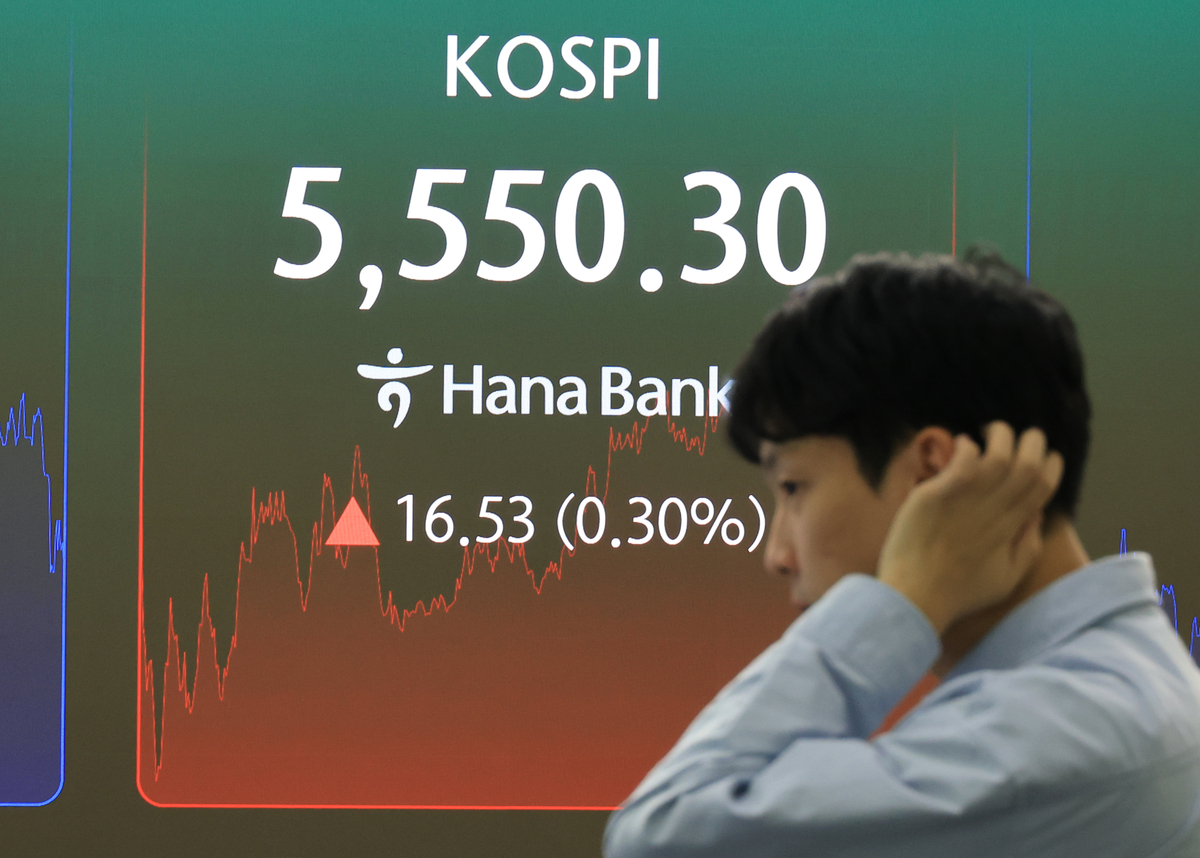
Korea’s ten largest conglomerates evaporated more than 1,100 trillion won (≈$780 billion) in market capitalization in a single month. The number is almost too round to feel real. It took a KOSPI that shed nearly 19 percent to engineer it, but the damage was not evenly distributed. Roughly 90 percent of the total loss concentrated in two names: Samsung and SK. Both are dominated by their semiconductor arms. This is not a broad market event. It is a sector purge.
The math is blunt. Samsung Group’s market cap fell from 2,161 trillion won to 1,637 trillion won — a loss of 525 trillion won, the single largest decline among all ten groups. SK Group dropped 30 percent, from 1,563 trillion won to roughly 1,093 trillion won. Combined, they accounted for 995 trillion won of the 1,101 trillion won total reduction. HD Hyundai came in third with a 25.6 percent wipeout, followed by Hanwha at minus 19.4 percent and Hyundai Motor at minus 15 percent. Smaller groups like LG and Lotte lost single-digit percentages, suggesting the panic was not about conglomerate governance or household-name brands. It was about memory chips.
The concentration tells the story
A 1,100 trillion won decline across ten diverse industrial groups should look like a broad recession repricing. Instead, it looks like a single stock sector collapse amplified through listing structures. SK Hynix and Samsung Electronics are not peripheral holdings. They are the anchors. When global memory prices falter, when AI-driven demand expectations re-price, when the market decides the cycle has turned before earnings have confirmed it, the entire group descends with them.
This matters for investors outside Korea because the dynamic is replicable anywhere that large-cap technology names cluster disproportionately in one industry. The KOSPI lost 1,288 points — nearly 19 percent — over the period, but the top ten groups’ market cap contracted by a rate 5.8 percentage points faster than the index itself. That spread is the premium penalty for semiconductor exposure. It is the market’s way of saying: if your largest companies ride one sector, you pay a steeper discount when that sector sneezes.
Who loses, who watches
Korean retail investors, pension funds, and foreign holders of KOFIA-tracking ETFs are the immediate victims. A 30 percent drawdown in SK’s market cap does not discriminate between institutional accounts and grandmother savings. The ripple hits domestic consumption, corporate investment plans, and the won’s stability. FX markets price uncertainty, and sudden cap蒸发 in a currency-issued economy is not abstract.
Global semiconductor players face a quieter but consequential reading. If Korean memory manufacturers are being repriced aggressively, it signals that Wall Street and Tokyo are already pricing in weaker ASPs, slower inventory digestion, or both. The question is whether this repricing reflects a temporary cyclical trough — the kind that precedes the next AI hardware build-out — or a structural reassessment of demand durability.
TSMC and Intel get a competitive halo from Korean weakness. Not because they gain directly from Samsung’s or SK’s decline, but because the capital allocated to memory expansion, fab construction, and R&D contracts when valuations compress. Customers may delay orders. Suppliers renegotiate terms. The competitive gap between leaders in logic manufacturing and memory giants shifts on the balance sheet long before it shows in shipment data.
The cycle argument vs. the secular argument
There are two ways to read this. The cyclical case says memory markets are volatile by nature. Pricing peaks, inventories rebuild, capex cycles lag. Korean conglomerates have survived deeper troughs. If this is a conventional down-cycle, the valuation damage is temporary and potentially generative — cheaper capital raises, accelerated buybacks, and a rebound that rewards patience.
The secular case is harder to dismiss. China’s push toward self-sufficient memory production, whether through Changxin or Yangtze Memory, is structurally changing the addressable market for Samsung and SK. Export controls, entity lists, and the geopolitical architecture around advanced chips create friction that no quarterly earnings call can unwind. Meanwhile, AI demand may be concentrated in high-bandwidth memory tiers where SK already leads, but that advantage is vulnerable to substitution, redundancy, or Chinese capture of the lower-end volume market.
Neither argument is settled by a single month of trading. What the numbers do show is that markets are pricing something material into these stocks. The concern is not that Korean chips will stop working. The concern is that their pricing power, their market share trajectory, and their role in the global supply chain are being re-estimated downward.
What happens next
Expect volatility around earnings guidance. If Samsung and SK articulate confidence in DRAM and NAND pricing recovery, expect a relief rally. If they signal caution — and recent global memory benchmarks have been mixed — the repricing may extend. Foreign investors, who have been rotating into Korean tech on AI narratives, will be the first to move and the first to sell. Their exit or entrance determines whether this becomes a three-month dip or a year-long repricing.
Regulators in Seoul will feel pressure. A 1,100 trillion won erosion in one group is politically significant. Emergency liquidity measures, trading halts, or coordinated statements from the Financial Services Commission are plausible responses if the decline accelerates.
For global portfolio managers, the takeaway is specific: Korean semiconductor exposure is now a leveraged bet on memory cycle timing and China containment policy. Two variables, one portfolio decision. The 995 trillion won that vanished from Samsung and SK in thirty days was not just a valuation adjustment. It was a signal that the market sees structural risk where it previously saw cyclical risk. Whether that signal is premature or prescient will become clearer within one earnings season.