Korea's Won Immunity — Why Seoul Is Breaking From the Fed's Shadow
BoK Governor Shin Hyun-song's Jackson Hole remarks signal a decisive break from mechanical Fed-following, redefining how emerging markets can balance currency stability with monetary independence.
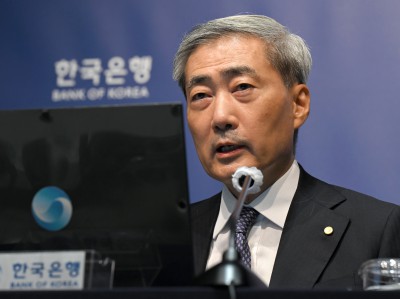
A Quiet Revolution at Jackson Hole
Shin Hyun-song did not shout it from the mountaintops, but his remarks at the August 28 Jackson Hole symposium carried a weight that reverberated well beyond the Wyoming foothills. Speaking to US correspondents in New York after the meeting, the Bank of Korea governor said plainly that Seoul would not mechanically raise interest rates simply because Washington did.
“Just because the US raises rates does not mean we must mechanically follow,” Shin said. The language was deliberate. It marked a departure from the reflexive policy alignment that has defined Korea’s monetary posture for decades and sent a clear signal to markets watching how emerging economies navigate the tension between exchange-rate stability and domestic priorities.
The Spread Story
The context matters. The Korea-US rate differential had widened to as much as 1.25 percentage points at one point, a figure that spooked investors and threatened capital outflows. That gap has since narrowed to between 0.5 and 0.75 percentage points, but the mechanics behind that narrowing tell a story worth unpacking.
The US Federal Reserve, under Chair Kevin Wash, has held rates steady at 3.50 to 3.75 percent for five consecutive meetings as of July. Wash has framed the central bank’s next move around inflation risks, warning that price stability remains the Fed’s core mandate. Markets are now pricing in a possible rate hike at the September FOMC meeting, a scenario that would immediately widen the spread again.
Korea, by contrast, raised rates twice in quick succession — 2.75 percent in July and 3.00 percent in August — each time adding just 0.25 percentage points. Those incremental moves were not blind imitations of the Fed. They were calibrated responses to domestic financial conditions, according to Shin’s own framing.
The Arithmetic Trap
Shin’s argument cuts against a familiar EM reflex: when the dollar strengthens and the Fed tightens, central banks from Seoul to Jakarta feel compelled to raise rates in lockstep, regardless of what their own economies need. It is a logic that reduces monetary policy to arithmetic — compute the spread, compare it to some invisible threshold, react.
Shin rejected that calculus entirely.
“There is no rule that says you must respond mechanically just because the Korea-US rate differential crosses a certain threshold,” he said. “Domestic financial stability conditions must be considered comprehensively.”
That is an argument for policy sovereignty, not isolation. Korea’s currency — the won — remains a traded asset in global markets, and its value is influenced by flows that no single central bank can fully control. But Shin’s position suggests that Bank of Korea policymakers now believe they have enough credibility, enough market confidence, and enough policy space to resist the temptation to outpace the Fed purely for currency-defense reasons.
Trust as Policy Tool
Perhaps the most significant line in Shin’s remarks was his assessment of the won’s recent behavior. He credited the Bank of Korea’s clear communication and consistent policy direction with anchoring market expectations.
“The BoK established a clear monetary policy direction, which helped stabilize the foreign exchange market,” Shin said. “That credibility translated into market trust.”
He acknowledged that the won-dollar exchange rate remains above its long-term historical average. But he stopped short of calling that a problem requiring policy correction. Instead, he positioned the market itself as the ultimate arbiter of the currency’s fair value.
That is a notably confident stance for a central bank governing a small, trade-dependent economy. It implies that Shin believes Korea has moved past the era of reactive currency management — the kind that treats exchange rates as policy targets rather than outcomes.
What Happens Next
If Washington raises rates in September, the spread will widen. Capital will flow. The won will come under pressure. The question is whether the Bank of Korea responds with another rate hike or stands firm.
Shin’s Jackson Hole remarks make it clear: a mechanical response is off the table. Whether that conviction holds under market stress is another matter. A sharp drop in the won could trigger financial-stability concerns that even a confident central bank cannot ignore. Banks with dollar-denominated liabilities, corporations with heavy overseas debt, and investors riding carry trades all factor into the calculus.
But the direction of travel is unmistakable. Korea is attempting something relatively rare for an emerging-market central bank — asserting monetary independence without fully embracing floating exchange rates. It is walking a narrow path between policy credibility and market discipline, and the won’s recent stabilization suggests the strategy is working so far.
The Bigger Picture
Korea’s signal may resonate across emerging markets that have long felt trapped between domestic economic needs and the gravitational pull of US monetary policy. The message from Seoul is that the old playbook — follow the Fed, defend the currency, sacrifice growth — is no longer the only option.
It is a gamble on credibility. If Shin’s Bank of Korea is right, other EM central banks may take note. If the won suddenly destabilizes under the weight of a widened rate spread, the experiment will look dangerously naïve.
For now, the data supports Shin’s confidence. The spread is narrower. The currency is steadier. The market appears to believe that the Bank of Korea knows what it is doing.
That belief is the real asset. And it is worth watching carefully.