Korea's Energy Lifeline Just Got Blacklisted by Iran
Iran's new tanker blacklist puts five Korean-flagged vessels at risk of seizure and cargo confiscation at the Strait of Hormuz — a direct shot across the bow of Seoul's energy supply chain that global markets are still underestimating.
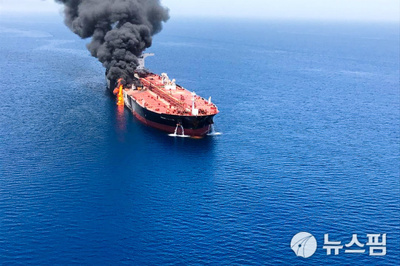
Iran Just Put a Korean Shipping Company on Its Watch List
Not long ago, the Strait of Hormuz was simply a geographic fact — a narrow channel where 20 percent of the world’s daily oil and LNG supplies once transited without a second thought. Now it’s become an operational gauntlet, and South Korea’s energy supply chain is squarely in the crosshairs.
Iran’s newly created Persian Gulf Straits Authority (PGSA) announced on August 23 that it had blacklisted 45 tankers for alleged transit violations. Among them: vessels owned by Sinokor, one of Korea’s largest shipping companies. The PGSA warned of fines, vessel detention, and cargo seizure for any ship on the list. A broader category — vessels involved in ship-to-ship transfers — could also be added.
The move came just days after the United States warned of “the strongest sanctions in history” against Iran. Tehran responded in kind, promising that any American provocation would meet a “devastating” response. The rhetoric is familiar. What’s different is the mechanism: Iran is no longer just threatening to close the strait. It is asserting administrative control over it — and the enforcement apparatus is already in place.
Who Is on the List and Why It Matters for Korea
The PGSA’s blacklist spans VLCCs, LNG carriers, LPG tankers, and refined product vessels. Major names include ADNOC Logistics & Services and its subsidiary Navig8 Tankers (UAE), Saudi state-owned Bahri, Norwegian Klaveness Ship Management, and Stolt Tankers. Sinokor’s vessels are among the Korean-flagged ships flagged for violations.
Iran has not disclosed the specific regulations the listed vessels allegedly breached. That absence of detail is itself significant. In past confrontations, Tehran has insisted that all ships seeking passage through Hormuz must obtain its approval and pay fees for security and other services. The PGSA’s demand that shippers verify the latest compliance list before entering Gulf waters signals that Iran is formalizing what was previously an informal coercion strategy.
For Korea, the exposure is structural. The country depends on the Gulf for the vast majority of its crude oil and LNG imports. Even though US-coordinated operations have partially restored throughput by transferring crude to ultra-large tankers outside the strait, the bottleneck remains real. Sinokor operates one of Korea’s most prominent tanker fleets, and its inclusion on the blacklist is a direct signal that Tehran is now tracking and targeting individual nationalities of operators — not just countries.
The US Navy Factor and the Thin Line Between Deterrence and Provocation
US Energy Secretary Chris Wright told social media platform X on August 21 that the seven-day average volume of oil exiting Hormuz had surpassed 8 million barrels per day. He attributed the flow directly to the US Navy.
That claim underscores the central tension: Iran’s maritime enforcement actions exist in a contested corridor that Washington says it protects. The PGSA’s threat to seize cargoes and detain vessels is a challenge not only to commercial shipping but to the US Fifth Fleet’s operating environment. If Iran begins detaining a Korean-flagged vessel in practice rather than just naming it on a list, the question becomes whether the US would intervene — and whether Seoul would welcome that intervention, given its careful diplomatic balancing act with Tehran.
Korea has historically avoided overtly antagonizing Iran while maintaining its alliance with Washington. A vessel seizure would force Seoul into an uncomfortable position: responding to an attack on a Korean-flagged ship without derailing its energy diplomacy in the Gulf.
The Real Risk: From Blacklist to Boarding Party
The most dangerous aspect of this escalation is not the name on a list. It is the precedent of enforcement. Iran has already conducted boardings and inspections of vessels in the strait during previous phases of tension. The PGSA’s explicit warning — that non-compliant ships face detention and cargo seizure — moves the threat from symbolic to operational.
A single detained vessel creates ripple effects. Insurance premiums spike. Charter rates jump. Supply disruptions materialize weeks later when cargoes cannot be replaced. Korea’s refineries, which process Iranian and Gulf crude into products for both domestic use and export, are the downstream targets. Even partial disruption to Hormuz transit raises costs across the entire Korean petrochemical and refining sector.
The PGSA has urged cargo owners to check compliance lists before navigating Gulf waters and provided a channel for vessel name removal — but only upon submission of explanatory materials to Iranian maritime authorities. That process itself is a leverage point: Iran can delay, deny, or conditionally accept requests at will, turning regulatory compliance into a discretionary tool of statecraft.
What Happens Next
If the PGSA begins detaining vessels in the coming weeks, the immediate consequence will be a sharp increase in Hormuz transit insurance rates and a likely re-routing of some Korean-bound cargoes through alternative, more expensive corridors. Sinokor and other Korean operators will face a choice: comply with Iranian demands on their terms or absorb the cost of avoidance.
For Washington, the dilemma is equally acute. Pressuring Iran to release detained ships could escalate the very confrontation the US seeks to avoid. Doing nothing signals that administrative coercion — rather than outright blockade — is an acceptable middle ground, which would encourage similar tactics in other chokepoints.
Seoul’s response will define the next phase. The government has not yet commented on the inclusion of Sinokor vessels on the blacklist. That silence is notable. In a crisis, delayed communication is itself a signal — and right now, it suggests Korea is still calculating whether to treat this as a shipping dispute or a strategic provocation.
The Strait of Hormuz has never been truly open. It has always been a corridor where power determines passage. Iran’s blacklist is the latest document in a long argument about who gets to decide. For Korean shippers, the answer to that question may soon determine the price of every barrel that enters the port of Ulsan.