Korea's Longest Special Probe Indicts Yoon and 57 Others
A 180-day special prosecution has indicted 58 people, including former President Yoon Suk-yeol and his wife, marking the most expansive accountability sweep in South Korea's modern political history.
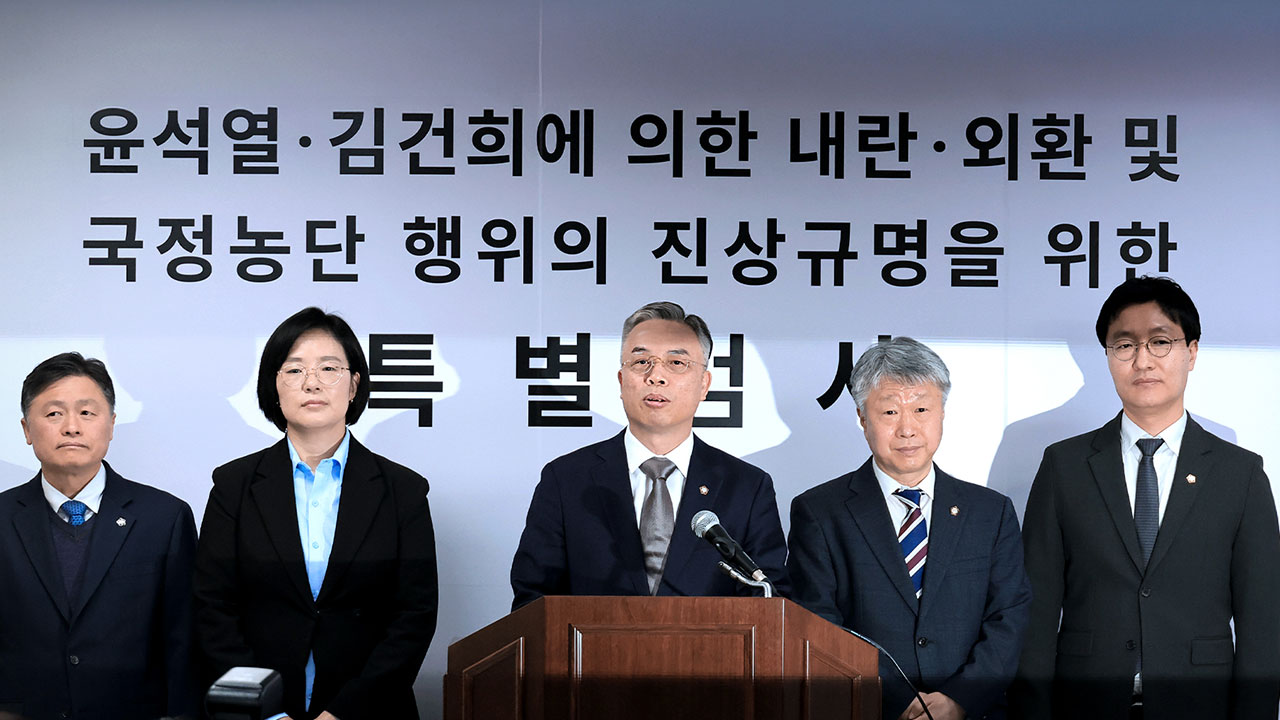
The Net Closes
South Korea’s second comprehensive special prosecution has wrapped up 180 days of investigation — the longest such probe in the country’s history — and in its final weeks, it swung the gavel hard. On Thursday, the unit announced 58 indictments, 40 of them filed in the last two weeks alone under what investigators called a “heavy tail” strategy designed to concentrate all remaining actions at the end rather than spread them out across the full investigative timeline.
Among the indicted are former President Yoon Suk-yeol and his wife, Kim Keon-hee. Seven people have been arrested; 51 were released without detention. The indictments touch everything from the controversial relocation of the presidential residence to the December 3 martial law crisis, and they signal that South Korea is entering an uncharted phase of post-presidential accountability — one without clear precedent for how far institutional追责 should extend when the charges involve constitutional breakdown rather than mere corruption.
Prosecutors described the heavy tail approach as necessary given the volume of evidence accumulated throughout the probe’s lifespan. But the strategy also produced a press conference burdened with detail, leaving political observers to puzzle over what remained uncharged and why. The timing — coming just months before the next presidential election cycle — raises immediate questions about whether the rushed conclusion served justice or political convenience.
What the Prosecutors Proved
The probe’s most significant finding centers on the illegal diversion of state budget for the presidential residence move. Kim Dae-gi, who served as Yoon’s chief of staff, was indicted alongside Kim Keon-hee and Yun Han-hong, a legislator from the ruling People Power Party. Yoo Byeong-ho, a member of the Board of Audit and Inspection, was among those arrested for allegedly intervening improperly in an audit investigation that threatened to expose the relocation costs. The coordination between executive branch officials and audit watchdogs, if proven at trial, would represent a rare instance of institutional capture within South Korea’s checks-and-balances framework.
On the martial law question, the indictment alleges that Yoon and Kim Tae-hyo, his former national security office chief, ordered communications justifying the December 3 declaration to allied governments, particularly the United States. If proven in court, this represents a direct charge that the president weaponized foreign diplomacy during a domestic constitutional crisis — transforming the State Department into a transmission belt for a legally questionable order. The allegation cuts to the heart of the probe’s most serious claim: that martial law was not merely declared but actively sold abroad before it was revoked at home.
Additional indictments include Lee Si-won, Yoon’s former public integrity secretary, charged with leaking details of an investigation into a fallen marine — a case that reveals how deeply internal security protocols were compromised during the administration. Hwang Yu-seong, former military counterintelligence commander, was accused of covering up rumors about a VIP’s anger during the crisis, suggesting that even after martial law was lifted, information control remained a priority for surviving allies of the former president.
Taken together, the 58 indictments paint a portrait of an administration where the boundary between state authority and personal political survival became increasingly porous — and where multiple institutions, from the audit board to military intelligence, were allegedly pulled into service.
What the Probe Could Not Touch
For all its scope, the special prosecution’s final report reads like a map of both what it found and what it left behind. Two major lines of inquiry were closed without conclusions and handed to the National Police Agency’s serious crimes division: the so-called “Nosanwon notebook,” which contains allegations that Yoon’s administration planned to assassinate prominent opposition figures before declaring martial law, and a separate controversy involving the Seoul-Yangpyeong expressway, where construction contracts and political favor appear intertwined.
Both cases remain open. Neither yielded sufficient evidence for indictment during the probe’s lifespan, but neither disappeared either. The police接手 means the statute of limitations clock is still ticking, and the political damage from the very existence of these allegations will outlast any courtroom outcome. The Nosanwon notebook, in particular, carries corrosive potential: even unproven allegations of planned political assassination strike at the foundational legitimacy of democratic competition.
There was also procedural confusion around two former officials — Hong Jang-won, the former National Intelligence Service deputy director, and Jo Sung-hyun, former capital defense command first guard unit commander — who were indicted by this probe despite not being charged by the earlier rebellion-focused special prosecution. Whether courts view this as a necessary expansion or jurisdictional overreach remains to be seen, and the overlap could become a procedural battleground that delays proceedings for years.
Second-Order Effects
The indictment wave has already set off tremors beyond the courtroom. Within the People Power Party, factions are recalibrating their loyalties, with some lawmakers quietly distancing themselves from the indicted while others frame the prosecutions as political persecution. The party’s ability to mount a coherent defense in the 2028 presidential race is already constrained by the sheer number of its leaders in the indictment pipeline, and early polling suggests voter appetite for PPP candidates has contracted accordingly.
Kim Keon-hee’s indictment is the most politically volatile element. Her case has already drawn fierce partisan debate, and her prosecution as part of a formal special investigation — rather than a routine corruption probe — elevates the stakes beyond typical first-lady scandals into territory that could reshape expectations of presidential spouses in Korean politics. Future first ladies will now face the question of whether their proximity to power carries legal risk that extends beyond ethical gray areas into criminal exposure.
The judiciary itself faces an institutional test. Korean courts have never tried a former president for actions taken while in office amid allegations of constitutional breakdown. The outcome will set precedents that outlive any single administration, and both sides of the political spectrum are watching closely for signs of bias or overreach. Legal scholars have already begun debating whether the special prosecution’s mandate exceeded its statutory authority — a question the Supreme Court may ultimately resolve.
Why This Matters Beyond Korea
South Korea is conducting something unusual for an East Asian democracy: a structured, time-limited, internationally observable legal process targeting a sitting leader’s conduct during a constitutional emergency. The 180-day clock, the public briefing schedule, the mix of arrests and non-arrest indictments — these are features of a system testing its own resilience under conditions that no handbook prepared it for.
The global implication is not whether Yoon will be convicted — that depends on courts, not prosecutors — but what happens next. If the indictments hold, South Korea becomes the first country in decades where a sitting president’s decision to impose martial law led directly to his own prosecution. That precedent would reverberate through authoritarian-leaning democracies across the region, from Taiwan to the Philippines, where leaders have contemplated similar executive maneuvers.
If the indictments collapse under procedural challenges or political pressure, the precedent for holding leaders accountable for constitutional violations weakens across the region. The stakes are not merely Korean; they are structural.
The Close
What remains unresolved — the assassination allegations, the expressway controversy — means this story will not end with the probe’s conclusion. The heavy tail strategy produced a large number of indictments quickly, but it also left gaps that will haunt后续 proceedings. Some defendants may argue that the compressed timeline deprived them of adequate preparation time; others may claim that selective indictment reflects political prioritization rather than legal merit.
The special prosecution’s 180 days are over. The trial has just begun — and with 58 cases moving simultaneously through a judiciary that has never handled a matter of this magnitude, the process will test every assumption about how South Korea’s institutions respond when the executive branch itself becomes the accused.