Kyiv's Daytime Missile Strike Signals Russia's Calculated Shift
Russia's October 10 daytime missile attack on Kyiv, coming hours after Trump signaled sanctions relief on Russian diesel, marks a deliberate escalation in both timing and target selection that could reshape the war's trajectory.
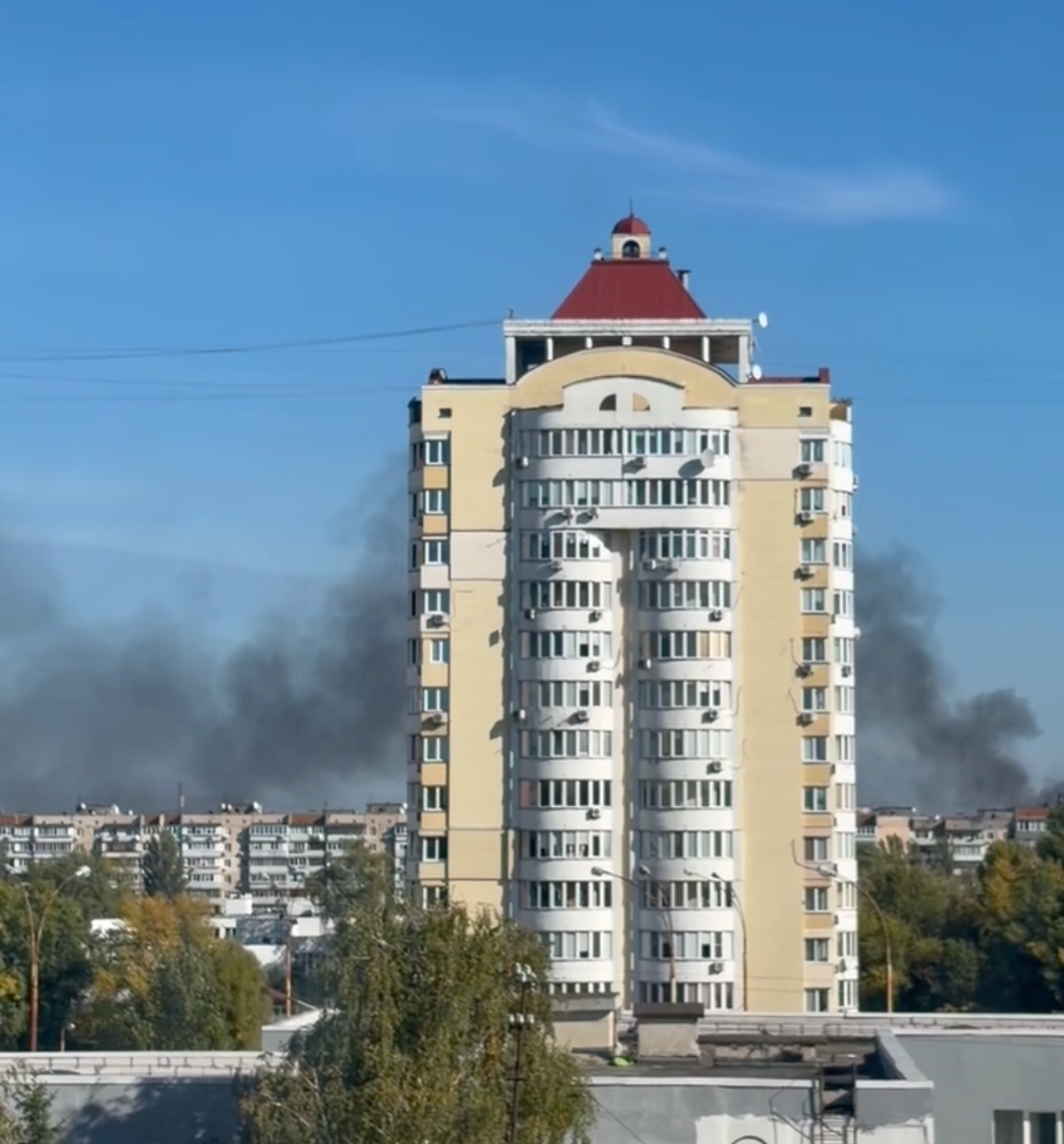
The Timing Was Not an Accident
Seven people were hurt when Russian missiles struck Kyiv’s Obolon district on the afternoon of October 10. Five were taken to hospital, three of them seriously. A boating station near Natalka park was destroyed in a fire that burned across more than 200 square meters. Rescue workers were left dismantling rubble from a single-story building and scorched courtyards behind residential high-rises, picking through insulation and shattered glass that had once been someone’s home.
But the numbers on the ground barely register the real significance of what happened that day.
The attack came in broad daylight, around 2 p.m., following morning strikes on energy infrastructure that had already knocked out power across parts of the capital. It came just one day after President Donald Trump announced he had agreed with Vladimir Putin to permit Russian diesel onto global markets. Within hours of the bombs falling, President Volodymyr Zelensky made the connection explicit. He said the consequences of allowing Russia to sell oil products were “most clearly felt in Kyiv today.”
Zelensky did not say that directly. But the sequence speaks for itself — a policy decision in Washington followed by an attack on Ukrainian civilians, with the timing so tight it leaves no room for coincidence to serve as a comfortable excuse.
A New Phase in the Bombing Campaign
Russia has been systematically targeting Ukraine’s energy grid since October 1, and the pace has only intensified. On October 8, the capital was plunged into near-total darkness. The government introduced rolling blackouts and water supply disruptions became routine. By October 10, the pattern had shifted again. The morning drones hit energy facilities. The afternoon missiles hit the city itself.
That distinction matters. For months, Russia’s strategy had focused on breaking Ukraine’s ability to keep the lights on — a campaign of attrition against infrastructure designed to wear down civilian morale through cold and darkness. The October 10 attack added a second layer: direct strikes on populated urban areas during working hours. This is a departure from the usual overnight or late-evening barrage pattern that has characterized much of the war. Daytime attacks increase casualties. They increase fear. And they force the city’s rhythms — schools, workplaces, transit — to adapt to the sound of incoming missiles while people are actually outside, commuting, running errands, living their lives.
The shift also suggests something about Russian confidence. Attacking in daylight requires a degree of precision and timing that late-night saturation strikes do not. It implies Moscow believes it can coordinate multiple attack waves with enough sophistication to overwhelm air defenses before they can reposition — a sign of operational adaptation that goes beyond simply launching more weapons.
Who Benefits and Who Pays the Price
The Trump administration’s decision to ease restrictions on Russian diesel exports is the elephant in the room. Russia earns billions from energy sales each month. That money funds weapons production, drone upgrades, mercenary recruitment, and the procurement of critical components that sanctions were supposed to block. Every additional billion that reaches Moscow translates directly into more missiles overhead — into the very weapons that struck Kyiv on October 10.
Zelensky put this plainly. He said every extra dollar from oil exports goes toward “finding and importing critical components, equipment for weapons production, upgrading Shahed drones, manufacturing missiles, and recruiting additional mercenaries for the front.” The question is whether the administration in Washington understands the arithmetic as clearly as Kyiv does, or whether the economic logic of cheapening global fuel prices has simply overridden the strategic logic of starving a belligerent of war revenue.
On the ground in Kyiv, the Obolon district bore the cost. Residents who had already been living without reliable electricity and water for days now faced physical danger from falling missile debris. The metro — a lifeline during blackouts, a shelter during air raids — was temporarily shut down after voltage drops halted train and escalator operations. Commuters who had learned to navigate the new normal were forced to recalibrate again, stepping out of underground tunnels into a city that no longer offered the predictability they had come to depend on.
The human cost here is layered. There are the five people hospitalized, the three in serious condition. There are the families in Obolon whose apartments may have windows blown out, whose heating will fail as winter deepens. And there is the psychological toll of realizing that a policy decision made thousands of miles away has material consequences measured in burned buildings and broken bones.
What Comes Next
Ukraine’s energy company DTEK confirmed that power outages spread beyond Kyiv into the Bucha district. Utility crews were dispatched to restore supply, but the damage to the grid is cumulative. Each strike degrades capacity further, and each repair consumes resources that could be directed elsewhere — elsewhere being the front lines, where ammunition and personnel are in constant short supply. The military dimension of an energy campaign is often overlooked: every truck of equipment sent to fix a substation is one less truck going to a bombardment zone.
The intercept rate also deserves attention. Zelensky acknowledged that only “some” of the missiles were shot down. That implies a significant number reached their targets or came close enough to cause damage. Ukraine’s air defense systems are under constant strain, and missile saturation attacks — multiple waves fired in quick succession — are designed to exhaust those defenses. The Interceptors, the Patriot batteries, the S-300 systems — none of these are infinite. Every missile launched by Russia is one less target that can be dealt with later.
If Russia can coordinate drone strikes on energy infrastructure in the morning and ballistic missile strikes on urban centers in the afternoon, it is demonstrating a level of operational sophistication that is still evolving. The Shahed drones are being upgraded. The missile inventory is being replenished. The bombing pattern is becoming more adaptive. This is not a war of static tactics. It is a war of learning and adjustment, and right now the evidence suggests Moscow is learning faster.
The Signal Beyond the Blast
Zelensky’s statement on Telegram ended with a demand for “strong signals” from the United States, Europe, and other partners. The message was straightforward: the world needs to send clear indications that it supports Ukraine and is actively working to limit Russia’s capacity to wage war and terrorize civilians.
What Kyiv received on October 10 was the opposite. Sanctions relief on energy exports followed by missiles over the capital does not read as a strong signal of support. It reads as a contradiction. And contradictions, in wartime, are not harmless. They embolden the attacker and unsettle the defender. They send a message that the costs of escalation are manageable, that the international response will be inconsistent, that the window for achieving favorable terms through force remains open.
For Kyiv’s residents, the contradiction is personal. They are expected to keep living, keep working, keep defending a city that is being methodically degraded. The question that hangs over every evening air raid siren is whether the world watching from afar truly grasps what is at stake, or whether the war has become background noise — another conflict to follow, suspend, and return to as political winds shift.
The people of Kyiv are still there. The city has not fallen. But the strategy on both sides is shifting, and the next phase of this war will be defined by who adapts faster — and who understands the full arithmetic of what happens when the funds meant for destruction flow more freely than ever.