North Korea's Lazarus Group Prepares PHP Exploit for Major Cyber
Singaporean cybersecurity firm CYFIRMA detected a suspicious campaign targeting Korean and Western infrastructure using a critical PHP flaw. While North Korean ties remain unconfirmed, the precision of the operation is raising alarms across Asia-Pacific.
Who is Behind the PHP Flaw Campaign, and Why It Matters Now
A new campaign called June 2026 Minjun has been detected operating inside I2P, a closed network built for anonymity. The actors are discussing coordinated attacks through a critical flaw in PHP — the same server-side programming language that powers much of the open-source web. What makes this notable is not just the target list, but how the operation was uncovered before any Western cybersecurity outlet reported it.
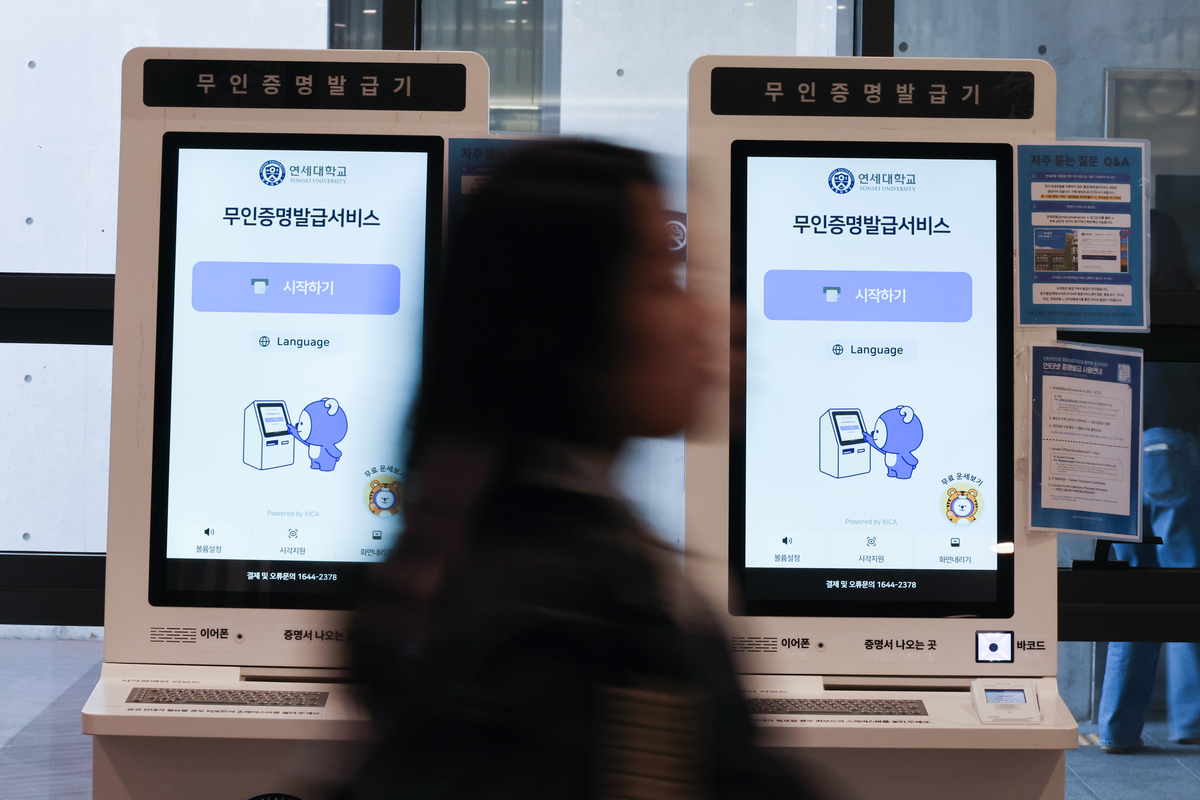
Singapore-based firm CYFIRMA identified the activity on 24 July 2026. Within hours, Korean security monitors had flagged it. Western desks were still compiling reports when Yonsei University in Seoul suffered a breach that exposed personal data of roughly 10,000 students and staff — a reminder that the window between detection and compromise can be vanishingly small.
The Technical Setup
The vulnerability at the center of this operation is PHP2Shell, tracked under two CVEs: CVE-2026-109618 and CVE-2026-109619. It receives a CVSS score of 9.2 out of 10 — classified as critical. The attack chain does not require authentication. A crafted web request alone can trigger remote code execution on the target server. That means any poorly patched PHP installation becomes an open door.
The attackers in the I2P discussion gathered proof-of-concept code, ranked targets through an in-house AI model, and validated exploitation attempts in controlled environments before moving to live infrastructure. CYFIRMA noted the use of AI as a distinguishing operational feature. It is becoming a recurring pattern: North Korean-aligned hackers adopting commercial AI tools to prioritize victims and stress-test exploits before deployment.
The Target List Is Strikingly Specific
Government agencies and financial institutions sit at the top. Beyond those, the campaign targets manufacturing, logistics and shipping, airports and aviation, online marketplaces, trading companies, and construction firms. The geographic scope stretches across South Korea, the United States, Japan, Australia, Taiwan, India, Singapore, the UAE, Saudi Arabia, and the European Union.
For readers outside Korea, the implication is that this is not a regional operation. The target profile matches a state-sponsored actor comfortable operating globally and motivated by either strategic intelligence collection or financial gain — a combination that defines much of North Korea’s cyber posture in recent years.
The North Korea Link, and Why It Remains Unproven
CYFIRMA assigned a moderate confidence rating to the attribution linking the campaign to the Lazarus Group. The rationale rests on three observations: the instruction language is Korean, the priority targets align with known Lazarus preferences, and the web shell tactics mirror previous Lazarus operations.
But here is what matters: no malware shared with known Lazarus infrastructure, no overlapping command-and-control servers, and no independent forensic confirmation. The attribution is circumstantial. That does not weaken the operational warning — the PHP exploit is real regardless of who pulls the trigger — but it does mean Western analysts should not treat this as confirmed North Korean activity until stronger evidence emerges.
Why This Story Broke in Korea First
The chronology here is telling. Korean security teams had already sounded the alarm by 22 July, days before CYFIRMA published its analysis and well ahead of mainstream Western reporting. Yonsei University’s breach earlier that same week signaled that the vulnerability was already being exploited in the wild.
This pattern — Korean outlets and security firms detecting threats aimed at their region before global desks — reflects an increasingly competitive intelligence landscape. South Korea’s investment in cybersecurity research and its constant exposure to North Korean attacks have produced a monitoring apparatus that sometimes outperforms larger Western organizations when the threat originates from the peninsula. International readers should pay attention when Seoul moves first.
What Happens Next
The PHP development team released an emergency patch on 21 July. South Korea’s Ministry of Science and ICT and the Korea Internet & Security Agency (KISA) issued a warning level alert on 22 July and distributed mitigation guidance to enterprises. The patch exists. The problem is adoption.
PHP installations remain widespread across government and financial systems in developing markets, and many organizations have not yet applied the latest update. The gap between patch availability and deployment is where the next wave of exploitation will occur. CYFIRMA’s report suggests the June 2026 Minjun campaign is already past the planning stage and into execution.
The Yonsei University breach should be treated as a preview. If 10,000 records were exposed from an educational institution, the payoff for targeting banks or government databases could be exponentially higher — both financially and strategically. The attackers are likely measuring response times now, gauging how quickly Korean and American organizations apply patches, and adjusting their deployment schedule accordingly.
Until direct forensic links are established, the attribution question will remain unresolved. But the operational threat is concrete. Organizations running PHP should verify their patch status immediately. The people behind this campaign are not asking for permission.