Lee's Nuclear Comment Divides Seoul Over DPRK Doctrine
President Lee's characterization of North Korea's nuclear arsenal as merely defensive has triggered fierce opposition backlash and raises serious questions about Seoul's stance on DPRK deterrence and inter-Korean policy.
A President Misreads an Enemy’s Nuclear Doctrine
President Lee Jae-myung’s remark last week—that North Korea’s nuclear weapons are merely “a last defensive weapon”—has exposed a dangerous gap between Seoul’s leadership and Pyongyang’s actual military doctrine, drawing rare bipartisan condemnation from opposition figures who warned the commentary could undermine South Korea’s deterrence posture.
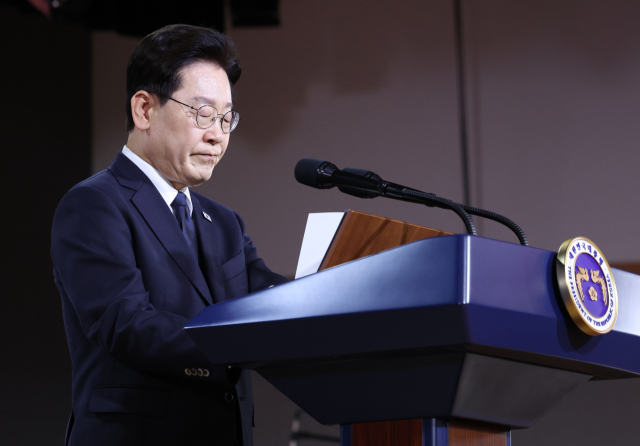
The comment came during a press briefing at the Blue House on Thursday, when the president was asked about North Korea’s nuclear program. He acknowledged the DPRK possessed nuclear weapons but minimized their operational intent, saying: “Of course they have nukes over there. But would they really use them in combat? That counts as a last defensive weapon.”
The remarks immediately ignited fury among conservative lawmakers, who saw them as a troubling endorsement of Pyongyang’s own propaganda line—a line that directly contradicts North Korea’s own codified doctrine of first-strike nuclear use. Within hours, social media threads dissected the statement, and several news outlets ran editorials questioning whether the president understood the gravity of the threat he was dismissing.
The Lawmakers Who Pushed Back
Yoon Sang-hyun, a member of the ruling PeoplePP Party, took to Facebook on Saturday with a scathing rebuke: “Is the President of South Korea the spokesperson for the Kim Jong-un regime?” He went further, questioning whether the president’s understanding of national security threats was sufficiently grounded in reality.
“A president should be evaluating and preparing for the North Korean nuclear threat—not downplaying it,” Yoon wrote. “If we underestimate Pyongyang’s willingness to launch a first strike, it could lead to serious misjudgments in our own deterrence calculations and military readiness.”
He cited North Korea’s 2022 Nuclear Weapons Policy Act, which enshrines the right to preemptive nuclear strikes under certain conditions—including when the regime perceives an imminent non-nuclear attack or when it deems a first strike necessary to seize the initiative in war. The law, passed after years of deliberation by the Supreme People’s Assembly, explicitly outlines scenarios in which Pyongyang may employ nuclear weapons before being attacked, a provision that Seoul’s intelligence community has long treated as a baseline assumption in its own strategic planning.
“The North has already lowered the threshold for nuclear use,” Yoon argued. “And yet our president is echoing their own language about nukes being purely defensive?”
Former lawmaker Yu Seung-min was equally blunt, calling the president’s comments “deeply concerning” and warning they reflected a fundamentally flawed understanding of the security landscape. He pointed to a series of recent tests by Pyongyang—hybrid warhead tests, multiple ICBM flights, and tactical nuclear weapon drills—as evidence that Seoul’s leadership was operating from an outdated frame of reference.
“This isn’t just pro-North sentiment—it’s 종북, or pro-North ideology,” Yu wrote. “If you’re not 종북, you simply cannot speak about North Korean nuclear weapons this way.”
The term 종북, which carries heavy political weight in Korean discourse, was deployed deliberately to signal that the president’s comments were not merely naive but ideologically sympathetic to the North’s position. The accusation has historical resonance in South Korean politics, where such labels have been used for decades to marginalize progressive voices on national security issues.
What the Lawmakers Missed About Alliance Dynamics
The controversy also touched on a second major issue: the transfer of wartime operational control (OPCON) of South Korean forces from U.S. command to Seoul. President Lee has long argued for earlier transfer, framing it as a matter of national sovereignty.
But Yu Seung-min pushed back, arguing that the president was treating the issue through an ideological lens rather than a practical military one. “OPCOM isn’t about dependency theory or outdated notions of independence—it’s about maximizing combined defense capabilities against real threats,” he said.
He warned that Seoul’s leadership was viewing the issue through what he called a “colonial dependency” framework, one that prioritized symbolic independence over actual security effectiveness. Military analysts have noted that any move to accelerate OPCON transfer without clear readiness benchmarks could send confusing signals to both Washington and Tokyo, potentially complicating joint training exercises and intelligence sharing that have become standard practice since the 2018 inter-Korean summits.
The debate has broader implications for Washington’s posture toward the peninsula as well. Any hint that Seoul’s leadership may be sympathetic to Pyongyang’s nuclear narrative could complicate trilateral coordination between Seoul, Washington, and Tokyo—a coordination that has become increasingly vital as both North Korea and China test the limits of the U.S.-led alliance system in the Indo-Pacific. Defense officials in Washington have privately expressed concern about inconsistent messaging from Seoul, according to sources familiar with the discussions.
Why This Matters Beyond Domestic Politics
At its core, the controversy reveals a fundamental disagreement about how South Korea should view the North Korean threat. Is Pyongyang’s nuclear arsenal genuinely defensive—a coercive shield designed to prevent regime change—or is it an offensive instrument that North Korea has already codified into law as a tool for first strike?
President Lee appears to have answered the former. Opposition lawmakers insist the latter is correct—and that his characterization could dangerously erode deterrence credibility both domestically and internationally.
The stakes extend beyond rhetoric. If allied partners in Washington or Tokyo begin to doubt Seoul’s commitment to a hardline deterrence posture, it could affect everything from U.S. extended deterrence guarantees to Japanese security calculations regarding North Korean missile and nuclear threats. Japan’s defense ministry has already begun quietly reviewing its own posture in response to perceived shifts in the security environment, according to reports from Tokyo-based analysts.
There is also a domestic political dimension that cannot be ignored. The ruling party faces internal pressure to maintain a tough line on North Korea while also pursuing dialogue. Lee’s comments may have been intended to leave room for future engagement, but the timing—coming amid heightened North Korean missile activity and a broader regional arms race—has made that argument difficult to sell.
For now, the immediate fallout is domestic. But the longer-term question is whether Lee’s approach to Pyongyang will prove pragmatic or whether his comments—however casually delivered—will be seen as opening a strategic gap between Seoul and its allies at a moment when such gaps are precisely what the North Korean regime hopes to exploit.
The Bigger Picture
This episode is a reminder that leadership rhetoric matters enormously in nuclear deterrence dynamics. When a sitting president describes an adversary’s nuclear arsenal as merely “defensive,” it sends signals—to allies, to adversaries, and to domestic audiences—that can reshape threat perceptions and policy options.
Pyongyang has spent decades cultivating exactly this narrative: that its nukes are for self-defense against a hostile superpower. By repeating the refrain without acknowledging North Korea’s own doctrinal commitment to first-strike use, President Lee inadvertently lent weight to a propaganda frame that Seoul should be working to dismantle. The irony is not lost on strategists in Seoul, who note that Pyongyang’s leadership has consistently referred to its weapons as a “sword” rather than a shield in official declarations.
Whether the administration learns from this backlash—or digs in—will shape South Korea’s posture toward the North for years to come. The coming weeks will likely see the White House and Pentagon weighing in more explicitly, as Washington has every incentive to ensure its Korean ally remains aligned on the fundamental question of how to deter a nuclear-armed adversary that has already written its intentions into law.