The Cobalt Escape: How LG and Seoul National Are Reshaping EV Batteries
LG Energy Solution and Seoul National University have cracked a decades-old problem in lithium manganese-rich batteries — gas generation that makes them unusable in electric vehicles. The result could rewrite the economics of EV powertrains.
The cobalt problem, finally solvable
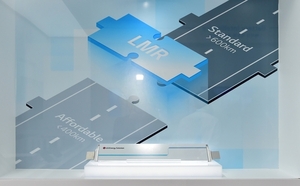
For over a decade, the lithium manganese-rich battery — or LMR — has been the most promising next-generation cathode material that could not seem to escape its own chemistry. The concept was elegant: replace expensive cobalt with cheap manganese, and tap into oxygen atoms inside the crystal lattice to store even more energy. Higher energy density without the price tag of cobalt.
The catch was brutal. During charging, some oxygen oxidizes and does not fully return to its original state during discharge. That incomplete recovery creates structural damage and generates gas — hydrogen, carbon dioxide, and other compounds that build up pressure inside the cell. In a small research cell, you can tolerate gas. In a 40 amp-hour large-format cell designed for an electric vehicle, gas is a death sentence. The casing swells, the separator degrades, and the battery fails long before it reaches useful life.
That has been the single largest barrier to LMR commercialization. Until now.
What LG and SNU actually did
The breakthrough came from an unexpected angle: process engineering rather than materials discovery. LG Energy Solution’s team, working with Professor Im Jong-woo’s research group at Seoul National University’s Department of Chemistry, did not try to redesign the LMR material itself. They redesigned how the cell is activated — the formation process that conditions a new battery before it ships.
The key move was lowering the temperature during formation. Formation is when a new cell undergoes its first controlled charge-discharge cycles to build the solid electrolyte interphase — the protective layer that determines whether a battery lives or dies. For LMR cells, the traditional formation temperature range was too aggressive. Gas generation exploded during that critical window, and once it started, it was hard to stop.
By slowing the formation process down at lower temperatures, LG and SNU were able to constrain gas evolution in its earliest stages. They also recalibrated the operating voltage window for the 40Ah cell, finding a sweet spot that preserved the high energy density LMR promises while keeping oxygen release in check.
The results are specific enough to matter. After 883 charge-discharge cycles, the optimized cell retained 92.2 percent of its initial capacity. That is not a lab curiosity — it is a large-format cell undergoing real-world-level cycling, and it cleared the threshold that has kept LMR out of production for years.
The work was published in Nature Communications, which carries weight in this space. Battery companies do not publish in Nature Communications to celebrate; they publish there when the results are robust enough to withstand scrutiny from competitors who will try to replicate or debunk them.
Who wins and who loses
Cobalt is the obvious casualty. LG Energy Solution does not need to say this outright — the math speaks for itself. Cobalt accounts for roughly a third of the cost of a standard nickel-cobalt-manganese cathode, and its supply chain is concentrated in the Democratic Republic of Congo, where ethical and geopolitical risks are well documented. LMR uses no cobalt at all. Manganese is abundant, cheap, and geographically diversified.
The winner is anyone building an EV on a razor-thin margin. A shift from NCM to LMR could reduce cathode material costs by 20 to 30 percent, depending on nickel prices and the exact formulation. That is not hypothetical savings — it is the difference between profitability and loss on a volume model at the $25,000 price point.
Samsung SDI and SK On are the implicit losers in this particular race. Both companies have been investing heavily in their own next-generation cathode strategies, including high-nickel NCM and partially demanganized variants. LMR bypasses much of that investment path. It does not make their current NCM lines obsolete overnight, but it shortens the runway.
Chinese cathode manufacturers face a different kind of pressure. The dominant players — Ganfeng, BYD, Shanshan — have built substantial capacity around cobalt-based chemistries. LMR’s cobalt-free nature aligns more naturally with the supply chain strategies that Chinese OEMs like CATL have been signaling, but LG’s head start on a validated large-cell process is a gap that is not easily closed.
What comes next
The nature of this breakthrough matters for timing. LG and SNU did not discover a new material. They optimized an existing one for large-cell manufacturing. That means the path from lab to line is shorter than it would be for a materials-first breakthrough — but it is not instantaneous. Formation process optimization can be replicated by competitors, and LG will need to protect the specific parameters through patents and process know-how.
The 40Ah cell is a starting point, not a product. The next step is scaling to the 50–80Ah cells that will appear in production EVs, and proving that the gas suppression holds under thermal stress, rapid charging, and low-temperature operation. None of those tests have been reported yet.
There is also the question of energy density. LMR’s advantage over standard NCM is higher capacity, but the formation process changes may narrow that gap slightly. If the working voltage window was narrowed to control gas, some of the theoretical energy density advantage may have been traded away for stability. The final numbers will determine whether LMR is a step up or a step sideways from current high-nickel cathodes.
Interbattery 2026 — where LG showcased the cell — is a trade show, not a peer-reviewed venue. The real test will come in the next 12 to 18 months, when LG announces whether it is moving LMR into pilot production lines. The technology is credible. The question is whether the economics will let it ship.
For now, the implication is clear: the cobalt-free EV battery is no longer a research problem. It is an engineering one.