Lula's Upset Win Rewires Brazil's Global Position
Lula's surprise fourth-term victory upends Latin America's rightward drift and tests Brazil's democracy. Bolsonaro's refusal to concede opens a volatile chapter with global supply-chain and alliance implications.
A Result the Polls Missed
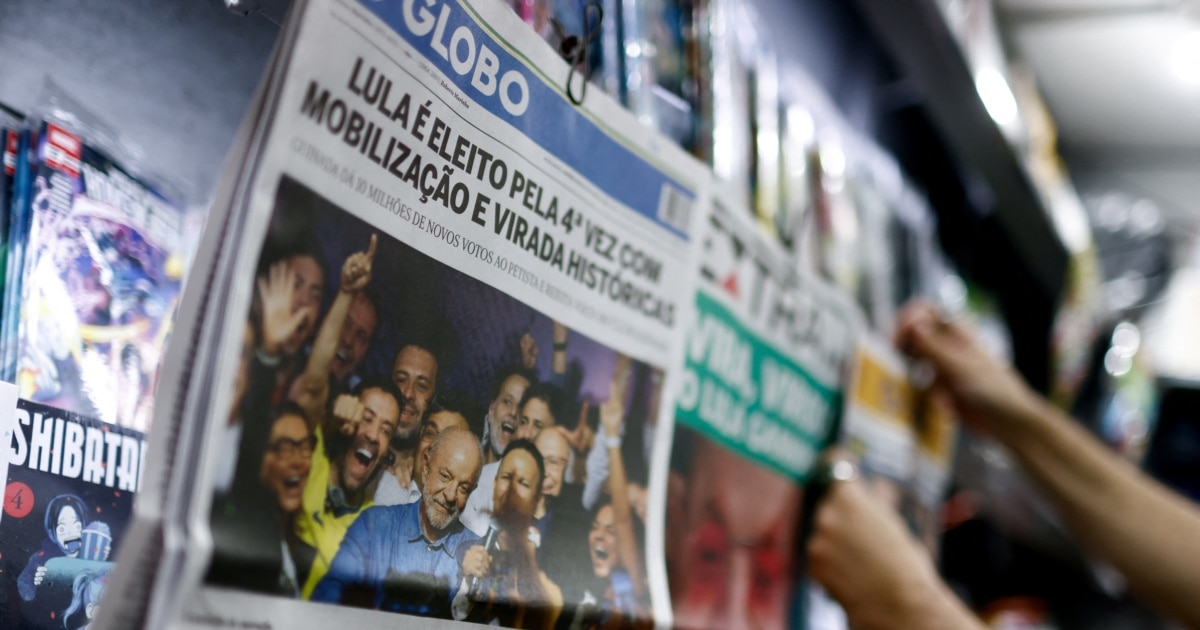
Luiz Inácio Lula da Silva took Brazil back to the presidency in a runoff that looked impossible until the final ballots were counted. Official tallies from the country’s top electoral court put him at 51.79 percent, edging out Flávio Bolsonaro at 48.21 percent — a gap of roughly 4.4 million votes. The margin was razor-thin, but what made this outcome remarkable was how far behind the polls the Labor Party candidate had been going in. Flávio Bolsonaro had led by more than 2 million votes after the first round and dominated recent surveys. Lula did not flip that trajectory through a sudden shift in public opinion. He won because Brazil’s runoff system rewarded turnout and organization in parts of the country that early polling understated.
That the race felt this close is itself a signal. Brazil’s political center has been moving to the right since 2022, with Argentina, Chile, Colombia and Peru all putting conservative or anti-establishment leaders in power. Lula’s victory interrupts that pattern at its largest node. It does not reverse it, but it changes the geometry of the region.
The Extension That Became a Crisis
The most immediately dangerous element of this election was not the result but the process. With voting almost over, Brazil’s electoral court extended the ballot by two hours. The announcement came just three minutes before the scheduled close, creating confusion at some polling stations. Both campaigns had requested extensions for different reasons — Lula’s team cited difficulties voters faced traveling to the polls, while Flávio Bolsonaro’s camp pointed to bad weather in certain areas. The court approved the extension, but the timing turned a routine administrative decision into a flashpoint.
Flávio Bolsonaro has not accepted defeat. He is challenging the legitimacy of the vote and demanding annulment, zeroing in on the late extension as proof of irregularity. Whether that challenge has legal traction is uncertain; Brazil’s electoral system has withstood earlier crises, including the attack on the Supreme Court in January 2023. But the political risk is real. When a major candidate refuses to concede and frames the result as illegitimate, the question shifts from who won to whether the loser will accept what the courts decide.
For international observers, the extension story is a reminder that Brazil’s democracy is not self-executing. It depends on institutions holding under pressure. The electoral court made a operational call under difficult conditions. The political fallout will test whether that call can be defended or whether it becomes the opening wedge for a broader assault on the voting system.
Who Wins, Who Loses
Lula gains time and a mandate to pursue his agenda. He arrives with a narrow margin, which means his legislative room is constrained and his coalition will demand concessions. Still, a fourth term gives him the one resource Brazilian presidents crave: durability. He can plan beyond the next election cycle.
Flávio Bolsonaro loses the presidency but retains a formidable base. His refusal to concede is not yet a loss of support. It is a strategy to raise the cost of acceptance. If he can keep the dispute alive through the courts and in the public sphere, he forces Lula to govern against a shadow opposition that rejects the election’s legitimacy rather than opposing specific policies.
The broader right in Latin America watches closely. Argentina’s Javier Milei, who backed Flávio Bolsonaro during the campaign, has not yet congratulated Lula. El Salvador’s Nayib Bukele has also stayed silent. Their hesitation is a political message: the new right in the region is signaling that Lula’s win does not rewrite their coalition. Meanwhile, Mexico, Cuba, Chile, Ecuador, Peru and Bolivia have all sent congratulatory messages. Some of those countries are ideologically distant from Lula. That they are reaching out anyway shows the pragmatic calculus at work — Brazil is too large to alienate, regardless of where the ideological lines run.
The Global Ripple
Lula’s return matters beyond South America because Brazil is no longer a passive player in global commodity and geopolitical contests. It is a gatekeeper.
China moved fast. A spokesperson in Beijing praised the result and reaffirmed the commitment to deepen the China-Brazil community with a shared future. That phrasing is not empty. Brazil is already China’s largest trading partner in Latin America and a critical supplier of iron ore, soy and, increasingly, critical minerals. A Lula administration is unlikely to restrict trade with Beijing. It may, however, negotiate from a position of greater assertiveness than previous Brazilian governments, leveraging Brazil’s resource weight to extract concessions on technology transfer and infrastructure financing.
Russia welcomed the outcome and highlighted Lula’s role in BRICS. That is no accident. Brazil has been a reluctant but useful participant in the grouping, providing geographic balance and commodity heft. Lula will push for BRICS to function as more than a rhetorical forum. He will want concrete architecture around payments, reserves and development finance. Whether the bloc delivers — or simply grows louder — will shape how effective Brazil’s multilateral positioning becomes.
The United States has not yet issued an official statement from the White House or State Department, a silence that speaks louder than a press release. Washington faces a dilemma. Brazil is a strategic partner on climate, maritime security and regional stability. It is also a BRICS member with deep economic ties to China and Russia. A Lula government will not align with Washington on every issue. It will cooperate where interests overlap and defect where they do not. The Trump administration’s silence reflects the discomfort of dealing with a leader who is neither an adversary nor a reliable ally.
Ukraine’s President Volodymyr Zelenskyy congratulated Lula but added a reminder. He called the result noteworthy and urged Brazil to stay engaged on international issues, respect human rights and uphold territorial integrity. That is Zelenskyy referencing Brazil’s ambiguous stance on the war in Ukraine. Lula has never clearly condemned Russia’s invasion. A second term will not resolve that ambiguity, but it will force Brazil to navigate it more explicitly as the war drags on and the Global South remains divided.
What Happens Next
Three outcomes are plausible in the months ahead.
First, the courts uphold the result and Flávio Bolsonaro accepts it. That is the baseline scenario, but it requires discipline from Bolsonaro’s network and patience from Lula’s supporters. Neither is guaranteed.
Second, the dispute drags through the electoral judiciary and emerges narrowed but unresolved. Lula takes office while the legal challenge continues. Governance becomes harder, opposition gains cover, and Brazil’s international standing wavers as partners wonder whether the mandate is clean.
Third, the challenge succeeds in some form — a partial annulment, a delayed certification, or a constitutional crisis that forces new procedures. That outcome would destabilize not only Brazil but the region. Markets would react. Alliance politics would fracture. The precedent would reverberate through other democracies facing similar pressures.
The odds favor the first scenario. Brazil’s institutions have survived worse. But the second and third are not fantasies. They are risks generated by a narrow loss coupled with a refusal to concede.
Lula’s victory resets Brazil’s direction. It also resets the terms of the contest. The election is over, but the conflict over its meaning is just beginning. How that conflict resolves will determine whether Brazil consolidates a fourth Lula era or enters a prolonged period of institutional strain — with consequences for commodity markets, BRICS dynamics and the balance of power in the Americas.