Two Died at Frankfurt Airport From a Mosquito That Flew in From Somewhere Else
A mosquito that survived a long-haul flight seeded a malaria outbreak at Frankfurt Airport, killing two workers. The case exposes a gap in how Europe treats imported-vector disease — and why climate change is widening it.
The Mosquito Was the Vector, But the Real Pathogen Is Negligence
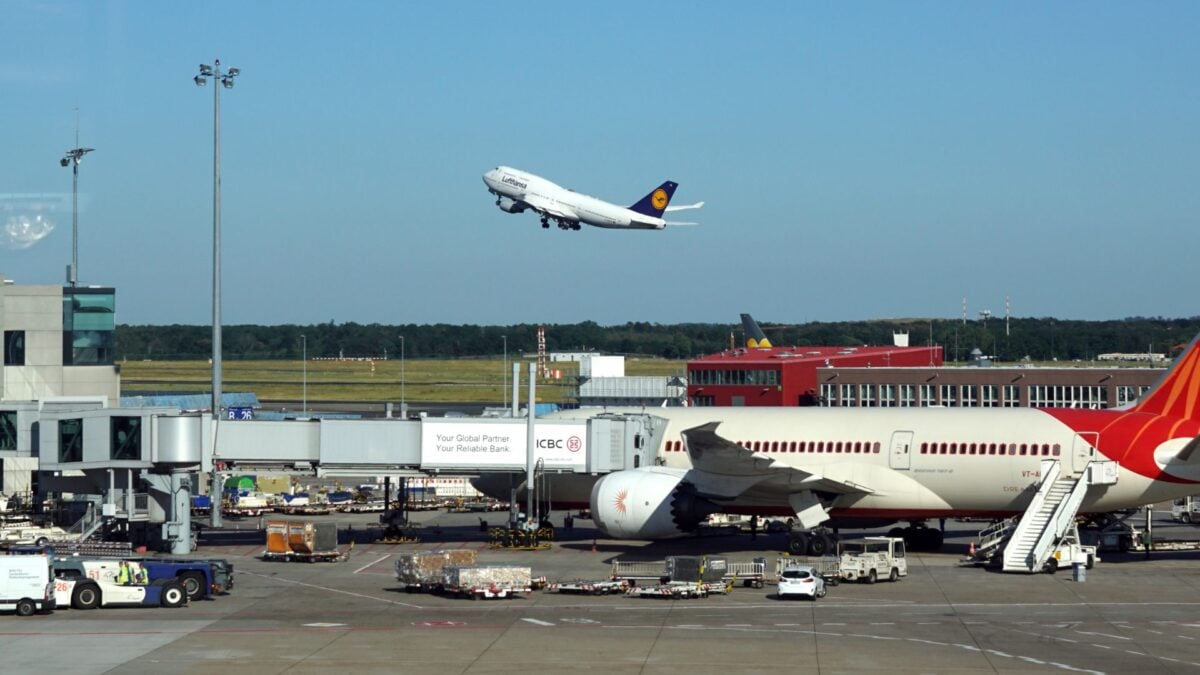
Two airport workers in Frankfurt are dead. Six have been infected with malaria. None of them traveled — they were on the job. The most plausible explanation, confirmed in fragments by the Frankfurt Public Health Department: a single Anopheles mosquito stowed away on a long-haul flight from an endemic region, survived the journey, and bit people inside the airport terminal.
This is not a hypothetical. Similar events have already occurred in the United States, where imported mosquitoes and infected travelers have triggered small local outbreaks. But the scale of this case — two fatalities in a country where malaria has been absent for decades — makes it an outlier in the worst possible way. It is also a signal flare.
How It Happened Is Simple. That Should Not Comfort Anyone.
Malaria is caused by Plasmodium parasites, transmitted through the bite of an infected female Anopheles mosquito. The parasite enters human tissue, reproduces, and invades red blood cells. Symptoms resemble severe flu — fatigue, chills, fever — but can escalate to organ failure and death. Without prompt treatment, P. falciparum, the deadliest species, can kill within 24 hours.
For this outbreak to occur, several conditions had to align:
- A mosquito carrying the parasite arrived in Germany on a commercial flight.
- The mosquito survived the temperature and pressure changes in the cargo hold or cabin.
- It escaped the aircraft and entered the airport grounds.
- It bit at least one infected person or introduced the parasite into a new transmission cycle involving local Anopheles vectors.
- At least two of those bitten developed fatal infections.
Officials say it is still unclear whether one mosquito or multiple mosquitoes were responsible. Blood tests on the six cases are underway and could take weeks to return results. If the genetic profiles of the parasites match, it would confirm a single introduction event. If they differ, the introduction may have been larger than assumed — which would be far more alarming.
Why This Is Not Just a Frankfurt Problem
Germany eliminated indigenous malaria in the 1950s. The last locally acquired cases were recorded decades ago. When malaria appears in a non-endemic country, it is almost always imported by a traveler returning from an endemic region. In those cases, the patient is diagnosed, treated, and the chain ends.
This outbreak breaks that pattern. The patients did not travel. The vector traveled. That shifts the entire framework from travel medicine to biosecurity — and Europe has no coherent biosecurity posture for imported vectors.
Airport health screening consists of thermal cameras, symptom questionnaires, and occasional random testing for specific pathogens. No European country screens aircraft cabins or cargo holds for live mosquitoes. Mosquitoes are small, resilient, and invisible to standard protocols. An Anopheles can survive a 10-hour flight in the ambient conditions of a pressurized cabin, especially if it lands in a sheltered area — a planterscape, a maintenance corridor, a baggage bay.
The Climate Angle Is Not Speculative Anymore
Rising temperatures across southern Europe have expanded the habitable range of Anopheles species. The European Centre for Disease Prevention and Control has warned for years that climate change is making sustained transmission of vector-borne diseases in Europe increasingly plausible. In 2023, Italy reported its first locally acquired malaria cases in over 60 years — a clear indication that the ecological conditions for transmission are shifting.
Frankfurt sits in central Germany, far from the traditional range of efficient malaria vectors. But if the mosquito that triggered this outbreak was an introduced species — or if local Anopheles populations are adapting — the geographic ceiling for self-sustaining transmission is lower than anyone thought.
Who Wins, Who Loses
The airport workers who contracted malaria lose. Two of them will not recover. Their colleagues now face a known risk doing routine work.
The German public, fortunately, loses very little. The health department has been clear: the risk to Frankfurt residents is very low. Malaria does not spread person to person, and the airport is a contained environment. The outbreak is unlikely to breach into the city.
But policy makers lose credibility if they continue to treat imported-vector events as anomalies rather than indicators. Every year, air travel increases. Every year, the window between an infected mosquito arriving at a European airport and establishing a local transmission cycle narrows. Doing nothing is a choice, and it is the wrong one.
What Should Change
Three things are practically actionable and none require extraordinary investment:
First, mandatory mosquito surveillance at all major European airports. Trap deployment should be routine, not reactive. Sequencing captured mosquitoes would reveal not just whether Plasmodium is present but where the vectors originated. This is basic data collection that costs little and signals institutional seriousness.
Second, airport worker health protocols. The six infected workers held different positions across different areas of the airport. Any program that limits screening to airline passengers is structurally incomplete. Workers who operate in areas with potential vector exposure need access to rapid diagnostic testing and prophylactic guidance, not a flyer about symptoms.
Third, a European-level framework for imported-vector disease. Currently, each country responds in isolation. The EU’s ECDC coordinates surveillance but does not mandate preparedness. Standardized airport mosquito monitoring, shared genomic sequencing of Plasmodium isolates, and a joint response protocol would close the coordination gap. Nothing about this outbreak is unique to Frankfurt.
The Timeline Will Tell
The next few weeks matter. Blood test results will determine whether this was a single introduction or part of a wider seeding event. Mosquito trap data will show whether Anopheles populations are established at the airport or whether this was a transient event. Either outcome should inform policy — the former demands urgent investment, the latter demands maintenance of vigilance.
What should not happen is the default response: acknowledge the shock, issue a statement, and return to business as usual. The mosquito that killed two people at Frankfurt Airport was not an accident of nature. It was an accident of policy. And accidents of policy are preventable.