Mario Kart 8 Switch 2 Update Makes 8-Way Party Racing Real Again
Nintendo's free Mario Kart 8 Deluxe update unlocks true 8-player split-screen on a single Switch 2, a feature that feels long overdue. What this tells us about Nintendo's post-launch strategy.
The Update That Should Have Been There From Day One
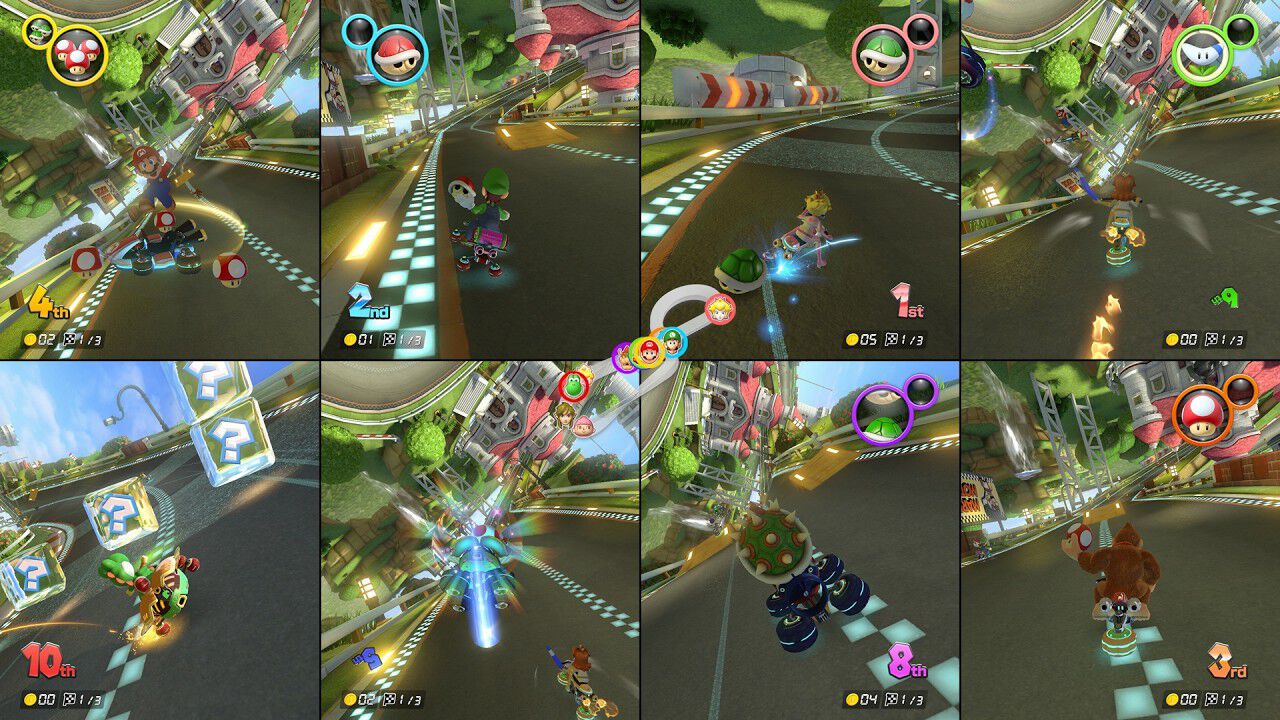
On September 2, 2026, Nintendo quietly pushed a free update — version 4.0.0 — for Mario Kart 8 Deluxe on the Switch 2. The headline feature sounds almost too simple to announce: eight people can now race on a single console, each getting their own slice of an eight-way split screen.
For a game that has sold tens of millions of copies and defined casual multiplayer for over a decade, the fact that this required a free post-launch patch rather than shipping built-in says something. Not everything about Nintendo, but enough to notice.
The Switch 2 hardware makes it possible. The computational headroom and display architecture that separate it from the original Switch allowed Nintendo to finally render eight distinct viewports without collapsing into a puddle of pixels. Whether this was always the intent or a reaction to fan demand is unclear — but the result is immediate and tangible.
Eight-player Mario Kart is not a niche mode. It is the definitive party configuration. Family gatherings, office events, the kind of room where someone inevitably spills punch on the controller — these are the moments that define this game’s cultural footprint. Getting here late does not diminish the release, but it does reframe how we think about Nintendo’s relationship with its back catalog on new hardware.
What Else Comes With It
The update also introduces camera play for two to four players when a USB camera is connected separately — not bundled. Your face appears in the corner of the screen during races. Online lobbies support this as well, meaning players in different physical locations can see each other’s expressions through the chat system while competing. It is a small social layer, but in a game where reading your opponents’ reactions is half the fun, it matters more than the spec sheet suggests.
Several balance adjustments apply across both the original Switch and Switch 2 versions. Racing speed received a modest increase equivalent to one collected coin. Teresa, the ghost character whose transparency makes her nearly invisible on track, no longer loses momentum when driving through dirt sections. And owners of the Course Extra Pass DLC gain access to a 96-race VS mode — a marathon option that was previously absent.
These are quality-of-life improvements, not revolution. They reflect a design philosophy rooted in patience: listen to the community, fix what frustrates them, and do not charge for it.
Why This Signals Something Bigger
Nintendo’s first-party support strategy on the Switch 2 deserves closer reading. For years, the company has treated its libraries as long-tail assets. Games do not die at launch — they accumulate value over time through patches, expansions, and eventually hardware compatibility upgrades. This update fits squarely within that logic.
What makes it noteworthy is the timing. The Switch 2 launched with a slate of first-party titles, many of them ports or enhanced versions of Switch games. But not every title received the same depth of treatment. Some launched as direct rereleases. Others, like Mario Kart 8 Deluxe, received substantive feature additions that actually change how the game functions on the new hardware. The distinction matters.
The eight-way split-screen update is not a marketing gimmick. It is infrastructure work — the kind of thing that requires genuine engineering effort to make eight simultaneous camera feeds, input streams, and physics calculations run smoothly on what is still a handheld-weight device. Nintendo could have shipped it as a paid expansion. It chose not to. That choice carries weight.
Who Wins, Who Loses
Party gamers win immediately. Families with multiple controllers, LAN parties, anyone who has ever tried to squeeze six people around a TV with a Switch and failed — the constraint is gone. The game now supports its most natural use case at full capacity.
Competitive racers gain marginally. Teresa’s dirt immunity and the overall speed bump favor aggressive, risk-taking play styles. The 96-race marathon option rewards commitment, if not skill.
Those who bought the original Switch version in recent years — particularly players who upgraded to Switch 2 and expected parity — win by default. The update applies to both hardware generations, meaning the investment in the game itself continues to appreciate.
Console manufacturers watching from the sidelines lose slightly. Sony and Microsoft have both struggled with local multiplayer on their newer hardware, often prioritizing online infrastructure over robust offline party experiences. Nintendo’s decision to double down on the living-room model — expensive in development terms, difficult to scale, but culturally sticky — reinforces a segment the industry has been quietly neglecting.
What Happens Next
Expect this to become a template. If Mario Kart 8 Deluxe can receive a free eight-player split-screen update on Switch 2, other major franchises likely will not be far behind. The question is not whether Nintendo will repeat this approach, but which titles receive it first and which are left to rely on their existing installations.
The camera play feature may also prove more significant than it appears. As online social gaming continues to evolve — think of the rise of voice chat, streaming overlays, and creator-driven content — the integration of face-camera feedback into competitive multiplayer represents a subtle but important step. It is still early, and the USB camera is an additional purchase, but the infrastructure exists.
Nintendo has always understood that Mario Kart is not merely a racing game. It is a social contract, a way for people who do not consider themselves gamers to sit in the same room and argue about who took the wrong item. This update strengthens that contract. It removes an arbitrary limitation and replaces it with something closer to what the game always promised.
The fact that it arrived for free, five-plus years into the Switch 2 lifecycle, is neither surprising nor disappointing. It is simply Nintendo being Nintendo — patient, pragmatic, and occasionally late to features the rest of the industry took for granted. But late is better than never, and in a franchise this big, never is not an option.