The Mecca Red Line: Why the Houthi Strike Threat Is Changing Everything
Saudi Arabia's accusation that Houthis targeted Mecca risks transforming a regional proxy war into a civilizational crisis — with oil markets, alliance politics, and the theology of modern warfare all on the line.
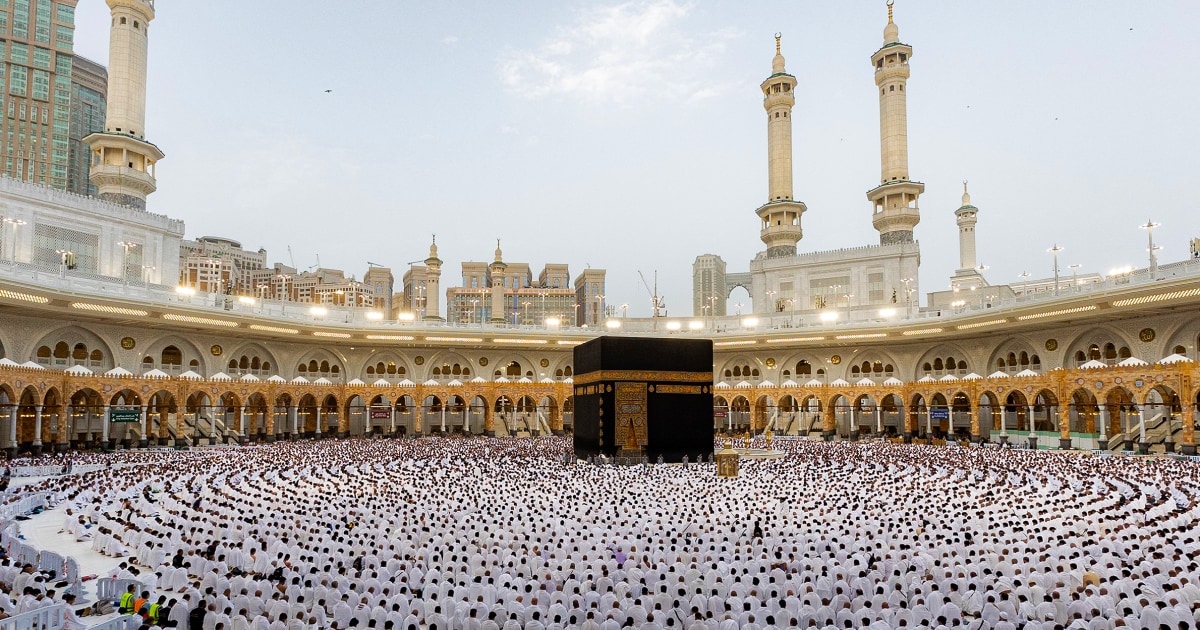
A strike on Mecca would not be a military escalation. It would be a theological one.
Saudi Arabia’s declaration Wednesday that the holy city is a “red line” carries weight far beyond its traditional role as a regional power warning. For the first time in the widening Iran war, the conflict has crossed from contested territory into the spiritual center of the Muslim world. That shift reconfigures everything — the economics of energy, the credibility of American alliances, and the unspoken rules governing how wars are fought in the 21st century.
The Saudi military spokesman, Maj. Gen. Turki al-Malki, said air defenses intercepted a drone south of Mecca just before 7 p.m. local time Tuesday. He warned of “necessary and deterrent measures” without elaborating. The Houthis denied targeting the city, insisting their operations had hit oil facilities and military bases “far removed” from Mecca, and accused Riyadh of spreading fabrications. Both narratives are plausible. What is not plausible is that this moment will pass without consequences.
Who wins, who loses, and who is already moving
Mecca holds roughly 2 million Muslims during the annual pilgrimage season. No weapon system in the Middle East operates with more political gravity than one that threatens that gathering. Saudi Arabia’s leadership has spent a decade trying to project itself as a modernizing kingdom under Crown Prince Mohammed bin Salman, and its legitimacy rests partly on the custodianship of Islam’s two holiest sites. A successful Houthi attack — even an attempted one — would shatter that narrative overnight.
The Houthis, conversely, have something to gain. Adam Baron at New America noted that the demonstration of strategic depth matters as much as the target itself. If Houthi drones can reach Mecca, they can reach Riyadh, Jeddah, and the King Salman Oil Processing Facility in Estcourt. The psychological toll on Saudi Arabia is the real victory — regardless of whether the kingdom chooses to escalate militarily in response.
Pakistan’s Prime Minister Shehbaz Sharif condemned the alleged attack as a “dastardly and heinous act,” but stopped short of the language that would have signaled military commitment. His joint defense agreement with Saudi Arabia exists on paper; it has not yet produced boots on the ground. That restraint is telling.
The oil market is pricing in the next escalation
Brent crude traded around $108 per barrel early Wednesday. The United States benchmark gasoline average had already hit $4.30 per gallon, and nationwide diesel reached a record $6.31. These numbers reflect a market that has absorbed the closure of the Strait of Hormuz — Iran’s most consequential move since the war began in late February — and is now bracing for something worse: the shutdown of the Bab el Mandeb strait, the second-most critical chokepoint for global energy transit.
The Houthis control the Red Sea coast of Yemen and have repeatedly demonstrated the ability to disrupt shipping through the Bab el Mandeb. If they extend that capability to the overland pipeline that runs from the Red Sea port of Yanbu to the Eastern Province, Saudi Arabia loses its primary export route entirely. The kingdom depends on the Strait of Hormuz for roughly 70 percent of its oil exports. With Iran effectively blocking that passage, the Yanbu pipeline is not a backup — it is the only alternative. Shut it down, and Saudi production faces a near-total blockade.
This is not a hypothetical scenario. It is the logical endpoint of the current trajectory, and commodity markets are already discounting it.
The Trump administration is already absent
President Donald Trump told reporters in Dublin over the weekend that the Houthis had contacted his administration and said they “don’t want to fight with us.” He spoke with MBS and said everything would “work out fine and dandy.” The State Department upgraded its travel advisory to Level 3 for Saudi Arabia on Wednesday, a bureaucratic signal that the United States is stepping back from direct involvement.
The United States bombed the Houthis extensively last year. There is no appetite for a second campaign. Trump’s language — casual, almost dismissive — reveals a strategic calculation: the Gulf is not the priority. The Iran war is being fought by proxies, and the United States will not expand that fight into another theater unless directly attacked on American soil.
That calculus leaves Saudi Arabia exposed. Riyadh has been the cornerstone of U.S. security architecture in the Gulf for decades. If the United States will not defend Mecca, the kingdom must decide whether to absorb the blow or respond unilaterally — and either choice carries enormous risk.
The theology of modern warfare has changed
Perhaps the least discussed dimension of this crisis is what happens when a holy city becomes a battlefield. Islam has a long tradition of rules governing warfare, including the protection of non-combatants and sacred places. The targeting — or attempted targeting — of Mecca forces every Muslim authority from Jakarta to Istanbul to confront a question they have never faced in the modern era: How do you wage war when one side claims to be fighting for God and the other claims to be defending Him?
The Houthis frame their struggle in explicitly religious terms, positioning themselves as defenders of Yemen against Saudi and American aggression. Saudi Arabia positions itself as the guardian of Islam’s holiest sites. Neither side can afford to back down without appearing weak on faith. That dynamic makes de-escalation far harder than the numbers alone would suggest.
The United Nations warned Tuesday that at least 125,000 people have been displaced since the start of September in Yemen, already the poorest country in the Arab world. An open war between Saudi Arabia and the Houthis would multiply that displacement exponentially and push the crisis into a region where no humanitarian infrastructure exists to handle it.
What happens next
The immediate future will be defined by what Saudi Arabia does — or does not do — in the next 72 hours. A measured response preserves the possibility of containment. A disproportionate one opens a second front in the Iran war that Washington has explicitly tried to avoid.
Oil prices will climb regardless. The question is whether they spike further if the Bab el Mandeb becomes the next targeted chokepoint. European and Asian economies, already strained by the Hormuz closure, will feel the pain acutely.
And the Houthis will have proved that their drone force can penetrate deep into Saudi territory — a capability that changes the strategic balance even if the Mecca claim turns out to be false. The Red Line has been drawn. The question is whether anyone crosses it intentionally, or whether the mere existence of the line changes how every actor in the region calculates their next move.