Melania Trump's Ceasefire Play Exposes Informal US Channels
A local ceasefire in southern Ukraine brokered through Melania Trump's unofficial channel raises questions about America's post-2024 foreign policy architecture — and what happens when informal backchannels overshadow formal statecraft.
The First Lady’s Backchannel
A ceasefire between Ukraine and Russia took effect at 3 a.m. Tuesday — not through the State Department, not through the National Security Council, but through an office that doesn’t officially exist in any foreign policy manual. Melania Trump brokered a localized humanitarian pause to allow aid into Oleshky, a Russian-occupied town in Ukraine’s Kherson region where up to 2,000 civilians remain stranded with dwindling food and medicine.
The mechanics were telling. According to her office, Trump led talks with civilian negotiators from both sides after meeting with U.N. officials who briefed her on Oleshky’s situation. Russian and Ukrainian militaries and negotiators confirmed the ceasefire in separate statements issued within hours of each other. The pause is scheduled through Saturday, though sources familiar with the discussions say there has been informal talk of extending it through early next week if the aid convoy proceeds without incident. It comes ahead of a new round of U.S.-brokered talks between Moscow and Kyiv expected next month in Istanbul.
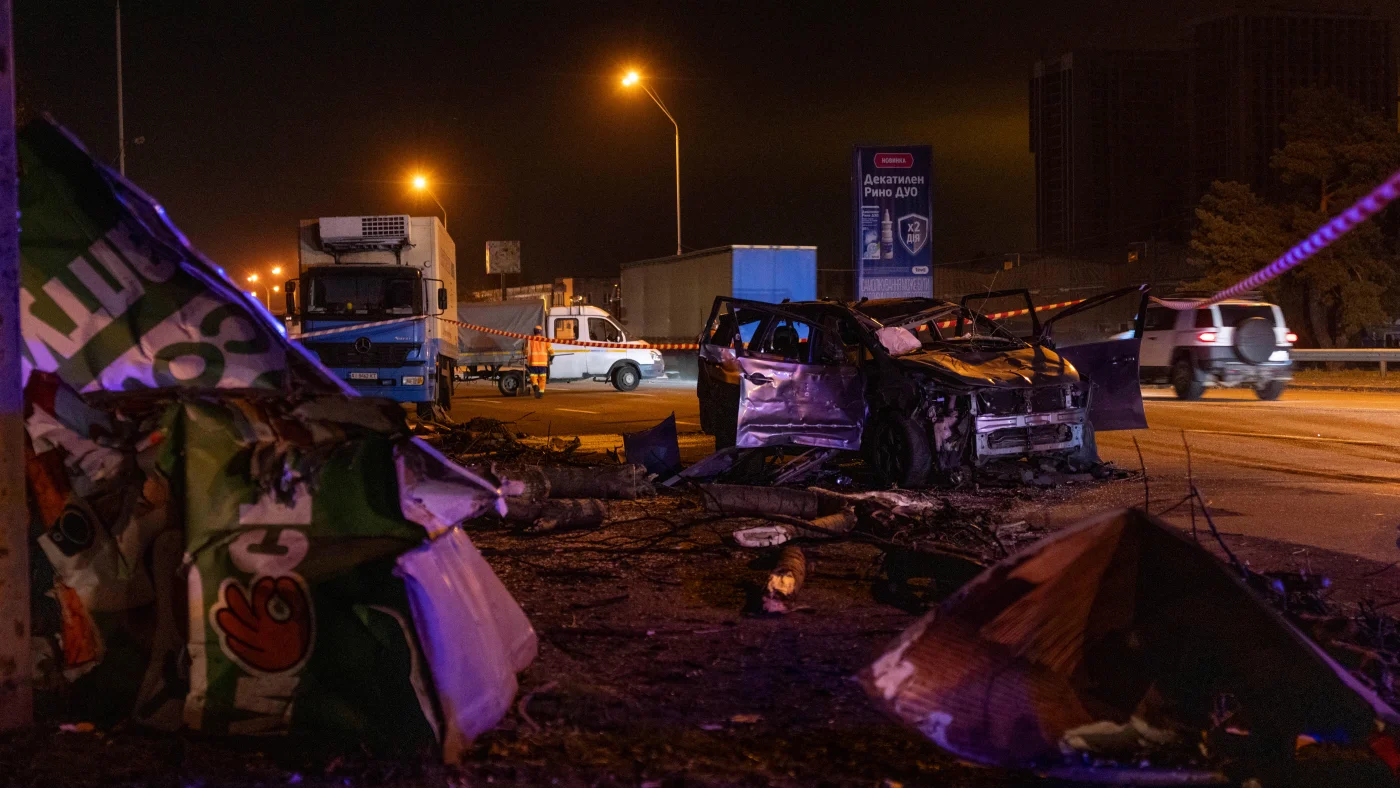
It also happened while missiles struck Kyiv minutes after the ceasefire began, according to air raid alerts posted on official municipal channels. At least three drones were intercepted over the capital’s residential districts in the Shevchenko district, and secondary explosions were reported near a thermal power facility on the city’s eastern edge. Kyiv’s military administration confirmed no casualties but noted structural damage to two apartment buildings.
The juxtaposition — a humanitarian pause announced while urban combat continued in the capital — underscored the fragile geometry of the current arrangement. This was never meant to be a broad truce. It was a narrow corridor carved around one town, one convoy, one desperate calculation that something is better than nothing.
What Oleshky Reveals
Oleshky sits on the west bank of the Dnipro River, about 550 kilometers southeast of Kyiv. Russian forces captured it on the first day of their full-scale invasion in February 2022. In June 2023, floodwaters inundated the town after a dam collapse compounded the destruction of a place already ground down by four and a half years of war. The population shrank from roughly 8,000 before the invasion to an estimated 2,000 today — mostly elderly residents and people who lack the resources to evacuate through active combat zones.
The U.N. estimates those 2,000 people remain trapped, unable to leave because of dense minefields along evacuation routes and persistent drone surveillance that has made daytime movement suicidal. The aid mission plans to deliver doctors, medicines, food and water before opening evacuation corridors for the most vulnerable. The convoy is expected to travel from Russian-held territory on the east bank, crossing through a narrow gap in theminefield perimeter that both sides have informally agreed to keep clear during the pause window.
The ceasefire held long enough for both sides to confirm it — which is more than can be said for most previous attempts. Deep mistrust between Kyiv and Moscow has repeatedly torpedoed humanitarian pauses before they start. A similar proposal for Oleshky was floated in March but collapsed after Ukraine demanded written Russian commitments that Moscow refused to provide. The fact that this one went through at all, however narrow its scope, suggests something shifting in how the two sides communicate — or perhaps more accurately, in how they’ve found ways to communicate around each other’s institutional objections.
Local residents reached by telephone described the atmosphere in Oleshky as one of exhausted caution. “We heard the trucks arriving,” one woman said on condition of anonymity, speaking from her basement. “We didn’t know if it was real. Nothing is real here anymore. But the food is real.”
The Broader Signal
This is not the first instance of informal backchannels operating alongside or around formal U.S. diplomacy during the current administration. But the optics matter in ways that extend far beyond this particular case. A ceasefire affecting real Ukrainian territory, agreed through the office of the first lady rather than the Secretary of State, sends a message about where decisions actually live in Washington’s foreign policy architecture.
NATO allies watching closely will note the absence of any formal State Department press briefing or Pentagon coordination statement. The U.N. served as a briefingsource — providing situational awareness but no mediation role. The first lady’s office became the negotiation channel. That structure repeats a pattern visible throughout American foreign policy over the past two years: deal-making is increasingly personalized, informal, and detached from institutional guardrails. Embassy cables and interagency processes have been supplemented, and sometimes supplanted, by communications that travel through personal relationships rather than official protocols.
European diplomats have privately expressed concern about what they term “channel opacity” — the difficulty of tracking where commitments are made and who authorizes them when multiple parallel tracks operate simultaneously. One senior EU official described the dynamic as “a foreign policy by Wi-Fi: fast, convenient, and impossible to secure.”
The pattern raises practical questions about succession and continuity. Informal channels depend on personal relationships that are fragile by definition. If the dynamics of the current administration shift, or if key intermediaries lose access, the threads that hold these arrangements together can unravel without warning. Formal institutions, for all their bureaucratic friction, provide a degree of durability that personal connections cannot match.
Who Wins, Who Loses
On paper, the civilians in Oleshky win. Aid gets through. Evacuation corridors may follow. The ceasefire, even if fragile and temporary, creates a window that didn’t exist before. For 2,000 people who have spent years surviving on minimal rations and untreated medical conditions, those next few days could be the difference between deterioration and reprieve.
But the trade-off is significant and multi-layered. Every informal channel that bypasses formal institutions erodes the transparency and accountability that make diplomacy legible to allies and adversaries alike. When the terms of a ceasefire are negotiated outside State Department channels, European partners lose visibility. They cannot prepare for what they cannot monitor. When humanitarian pauses depend on personal relationships rather than institutional frameworks, they become harder to replicate and easier to unravel. The Oleshky pause is an anomaly, not a model — and treating it as either would be a mistake.
Russia gains the most in relative terms. The ceasefire lets Moscow consolidate gains in Oleshky without international scrutiny of its military posture. Russian forces have spent months fortifying positions in the town, embedding defensive infrastructure into residential buildings and laying minefields along every approach. A humanitarian pause that halts Ukrainian counter-reconnaissance efforts gives those positions time to harden further. It also reinforces the narrative — useful to the Kremlin — that the United States operates through opaque personal channels rather than structured diplomacy, a framing that makes it easier for Moscow to question the durability of any agreement and to portray Western commitments as contingent on the whims of individual actors rather than the steady hand of institutional governance.
Kyiv faces the sharpest dilemma. Zelenskyy called the missile strikes on Kyiv and Kharkiv evidence that Russia demonstrates nothing but a desire to kill. His government agreed to a ceasefire that Russia violated within minutes of its start — yet refusing the aid mission would have meant watching 2,000 civilians suffer without leverage, and appearing to prioritize optics over human lives in a conflict where every decision is parsed for moral consistency. Ukrainian officials defended the agreement publicly while acknowledging privately that the violation was predictable. “We know how Moscow plays,” one senior advisor said. “But we also know what happens to people who wait too long.”
Second-Order Effects
The implications of this arrangement extend beyond the immediate humanitarian question. Intelligence communities across NATO are reassessing how they track and verify agreements that emerge from informal channels. Where formal diplomacy produces paper trails — memoranda, signed protocols, publicly stated positions — backchannel arrangements generate only hearsay and speculation. This makes verification harder and commitment tracking nearly impossible.
The defense industry is also taking note. Companies that supply equipment to Ukraine have begun factoring the possibility of negotiated freezes into their planning, even though no such outcome is imminent. Contract cycles are being adjusted, inventory projections revised, and force-posture estimates recalibrated to account for a scenario in which the war transitions from active combat to a managed stalemate — the kind of outcome that informal diplomacy is best positioned to produce.
Domestically, the arrangement has reignited debates about the appropriate role of non-elected officials in foreign policy. Legal scholars have pointed out that while the first lady’s office has no statutory authority in international negotiations, its growing prominence reflects a broader trend of executive branch centralization that predates the current administration. The question is whether informal channels complement formal ones or quietly replace them.
There are also political complications. Democratic lawmakers have expressed concern about being sidelined, while Republican leaders have been split between pride at the humanitarian outcome and unease about appearing to credit a process that bypasses congressional oversight. The tension reflects a larger anxiety about democratic accountability in an era when the most consequential diplomatic moves are made outside public view.
What Comes Next
The aid mission into Oleshky is meant to precede broader U.S.-brokered talks expected next month in Istanbul. If those negotiations follow the same informal template, expect the same mix of small wins and structural ambiguity. Humanitarian outcomes materialize quickly. Strategic clarity does not. The risk is that a series of narrow, informal agreements accumulates into something that looks like a framework without anyone having agreed to call it one.
The ceasefire’s duration — through Saturday, possibly longer — will test whether the current arrangement can survive beyond its immediate purpose. Russia has shown no sustained interest in holding pauses. In the past eighteen months, Moscow has violated or effectively nullified at least seven humanitarian truces, often using the interruptions to reposition forces or resupply forward positions. Ukraine has learned to accept imperfect truces because the alternative is often nothing. The United States has found that informal channels move faster than institutions, but speed without infrastructure is a fragile advantage.
The Istanbul talks, if they occur, will face the same structural question: who speaks for whom? If the format mirrors the Oleshky process, expectations should be modest. Limited humanitarian concessions are possible. Broader political agreements are not. The informal architecture that made the Oleshky pause work is poorly suited to the kind of comprehensive settlement that would require verified timelines, mutual security guarantees, and enforcement mechanisms — none of which can be constructed through backchannel conversations alone.
What Oleshky reveals is less about one first lady’s diplomatic role than about the architecture of American power in its current configuration. Deals still happen. They just happen differently now — closer to the center of personal authority, further from the machinery of state. The trade is speed for sustainability, flexibility for accountability. Whether that exchange serves U.S. interests in the long run remains an open question.
The civilians in Oleshky will get their medicine this week. The rest of the war will keep moving without them — faster than the formal institutions can track, slower than the informal channels can resolve, caught in a geometry of pauses and violations that defines a conflict where neither side can win and both sides refuse to stop.
What happens when the first lady’s backchannel runs out of road is a question the current architecture is not built to answer.