Memory Inflation Is Choking AI and the PC Market Simultaneously
DDR4 prices are surging as manufacturers shift capacity to HBM and DDR5 for AI datacenters. The resulting shortage is forcing a prematureDDR5 transition across the PC market and tightening margins for global electronics makers.
The Unseen Bottleneck in the AI Boom
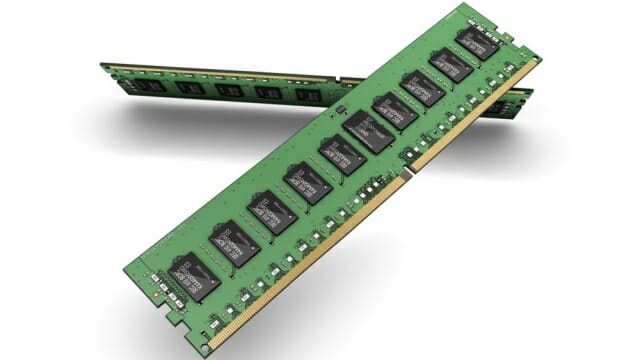
The narrative around AI infrastructure focuses on GPUs, cooling systems, and the race for high-bandwidth memory. But a quieter crisis is unfolding in a segment most people don’t think about: standard DDR4 DRAM. Prices for this aging memory standard are expected to climb up to 50 percent in the third quarter alone, with another 10 percent hike likely in the fourth, according to Morgan Stanley. The cause is not weak demand. It is the exact opposite.
Major memory manufacturers are redirecting fabrication capacity toward HBM and DDR5 to serve AI datacenters. DDR4, which generates lower margins, is being squeezed out. The result is a supply crunch that threatens to slow AI rollout by driving up server costs while simultaneously disrupting the consumer PC market and compressing margins for electronics manufacturers worldwide.
Why DDR4 Matters More Than You Think
DDR4 is a last-generation standard. By any measure of performance, it is obsolete. Yet it remains the backbone of enterprise desktops, kiosks, industrial computers, and budget consumer PCs where raw speed matters less than total cost of ownership. When DDR4 supply contracts, these segments feel the pain first and hardest. They lack the pricing power to absorb sudden cost increases, and they lack the alternatives that premium builders enjoy.
In South Korea, where local price-tracking data from Danawa provides a clear window into market dynamics, the divergence is stark. A 16GB DDR5-5600 module has climbed into the 350,000-won range. A comparable DDR4-3200 module sits around 200,000 won. The gap is still meaningful, but it is shrinking fast. And that shrinking gap is producing an unintended consequence: a reverse migration.
The Reverse Migration That Changes Everything
Consumers and small businesses who had been waiting for DDR5 prices to fall off their peaks are now reconsidering. The logic is straightforward. If DDR5 remains prohibitively expensive while DDR4 prices rise but stay below DDR5, the older platform becomes rational again. Danawa’s processor sales data for the week of August 17 to 23 reveals the shift. AMD’s Socket AM5, which supports DDR5 only, captured 47 percent of desktop CPU sales. But Intel’s LGA 1700 platform, which supports both DDR4 and DDR5, took 19 percent. AMD’s older Socket AM4, DDR4-only, claimed another 17 percent. Together, DDR4-compatible platforms held a significant share of the market.
This is not a nostalgic return. It is a cost-driven recalibration. And it complicates the lifecycle planning of every PC manufacturer on Earth.
The Capacity Squeeze at the Source
The root cause lies in the economics of memory production. HBM requires advanced process nodes and massive investment in packaging and testing. DDR5 follows a similar trajectory. Both serve the AI datacenter, where margins are attractive and demand is insatiable. DDR4 does not. Memory manufacturers are making a rational choice to prioritize higher-return products. But rational choices at the fab level create irrational outcomes at the market level.
Micron announced in May that it had begun producing LPDDR4 and DDR4 at its Fab 6 facility in Manassas, Virginia, using a 1-alpha nanometer process. On the surface, this looks like a supply expansion. Trendforce, a semiconductor research firm, pushed back. The output at Fab 6 is largely a relocation of existing capacity from Micron’s Taiwan operations, not new investment. Global DDR4 supply is not meaningfully increasing. Meanwhile, DDR4’s share of Micron’s total DRAM production has dropped to approximately 7 percent this year and is expected to decline further.
The company is not building more DDR4 factories. It is rearranging what it already has.
What This Means for AI Server Costs
Here is where the story connects back to AI. Every AI server requires both HBM for its GPUs and standard DRAM for system memory. The two compete for the same fabrication resources. As memory makers concentrate on HBM and DDR5, the availability and pricing of all other DRAM categories tighten. This is not theoretical. It is happening now.
OEMs that build AI servers cannot simply swap DDR4 for DDR5 without redesigning motherboards, updating firmware, and requalifying systems. The transition takes time and capital. In the interim, they face rising costs for a component most people never notice. That cost pressure will either compress margins or flow through to customers. Either outcome slows the pace of AI deployment, particularly for mid-tier cloud providers and enterprise buyers who are not Google or Microsoft.
The PC Industry’s Answer: Buy Now, Switch Later
One overseas PC manufacturer’s procurement and supply chain lead, speaking on condition of anonymity, offered a candid assessment. DDR4 and DDR5 processors are rising in price at roughly the same rate. The economic rationale for clinging to DDR4 is disappearing. The company plans to transition to DDR5-supported processors starting next year and has already secured sufficient DDR4 inventory to weather the current price spike without major disruption.
That strategy works for large manufacturers with deep pockets and long supply contracts. It does not work for smaller assemblers, regional brands, or companies that build to order. For them, the price increase is immediate and unavoidable.
The Platform Pivot Is Accelerating
Intel has acknowledged sustained demand for DDR4-capable LGA 1700 processors and committed to maintaining supply for the foreseeable future. AMD continues to produce Ryzen 5000-series processors for Socket AM4. Both companies are responding to real market pressure. But the writing is on the wall. As DDR4 and DDR5 prices converge, the performance and longevity advantages of DDR5 platforms become impossible to ignore. The transition that analysts expected to unfold gradually over two or three years may accelerate significantly.
AMD’s Socket AM4 and Intel’s LGA 1700 were always transitional platforms. They served the market while DDR5 infrastructure matured. Now they are becoming lifelines for buyers who cannot afford the jump. That lifeline is tightening.
Who Wins and Who Loses
The winners in this environment are the memory manufacturers. HBM and DDR5 command premium pricing. Companies like Samsung, SK Hynix, and Micron that can scale these products will see their margins expand. The AI infrastructure buildout continues to pour money into their laps.
The losers are everyone else. Enterprise buyers of budget PCs face higher costs for equipment that should be declining in price. AI server builders absorb margin compression or pass costs downstream. Consumer PC builders who bet on DDR4 are caught off guard. Emerging-market manufacturers that rely on DDR4 platforms for cost-sensitive products lose their competitive edge.
The broader implication is a reminder that the AI boom is not a standalone phenomenon. It is reshaping the entire semiconductor supply chain, and the ripples reach far beyond datacenters. When memory manufacturers prioritize AI-grade chips, they are making choices that affect the price of a $300 office computer just as much as a $3,000 GPU server. The bottleneck is real. The inflation is spreading. And the PC market’s DDR5 transition, already underway, is now being pulled forward by forces no one fully anticipated.