Meta’s four H strategy could reshape social media architecture
The Hook, Hold, Harvest, Hide allegations aren't just legal theatrics — they describe the fundamental architecture of the attention economy. A Meta loss forces structural changes no platform has ever engineered voluntarily.
The architecture of addiction, laid bare in court
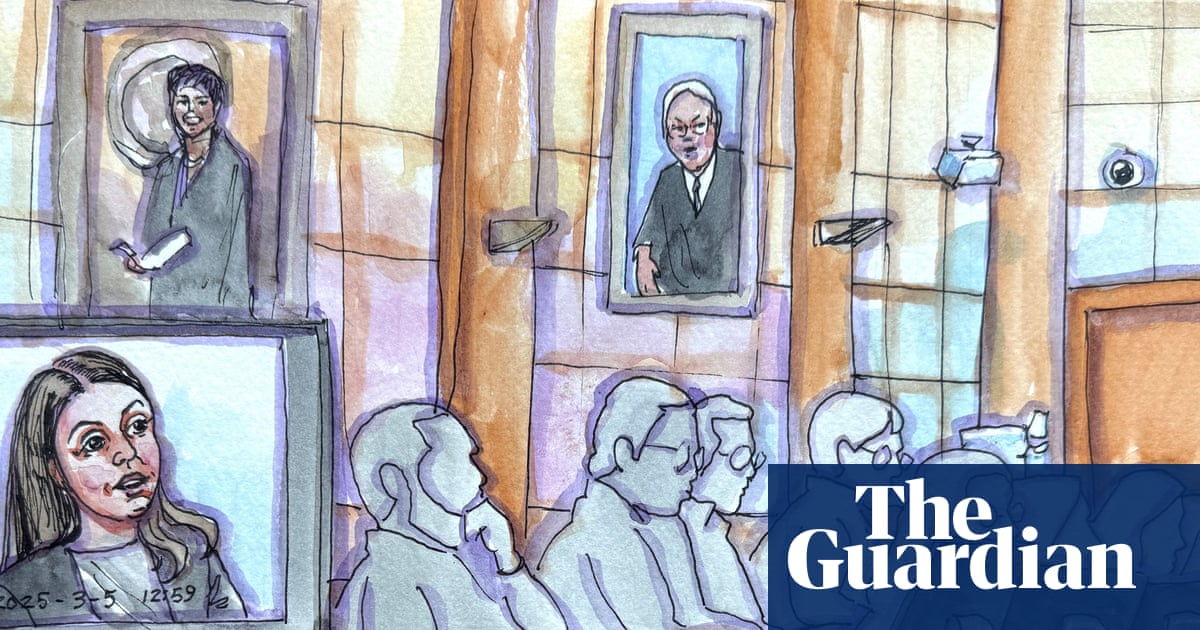
There is a world of difference between regulators discovering that a company does something harmful and discovering that a company designed it that way on purpose. The trial in Oakland, California, is doing the latter with a precision that most people outside Silicon Valley have never seen from a social media case.
Megan O’Neill, the California prosecutor opening the case this week, distilled Meta’s entire business model into four words: hook, hold, harvest, hide. It is a clean sentence. It is also a devastating one, because each verb describes a deliberate design choice rather than an accidental byproduct. Meta hooks users with variable rewards — infinite scrolls, pull-to-refresh animations, unpredictable notification timing. It holds them through network effects and content algorithms calibrated to surface outrage and anxiety, which keep engagement high. It harvests behavioral data at scale, turning attention into ad revenue. And it hides the mechanisms, making the inner workings opaque to regulators, researchers, and users alike.
The states’ argument is not that Meta happens to exploit attention. The argument is that it engineered the exploitation systematically.
What the testimony reveals about leadership awareness
Perhaps the most significant moment came from Arturo Béjar, Meta’s former safety engineer, who testified that he emailed CEO Mark Zuckerberg directly in 2021 with survey results showing that 51 percent of teen Instagram users experienced harmful content in a single week, with only 0.02 percent of that content actually removed. Béjar said he sent the data because he believed Zuckerberg would act on it. He did not get a reply.
This is legally consequential. In an industry where companies routinely argue they are surprised by the harm their products cause, evidence that leadership was shown the problem repeatedly and chose inaction shifts the entire moral and legal landscape. If the jury finds that Meta knew the design choices were causing measurable harm to children and continued them anyway, the company faces damages as high as $200 billion — equivalent to its entire 2025 revenue.
Zuckerberg and Instagram CEO Adam Mosseri are expected to testify. Their credibility under cross-examination will determine whether the states can prove knowledge and intent or whether Meta can maintain its defensive position that it built tools to address harms even if they fell short.
The structural consequences a Meta loss would trigger
Here is what the four H framework means beyond the courtroom. If Meta is found liable and ordered to redesign its products, it would not be a fine that can be absorbed as a cost of doing business. It would be a mandated restructuring of how engagement systems are built.
No major platform has ever voluntarily disabled infinite scroll, ended algorithmic amplification of polarizing content, or removed behavioral data collection on minors. Those are competitive advantages in the attention economy. Taking them away represents a fundamental rewrite of the user experience.
Consider what product changes a liability ruling could force. Endless scrolling could be replaced with natural stopping points — like TikTok now does with its auto-pause feature. Algorithmic feeds could be replaced with chronological or curated alternatives. Dark patterns that minimize reporting tools could be eliminated. Data collection targeting children could be banned entirely, not just limited.
These are not minor UX adjustments. They strike at the revenue model. The longer a user stays, the more data is collected, the more ads are served. Disrupting any of those links requires accepting lower engagement and lower ad revenue per user.
Why this trial matters for every platform
Meta is not the only company playing by these rules. But it is the largest, and it set the pattern that others followed. When TikTok, YouTube, Snapchat, and X copied Meta’s engagement mechanisms — some of them explicitly, some through competitive pressure — they inherited the architecture. If the architecture is ruled illegal or unsafe, the precedent applies across the industry.
Meta has already lost two separate trials this year. New Mexico awarded nearly $1 billion in connection with child sexual exploitation on its platforms. Another case awarded over $4 million to a young woman whose addiction was traced to Meta’s product design. Those verdicts suggest that juries are increasingly sympathetic to plaintiffs who frame the issue as intentional design rather than accidental harm.
The advisory jury in Oakland will recommend, not decide. Judge Yvonne Gonzalez Rogers holds the final authority on verdict and damages. But the recommendations will shape the legal and political environment going forward. A strong recommendation for Meta to change its product design would give other states and federal regulators additional leverage.
The human cost behind the architecture
The plaintiffs’ strategy has been deliberate. Lennon Torres of the Heat Initiative has held banners outside the courthouse bearing the names of young people who died as a result of social media use. These are not abstract policy arguments. They are lives disrupted or lost. The psychology testimony from Jean Twenge and others will connect product design choices to documented mental health outcomes.
This is the critical bridge between legal theory and public understanding. Regulators can argue about data collection practices and terms of service. But when a jury hears from former employees about internal awareness and from psychologists about developmental harm, the four H framework stops sounding like a prosecutorial slogan and starts sounding like an indictment of corporate priorities.
What comes next
The trial will run six to eight weeks. If Meta loses, the remedies could extend far beyond this case. The states are not just seeking damages. They are seeking structural changes — product redesign mandates that could outlast any single administration or regulatory cycle.
A Meta loss would mark the first time a U.S. court ordered a social media company to fundamentally restructure its engagement mechanics for a class of users. That precedent would reverberate through every platform, every market, and every design team that has assumed the current architecture was unavoidable.
The four H’s were never meant to be a legal strategy. They are a business strategy. The question now is whether courts will treat them as evidence of liability rather than proof of competence.
Meta denies all allegations. Its spokesperson called the payout demands outlandish. The company’s lead attorney acknowledged that people can struggle with social media but argued Meta has developed tools to address those struggles. Whether those tools were sufficient — and whether the company knew they were insufficient — is what the next six weeks will determine.