Meta's 100g VR Glasses Are the Comfort Breakthrough Apple Can't Match
Meta announced VR glasses weighing just 100 grams—five times lighter than Quest 3—at Meta Connect 2026. The move could finally crack the comfort barrier that's stalled mass adoption, and it draws a sharp line under Apple's Vision Pro strategy.
The Number That Matters
One hundred grams.
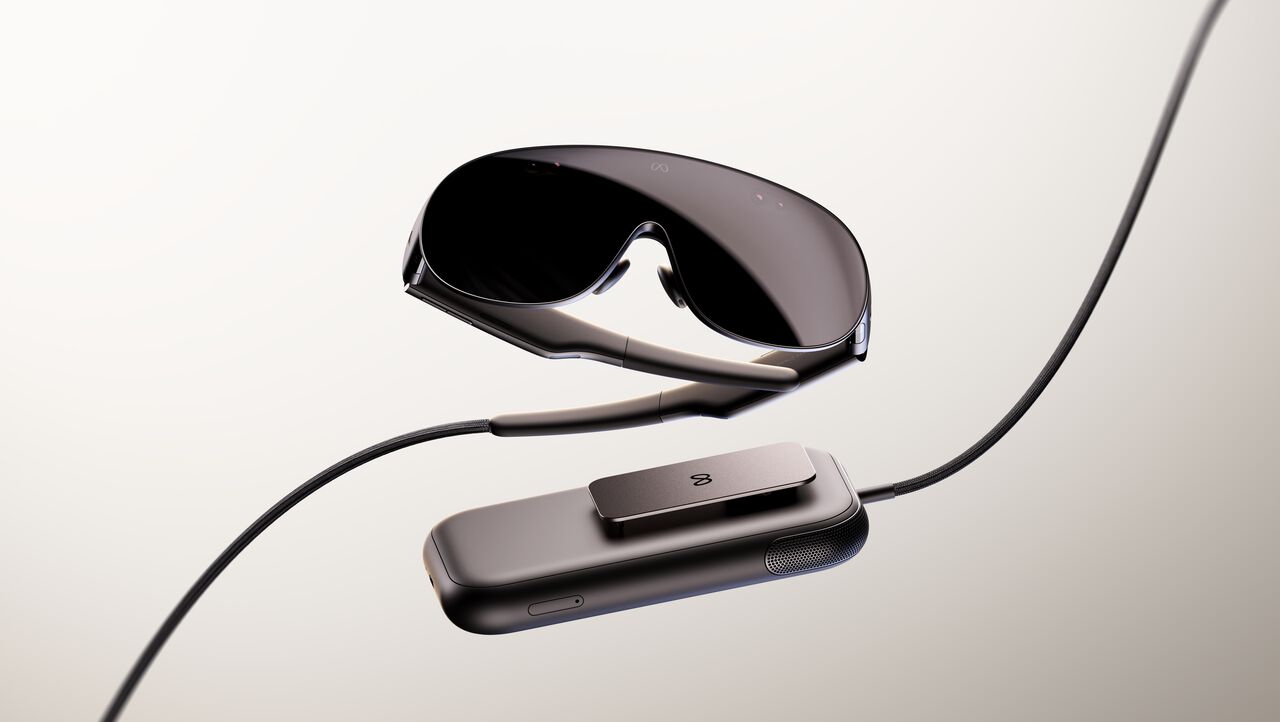
That is the weight of Meta’s newly announced VR Glasses, roughly one-fifth the heft of a Quest 3 and closer to a pair of thick sunglasses than anything you’d call a headset. The announcement came during Meta Connect 2026 on September 23rd in the United States, alongside details of the company’s first Ray-Ban Meta Audio frames, a pocket-sized AI accessory called Muse Charm, and new game content including Ace Attorney 5 VR.
But the 100-gram figure is the only one that will show up in any history of this product cycle. It is small in absolute terms and enormous in implication.
Why Comfort Has Been the Real Problem
For a decade, the bottleneck for VR adoption has not been resolution or processing power. It has been the face.
You can buy a 4K display for your eyes and a console-grade chip in your pocket. What you cannot easily buy is a device that does not feel like a weight pressing against your skull, digging into your nose, and making your hair a mess within fifteen minutes. Every major VR setback over the last five years traces back to this: people are polite about it in reviews, but they stop wearing headsets when the discomfort becomes genuine.
Apple understood this math and chose the opposite path. The Vision Pro weighs 600 grams or more depending on how you count the battery harness, and it charges $3,500. The company leaned into premium materials, high-resolution micro-OLED screens, and a promise of spatial computing that never quite delivered the usage patterns Apple sold. People bought them. People barely used them. The weight was always there, sitting on every face that tried to work in a Vision Pro for more than an hour.
Meta is now saying something different. The company designed a two-part system: the optical and sensor array sits on the face, while the battery and processor live in a pack that clips to a belt, slips into a pocket, or hangs in a bag. That separates the mass from the contact point. The result is a device that could be worn for hours without the pressure that defines almost every competitor.
What the Hardware Actually Says
The glasses carry a micro-OLED panel Meta calls a “5K Infinite Display.” Resolution is 2,412 by 2,288 pixels per eye, with a pixel density of 37 pixels per degree of visual field. That is the highest pixel density Meta has put in any VR device, and it is close to what the industry calls the retina threshold for immersive displays.
Input is handled through eye tracking and hand gestures, no controllers required. The glasses can function as a virtual multi-panel display, extending any connected device’s screen at whatever size the user chooses. A hologram feature was also announced; users will be able to capture themselves with a smartphone and project a life-sized representation for video calls. That detail was brief in the announcement, but it signals where Meta is aiming: not just gaming and media consumption, but persistent presence.
The price is $1,299.99 in the United States. That is not entry-level, but it is a third of the Vision Pro and it lands in a range where a serious technology buyer might actually consider the trade-offs. Launch is scheduled for spring 2027. Japan pricing has not been announced.
The Ray-Ban Play
The audio glasses announced alongside the VR system deserve attention for a different reason. The Ray-Ban Meta Audio frames integrate open-ear Bluetooth speakers and an AI assistant into what Meta calls its slimmest and lightest frame yet. Battery life is rated at up to twelve hours on a single charge. These are not VR devices. They are everyday eyewear with compute layered underneath, and they matter because they describe the trajectory Meta is already walking.
The company is expanding its AI glasses lineup to more than one hundred models by the end of 2026, including a third-generation Ray-Ban Meta with camera capability. The strategy here is not to win a single product category but to own the interface between your face and the digital world across as many form factors as possible.
Japan will see the Ray-Ban Meta Audio launch in 2027, with more details promised in the second half of this year.
What This Means for the Market
The competitive picture just changed in a way that favors Meta and complicates Apple.
Apple’s Vision Pro has spent two years trying to redefine a market around high weight, high price, and high-resolution screens. That approach attracted early adopters and critics, but it did not attract volume. The product sits in a segment that is too expensive for most buyers and too uncomfortable for many to use regularly. Apple’s next move is widely expected to be a lighter, cheaper headset, but the company has not confirmed any timeline or specifications.
Qualcomm faces a different problem. The chipmaker powers both Meta’s current Quest devices and Apple’s Vision Pro. Its revenue depends on volume, and volume depends on whether Meta can ship a comfortable headset at scale. If the 100-gram design works—which is still an open question, not a guarantee—Qualcomm’s position improves. If the two-part form factor introduces latency or connection issues, the upside evaporates quickly.
The broader implication is about where the boundary between AR and VR has been sitting for years. Meta’s announcement treats that boundary as irrelevant. The same face-worn form factor can host a fully immersive headset in the morning and lightweight AI audio glasses in the afternoon. That is a design philosophy, not just a product line.
Who Wins, Who Loses
Meta wins if the glasses deliver on comfort without sacrificing enough performance to make the experience unusable. The 37 PPD density is strong. The hand-tracking and eye-tracking inputs are mature. The real test will be whether people wear this for more than an hour, which is the metric that matters far more than any spec sheet.
Apple loses ground on the comfort argument regardless of what the Vision Pro’s resolution numbers say. A $1,300 headset at 100 grams will look expensive to some buyers, but it will look ridiculous to anyone who has carried a Vision Pro on a long flight.
Consumer hardware manufacturers that bet on heavy headsets lose. Companies that bet on lightweight, two-part designs win. The market is now rewarding the second group.
What Happens Next
The spring 2027 launch date gives Meta roughly eight months to refine the hardware, build developer content, and shape the conversation before the device ships. The Ace Attorney 5 VR announcement signals that Meta is investing in exclusive content to anchor the launch. The hologram feature suggests the company wants this to be more than a gaming device.
The one open question is execution. A 100-gram spec on paper does not guarantee a comfortable product in hand. Strap design, balance, heat dissipation, and battery life in real-world use are the variables that will determine whether this is a breakthrough or another promising prototype that never reaches critical mass.
For now, the announcement draws a clear line: Meta is betting that the next billion users will not carry a brick on their face. Apple has not answered that bet yet.
The weight of that decision will be measured in grams.