Meta’s Camera-Free VR Glasses Are a Pivot Western Outlets Haven’t Noticed Yet
Meta's new VR HMD strips away cameras and controllers, betting that AR glasses don't need to see the world — they just need to disappear into it. The Japan tech press is already reading deeper into the design philosophy than any Western wire story has.
The pivot no one saw coming
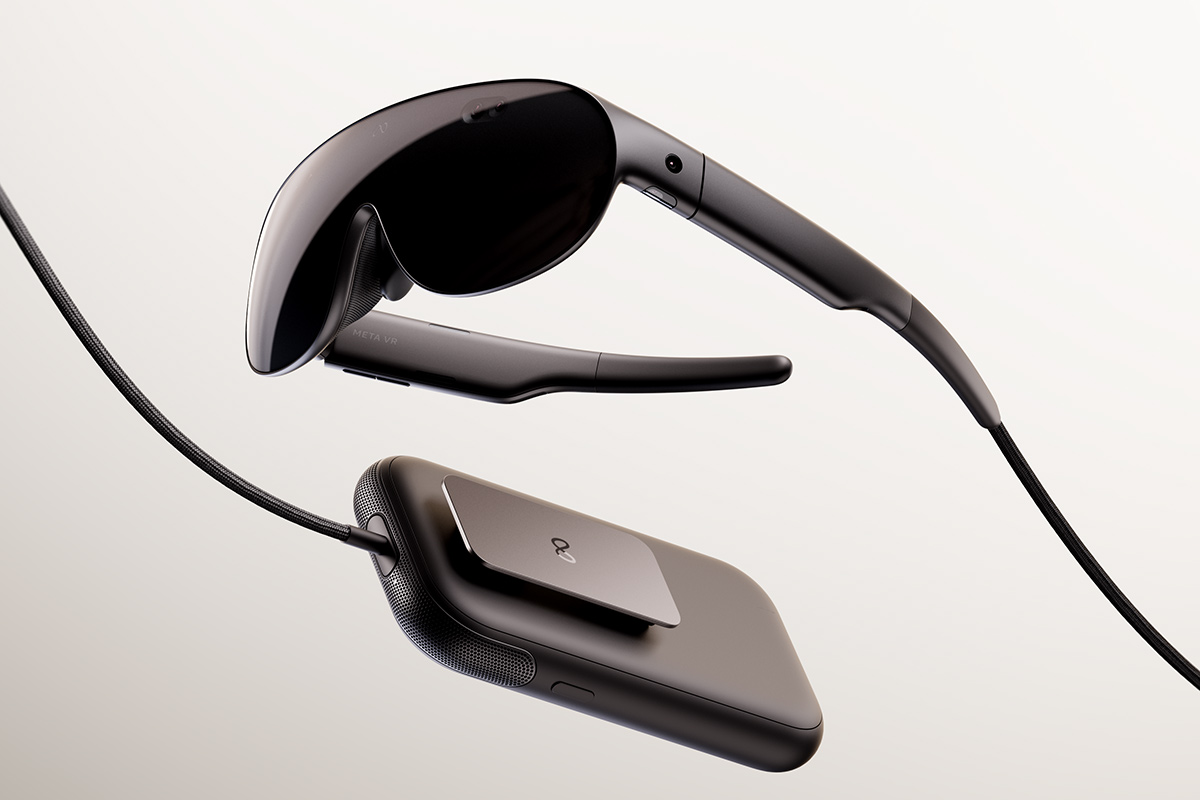
Meta just announced its most honest product in years. The Meta VR Glasses — arriving spring 2027 at $1,300 — are deliberately, aggressively camera-free in a way that forces you to reconsider everything Meta has been claiming about augmented reality.
Western outlets ran with the standard beat: light HMD, detachable computer pack, 5K micro-OLED display, 37 PPD resolution, no controllers needed. Useful specs. Wrong story.
The real move here isn’t lighter hardware. It’s that Meta has finally stopped pretending AR needs eyes on the world.
Why “camera-free” matters more than you think
The Meta Quest line has always been positioned as a mixed-reality device — even the Quest 3, with its six outward-facing cameras, was sold as a passthrough playground. Meta VR Glasses flips this. The goggles carry cameras only for hand tracking and spatial awareness, not for video see-through that overlays the real world onto your face in real time.
FourGamer.net picked up on something Western reviewers haven’t quite landed on yet: this is a design philosophy shift, not a spec bump. The日本 tech press has been quietly tracking how Meta’s internal teams have discussed the product — and the consensus emerging from Tokyo is that Meta’s AR glasses experiments (Think Glass, the original Portal glasses, Project Aria) all hit the same wall. Cameras add weight. Cameras add privacy complaints. Cameras make the product feel like surveillance gear rather than eyewear.
Remove the cameras, and you remove half the problems.
The 100-gram argument
The headline number is the weight: approximately 100 grams, roughly one-fifth of a Quest 3. That’s not incremental. That’s a different category of object entirely. You can wear these for hours without the neck strain that makes Quest headsets feel like fitness equipment.
The computer portion — the Snapdragon Reality Elite SoC, the battery, the storage expansion slot — is housed in a detachable pack the size of a large power bank. It clips to your pocket, bag, or belt. A fiber-optic cable connects it to the goggles, which eliminates the wireless latency that plagued early Quest Link implementations while keeping the head end light.
FourGamer noted the build quality of the lens assembly: soft fabric around the eye cups, IPD adjustment that moves smoothly left and right, a magnetic clip-on insert lens system for myopic users. These are details that matter when you’re selling a $200,000 yen product to a market where form factor has always been non-negotiable.
What the Japanese press sees that Western wires miss
The Japanese technology press has been tracking Meta’s hardware strategy for years with a patience that Silicon Valley newsletters rarely match. 4Gamer’s coverage of the Meta Connect 2026 event included analysis of the product’s positioning within Meta’s broader AI glasses ecosystem — something Western outlets largely ignored.
Meta didn’t announce just one product. It announced three AI glasses lines simultaneously: Ray-Ban Meta Gen 3 (with cameras), Ray-Ban Meta Audio (camera-free), and Meta Glasses (the budget option, including a Lisa collaboration). The camera-free Ray-Ban Meta Audio model is the same strategic choice being made here — strip the camera, keep the audio, keep the social acceptance.
The VR Glasses follow the same logic but at the opposite end of the spectrum: full immersion, not ambient computing. Both products share the same thesis. Cameras are optional. Comfort is mandatory. And the day Meta’s AI glasses can sell without looking like a dashcam on your face, the category opens up.
The software bet
Seventy-five controller-free games at launch. Beat Saber: Flux, where you play with your hands. Dragon Grove, a 3D puzzle game that demonstrates the mixed-reality capability without requiring cameras. Existing Quest titles remain playable if you buy Touch Plus controllers separately — but the point is that the default experience is designed for a future where controllers are nostalgia, not requirement.
Disney partnership is significant too. Marvel action films in 3D via Disney+, Disney Immersive Cinema by ILM with VR-enhanced versions of Avengers: Infinity War and Star Wars: Episode IV. IMAX Enhanced audio in the temple speakers. This isn’t just a gaming headset. It’s a personal cinema, and Meta knows it.
The quarterly earnings calls will measure success in units sold. But Meta’s longer play is clear: build the hardware that makes VR feel like glasses, then populate it with content that can’t be consumed any other way.
The price problem
$1,300. ¥200,000+. This is not a mass-market price. FourGamer called it “a significant hurdle” for Japanese consumers — and they’re right. At this price point, Meta is targeting enthusiasts and early adopters, not the broader market that Quest succeeded with.
But the Japan market has always been willing to pay for premium hardware design. Nintendo proves it annually. Sony proves it with PlayStation. And Meta’s decision to prioritize build quality over price — the fabric eye cups, the magnetic lens system, the smooth IPD adjustment — suggests the company understands exactly who this product is for.
The long game
Meta’s camera-free bet isn’t about selling more headsets this quarter. It’s about proving that AR and VR can coexist on the same design principle: minimal intrusion, maximum comfort. The Ray-Ban Meta Audio and the Meta VR Glasses share a DNA that neither Apple Vision Pro nor Quest has cracked.
Apple still needs cameras for its spatial computing pitch. Meta doesn’t — at least not in this product. That difference might look small on paper. But in a world where every wearable is under surveillance scrutiny, choosing not to record the world might be the most important feature Meta has ever shipped.