Micron's Memory Surge Reshapes Korea-Japan-TW Semiconductor Hierarchy
Micron's record earnings expose a memory-cycle inflection point that could squeeze Korean rivals Samsung and SK Hynix on margins even as revenues surge. The real story is who controls the next capex cycle.
The Barometer Breaks
Micron did not just beat expectations this quarter. It rewrote the memory-cycle forecast so far out that the Korean press is now recalibrating the entire HBM supply narrative around a company it used to treat as the laggard.
The numbers are blunt. Micron reported a 379% year-over-year revenue surge, with fourth-quarter sales hitting 73.5 trillion won. Analysts were forecasting something closer to 55 trillion won. That gap is not noise — it is a signal that demand for AI-grade memory has been underpriced across every major vendor model, including Samsung and SK Hynix.
For Seoul, this should be both encouraging and deeply uncomfortable. A strong quarter from Micron validates the market thesis that Korean fabs are building into — but it also demonstrates that the company best positioned to capture value from that market may no longer be Korean at all.
Who Wins, Who Bleeds
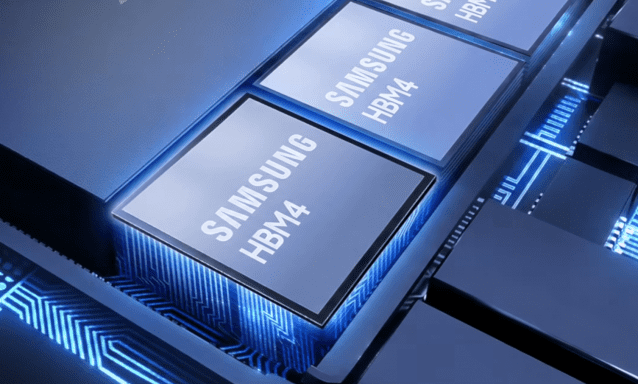
Samsung is projecting a quarterly operating profit that could crack the 100-trillion-won ceiling for the first time in its history, driven by a confluence of general DRAM price increases and the rapid expansion of its HBM4 production. IBK Investment & Securities framed the outlook as “overwhelming,” though it also flagged that unfavorable exchange rates and cost headwinds may pull actual results slightly below prior guidance.
What IBK did not emphasize enough is the structural implication: Samsung’s profit ceiling is being set by a US competitor’s earnings call. That inversion would have been unthinkable five years ago. Samsung has long dominated memory-market narratives simply by being the largest producer. Micron’s outperformance signals a shift in who defines the cycle’s terms.
SK Hynix faces a different set of pressures. Its HBM3E volume is ramping across the entire organization, and analysts at Shinhan Investment see demand from OpenAI and other non-big-tech AI firms buying directly — bypassing traditional cloud customers — as a structural tailwind. But SK Hynix’s margin profile remains thinner than Micron’s, and the company is navigating a narrower window before the next HBM generation forces another round of capital spending it may not be ready to finance on favorable terms.
SK Hynix’s direct-purchaser advantage is real but fragile. Those AI-native firms are now evaluating second-source suppliers. If Samsung HBM4 yields clear the bar earlier than expected, OpenAI and its peers may pivot allocation — and SK Hynix’s differentiation narrows to months rather than quarters.
Japan’s role in this equation is worth noting precisely because it is fading. Toshiba and Kioxia have ceded memory leadership entirely; their struggles are textbook. Taiwan’s TSMC remains the packaging chokepoint for HBM, not a memory producer. The hierarchy that once spanned three countries is compressing into a bilateral contest between Micron and the Koreans, with the US company holding the stronger balance sheet and the Korean firms holding the faster production ramp.
But even that framing may be outdated. Taiwan’s Semiconductor Manufacturing Foundation is not merely a packaging partner — it controls the interposer yield that determines whether Samsung and SK Hynix can ship HBM in volume at all. Any disruption at TSMC’s HBM-adjacent lines ripples directly through both Korean fabs, giving Taiwan leverage that neither Korean company fully appreciates in its capital planning.
The Capex Cliff
This is where the story gets dangerous for Samsung and SK Hynix.
Memory is cyclical by definition. Each peak creates the conditions for the next trough. Micron’s own guidance — forecasting a persistent memory shortage through 2028 — is a strategic statement designed to keep capital markets pricing in supply constraints even as the cycle turns. But when two Korean rivals are simultaneously planning their biggest capital expenditure rounds in history to chase HBM4 and next-generation products, the market will see either sustained discipline or a destructive oversupply event.
Neither outcome favors the Koreans at the margin. If Micron continues to outperform because it is less exposed to China and more disciplined with capacity allocation, Samsung and SK Hynix face a compounding problem: they must spend aggressively to compete on product but will earn lower returns per dollar invested because the cycle peak has already priced in the upside.
The direct-purchasing trend among OpenAI and other AI-native firms amplifies this tension. Micron benefits when buyers negotiate outside traditional cloud-agency channels. Samsung and SK Hynix benefit when cloud giants control allocation. The market is shifting in Micron’s direction.
There is also a second-order effect that few analysts are tracking: Korean labor and real-estate costs around the Yongsan and Hwaseong fab clusters are rising in tandem with capex commitments. Every trillion won of new spending pushes up local input costs, which erodes the very margins these companies are chasing. Micron’s primary US sites face none of these cost pressures, creating a structural margin advantage that widens with each capex cycle.
What Comes Next
Three variables will determine whether this quarter’s euphoria translates into sustainable Korean advantage or a margin squeeze that lingers into next year.
First, whether HBM4 yields stabilize at Samsung. The company has been publicly aggressive about HBM4, but yield rates on third-generation HBM have historically been the difference between profit and write-down. Any delay pushes revenue into 2027 and extends the period where SK Hynix retains its HBM market-share lead. More critically, extended yield struggles force Samsung to subsidize its HBM business from other divisions — a practice that distorts internal resource allocation and makes the whole electronics empire more vulnerable to a simultaneous downturn in displays or foundry.
Second, the dollar-won exchange rate. IBK noted that FX headwinds could pull Samsung’s results below prior estimates. A stronger dollar makes Micron’s reported figures look even larger in absolute terms and widens the competitive gap in favor of the US manufacturer. The won’s trajectory over the next twelve months will effectively act as a tax on Korean memory profitability that Micron does not pay.
Third, and most important, the pace of next-round capex. If Samsung and SK Hynix both commit simultaneously to HBM4 expansion without coordination on capacity discipline, the 2028 shortage narrative collapses into a glut. Micron, with its more conservative guidance and less exposure to the Korean market’s structural cost disadvantages, is positioned to absorb the downturn more cleanly.
A fourth variable deserves equal weight: China’s response. Both Samsung and SK Hynix derive meaningful revenue from Chinese buyers, and Beijing has signaled willingness to punish memory-supply dependence on non-Chinese sources. Any escalation in China’s semiconductor-self-sufficiency drive — through subsidies for Chinese memory makers or import restrictions on HBM — would hit Korean fabs disproportionately while Micron, already insulated by its lower China exposure, faces manageable fallout.
The memory barometer did not just shift. It pointed somewhere new — and the companies that misread the direction will pay for it through the next cycle.