Microplastics, Colon Cancer, and the Regulatory Gap
A new study links microplastics to aggressive colon cancer in mice, but the deeper story is who pays when plastics move through our food system — and why regulators haven't caught up.
The Study Is Grim. The Liability Map Is Worse.
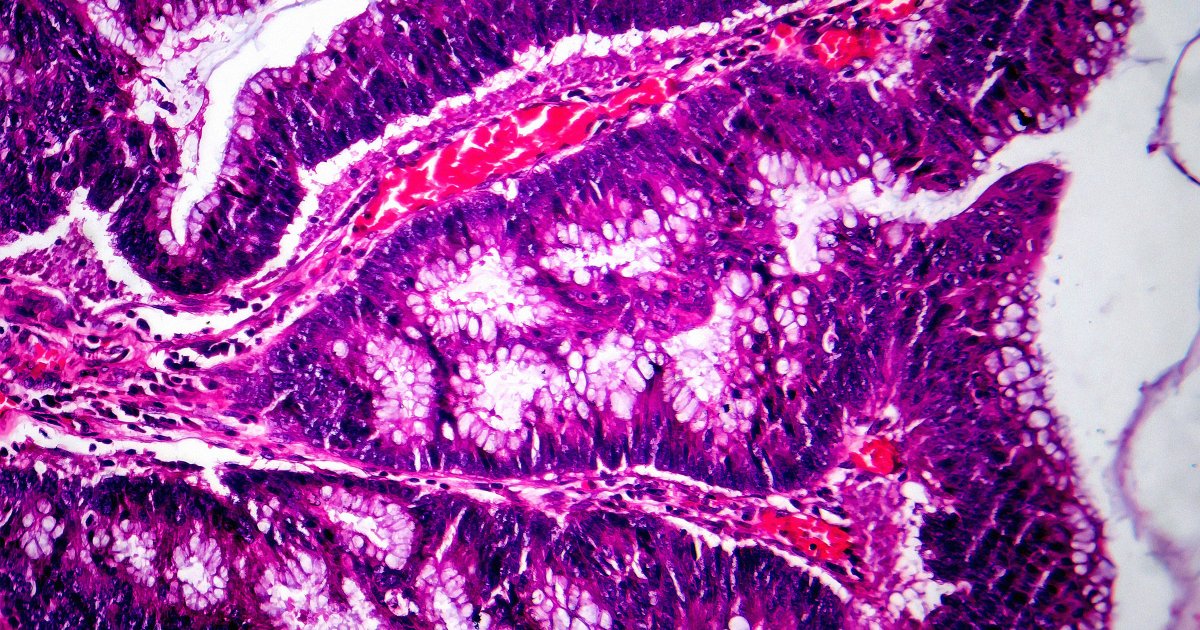
Researchers at Central South University in China exposed genetically engineered mice — already prone to colon cancer — to long-term polystyrene nanoparticles. The result was straightforward and disturbing: the animals developed more tumors, and the tumors were more severe. The microplastics accumulated in their guts, disrupted the balance of their gut microbiome, and appeared to degrade the protective mucus layer lining the colon wall.
Colon cancer is now the second-leading cause of cancer death in both American men and women. One in four men will develop it in their lifetime. Rates have skyrocketed among young adults over the past two decades, a trajectory that doesn’t track cleanly with genetics or diet alone.
Lorne Hofseth, a professor at the University of South Carolina College of Pharmacy, put it plainly to the Washington Post: “There has been a rise in consumption of ultra-processed foods. There’s been a rise in ‘forever chemicals.’ There has been a rise in the synthetic food dyes. But there’s also been a rise in microplastics, a significant rise.”
Frank Frizelle, a surgeon at the University of Otago in New Zealand, offered a more specific mechanism. He told the Post he suspects microplastics aren’t the direct carcinogen — they’re the delivery system. By breaking down the mucus barrier, they may be allowing other toxins through that would otherwise be blocked.
The study hasn’t established causation in humans. That distinction matters, and the researchers acknowledge it. But the pattern is familiar territory for public-health historians: environmental exposure data arrives first, regulatory action comes decades later, and by then the affected population is already mid-stream in its consequences.
Where the Plastics Enter the Food Chain
The causal pathway from polymer to plate runs through layers of infrastructure most consumers never see. Polystyrene — the same material found in foam takeout containers, coffee cups, and packing peanuts — is pervasive across the food-service industry. It fragments during manufacturing, transportation, and even the simple act of opening a package. Particles shed into foods and beverages at every step.
The European Food Safety Authority and other bodies have estimated that the average European consumer ingests roughly five grams of microplastic per week — about the weight of a credit card. The figure for the United States is harder to pin down, partly because surveillance is thinner. But the exposure vectors overlap significantly: bottled water carries higher concentrations than tap water, processed foods accumulate particles from packaging contact, and tea bags made from nylon or PET can release billions of particles per cup.
None of this is new. What’s shifting is the scientific confidence that these particles aren’t inert. They carry chemical additives — phthalates, bisphenols, flame retardants — and they adsorb environmental pollutants like heavy metals and persistent organic pollutants onto their surfaces. When they breach the gut mucus layer, those carried chemicals enter tissue directly.
The Regulatory Divergence
Here is where the map gets useful for anyone trying to assess real risk rather than react to headlines.
The European Union has moved with unusual speed on microplastic regulation. In 2023, the EU banned intentional microplastics in cosmetics and detergents. The European Commission proposed broader restrictions on microplastic pollution in 2022, which would cover everything from tire wear to synthetic textiles. The REACH framework has been used to restrict certain plastic pellets. Several member states — France, Norway, Denmark — have gone further still, imposing national limits on microplastics in food-contact materials well before Brussels acted.
The United States has no equivalent federal standard. The FDA monitors food for contamination on an ad hoc basis and has issued guidance documents, but no enforceable limits exist for microplastics in food or drinking water at the federal level. A handful of states have introduced legislation — California and New York have held hearings, Connecticut considered testing mandates — but nothing has crystallized into binding regulation. The gap is structural: without a federal standard, there is no enforcement mechanism, no mandatory testing, and no liability trigger for companies that continue using materials known to fragment into microscopic particles.
This regulatory asymmetry isn’t abstract. It means that a multinational food company operating in both markets faces different compliance costs, different disclosure obligations, and — critically — different legal exposure. In the EU, companies can be sanctioned for exceeding microplastic thresholds in food-contact materials. In the US, the same company faces no such penalty, even as scientific understanding of harm advances.
Who Bears the Cost
Liability in a microplastics case looks unlike anything modern tort law was built for. The polymer manufacturers produce raw resin. The converters turn it into film, foam, and bottles. The food processors package products in those materials. The retailers sell them. Consumers ingest particles across all of these touchpoints, often simultaneously. Establishing proximate cause across that many nodes is the central difficulty that any future litigation would face.
But the EU’s precautionary principle creates a different dynamic than the US approach. In Europe, regulators can restrict a substance before harm is fully proven. That shifts risk earlier in the product lifecycle and gives plaintiffs a stronger footing when courts later assess whether a company knew or should have known about danger. The US system waits. By the time the science is sufficiently settled, the relevant corporate entities may have restructured, assets relocated, or statutes of limitations expired.
Investors should watch two signals. First, whether the Central South University study withstands replication — particularly in human epidemiological cohorts. Second, whether the EU’s ongoing REACH evaluation of microplastics in food-contact materials produces binding limits. If both events occur, the commercial impact will land hardest on companies with significant North American exposure and limited alternative packaging strategies. Polystyrene manufacturers and food-service suppliers that rely on single-use plastics are the logical starting points for any claim.
What Changes Tomorrow
For consumers, the practical takeaway isn’t paralysis — it’s prioritization. Bottled water consistently shows higher microplastic concentrations than tap water. Processed foods in plastic packaging contribute more than freshly prepared alternatives. Heating food in polystyrene containers releases significantly more particles than using glass or ceramic. These are small adjustments, but they address the highest-exposure vectors identified in current research.
Screening recommendations have already shifted. Middle-aged adults are now urged to begin colorectal cancer screening earlier than previously advised, which improves detection odds substantially. That’s a win that doesn’t depend on any regulatory action.
For the broader picture, the Central South University study is one data point among many. The science is moving faster than the law, which is exactly where public-health crises tend to form. The question isn’t whether microplastics contribute to disease — the question is whether the liability architecture will catch up before the data becomes undeniable.
In the US, that architecture barely exists. In the EU, it’s being built in real time. The divergence between those two approaches will determine who pays when the next wave of studies lands.