Microsoft 365 clone wars begin as AI dev replicates Word, Excel
Brandon Thomas has used Claude to build open-source replicas of Microsoft Word, Excel, and PowerPoint — following his earlier Adobe suite clones. The "clone wars" have shifted from creative tools to enterprise productivity, and the implications go far beyond a few alpha apps.
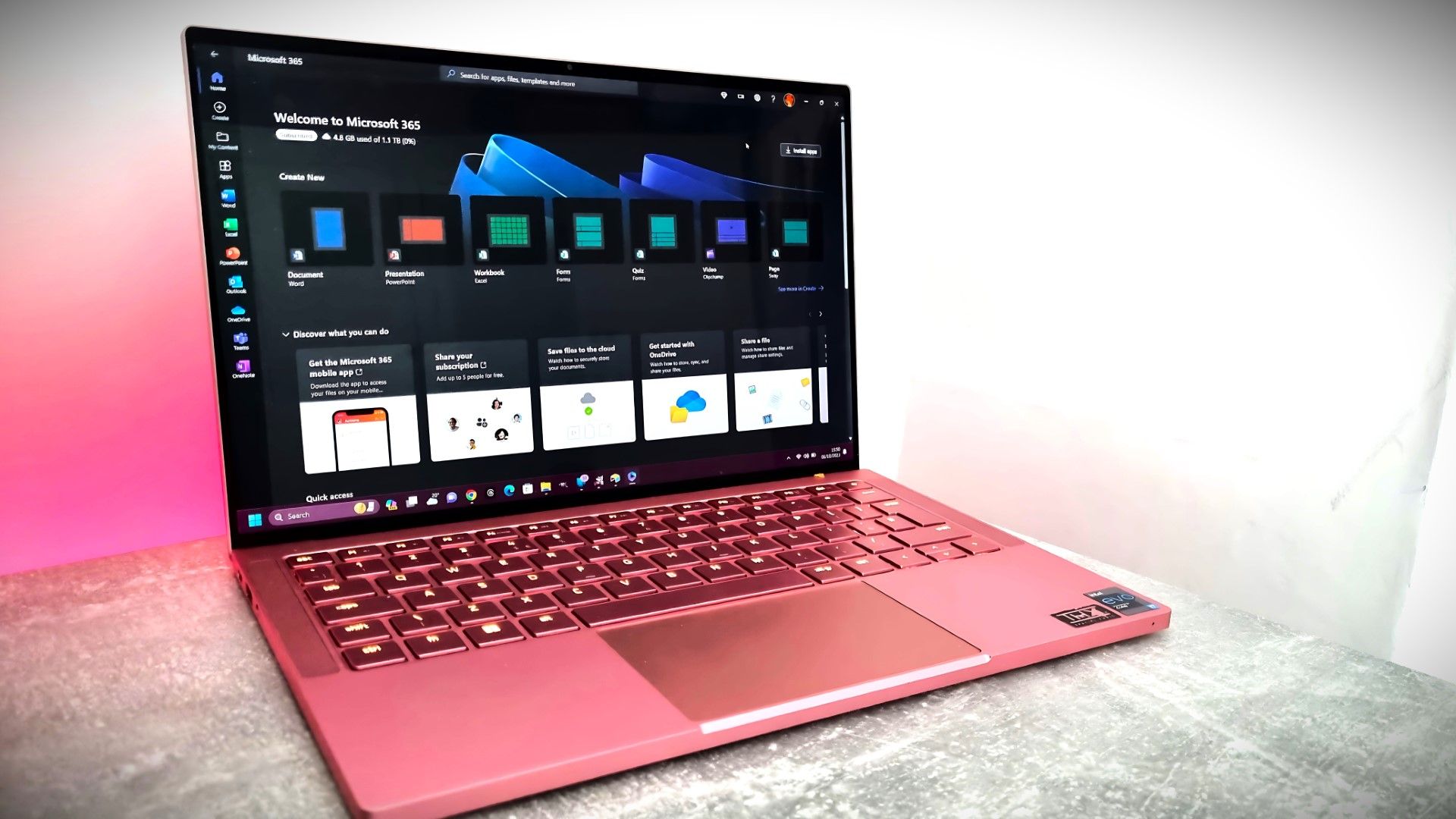
The clone wars just entered the enterprise tier
Brandon Thomas has spent the last several months doing something that would have been inconceivable a few years ago: building functional, open-source replicas of the world’s most commercially important software suites using nothing more than an AI coding tool and a laptop.
After replicating Adobe’s Creative Cloud lineup, Thomas has now turned his attention to Microsoft 365. Three clones — WordCraft (Word), GridCraft (Excel), and DeckCraft (PowerPoint) — are available on his ArtCraft GitHub page. All were built using Claude. All are, notably, free to download.
A Reddit user named EngFL92 captured the moment perfectly: “Begun, the clone wars have.”
What makes this significant isn’t just the technical feat. It’s that Thomas has moved from copying creative-professional tools to copying the productivity stack that underpins most of the global workforce.
How did this happen?
Thomas’s approach is straightforward in concept, even if the execution required serious iteration. He uses Claude to generate code that mimics the interface and functionality of Microsoft’s office applications. The result includes a ribbon-style toolbar, document layouts, spreadsheet grids, and presentation canvases that will feel immediately familiar to anyone who has opened Word or Excel in the past decade.
This is not the first time someone has attempted something similar. LibreOffice and other open-source office suites have filled this space for years. But those projects were built by teams of human engineers over decades. Thomas’s clones represent something different: a single developer, working largely alone, leveraging AI to compress what traditionally would have taken years into weeks.
The tools are improving fast enough that the gap between “proof of concept” and “viable alternative” is narrowing.
Why enterprise software is the real battleground
Adobe’s Creative Suite targets a relatively narrow — though high-spending — segment of users: designers, video editors, illustrators. Microsoft 365, by contrast, touches almost every knowledge worker on the planet. It runs law firms, hospitals, universities, small businesses, and governments. The revenue floor is much higher, and the switching costs are correspondingly steep.
That’s why Thomas’s pivot matters.
If AI can replicate the Microsoft Office experience well enough — and it clearly can at a basic level — then the economic model that supports the entire enterprise SaaS ecosystem faces a new kind of pressure. Not from Google or Apple, but from an open-source project built by an individual using publicly available AI tools.
This is the second-order implication that most coverage has missed so far. The immediate news is that someone built clones. The longer-term story is what that signals about the durability of proprietary software moats in an era of AI-assisted development.
What Microsoft and Adobe actually stand to lose
Right now, the damage is largely symbolic. WordCraft, GridCraft, and DeckCraft are in alpha. They lack advanced features, collaboration infrastructure, enterprise security controls, and the vast ecosystem of integrations that make Microsoft 365 sticky for organizations. Thomas himself has acknowledged that these projects are early stages.
But the direction of travel is unmistakable. Feature gaps close. Bugs get squashed. Community contributions accelerate development. And if Thomas decides to keep going — or if other developers pick up the baton — the timeline shrinks considerably.
For Microsoft, the threat isn’t that everyone will abandon Office tomorrow. It’s that the ceiling on what organizations are willing to pay for productivity software drops. Even a modest erosion — say, small teams choosing free AI-built alternatives for light use — pressures licensing revenue at the margins. Over time, that compounds.
Adobe faces a parallel risk. Thomas’s earlier Creative Cloud clones proved that high-end creative tools aren’t immune to AI replication either. The professional graphics and video-editing market may resist closer than general productivity tools, but not indefinitely.
The regulatory blind spot
Perhaps the most underexamined dimension of this story is the legal gray zone Thomas is operating in.
These clones replicate interface design and functionality. They don’t ship Microsoft or Adobe source code. They don’t violate traditional copyright in the way that pirated software does. But they also don’t fall neatly into any existing fair-use framework designed for commentary, education, or parody. This is something closer to functional imitation — and the law has almost no precedent for AI-generated functional duplicates of proprietary software.
Regulators in Washington, Brussels, and Tokyo are currently focused on AI safety, deepfakes, and job displacement. Nobody is tracking whether an AI tool can be used to recreate the full user experience of a $20-per-month productivity suite.
That oversight won’t last forever.
Who wins, who loses, and what happens next
The winners here are people who’ve been priced out of professional software for years. Students, independent creators, small nonprofits — Thomas’s stated motivation included what he called “paying back a grudge that has been years in the making.” That sentiment resonates with a broad cohort of users who feel squeezed by subscription pricing.
The losers are the enterprise SaaS companies that have built durable, high-margin businesses on software ecosystems that were once nearly impossible to replicate. Their moats are becoming less about technical exclusivity and more about distribution, trust, and integration depth — all of which are defensible, but not immortal.
What happens next depends on whether Thomas and the wider open-source community treat this as a long-term project or a proof of concept. If the former, the pace of improvement will be dramatic. If the latter, the clones will remain curiosities while the underlying technology continues advancing regardless.
One thing is already clear: the conversation around AI and software replication has moved from speculative to concrete. The clone wars aren’t coming. They’ve begun.