Microsoft and NVIDIA Just Declared War on Apple Silicon
Microsoft's new Surface Laptop Ultra runs NVIDIA's custom RTX Spark SoC — a bold move to challenge Apple's Silicon dominance with a Windows on Arm AI powerhouse. Here's what it means for the PC market.
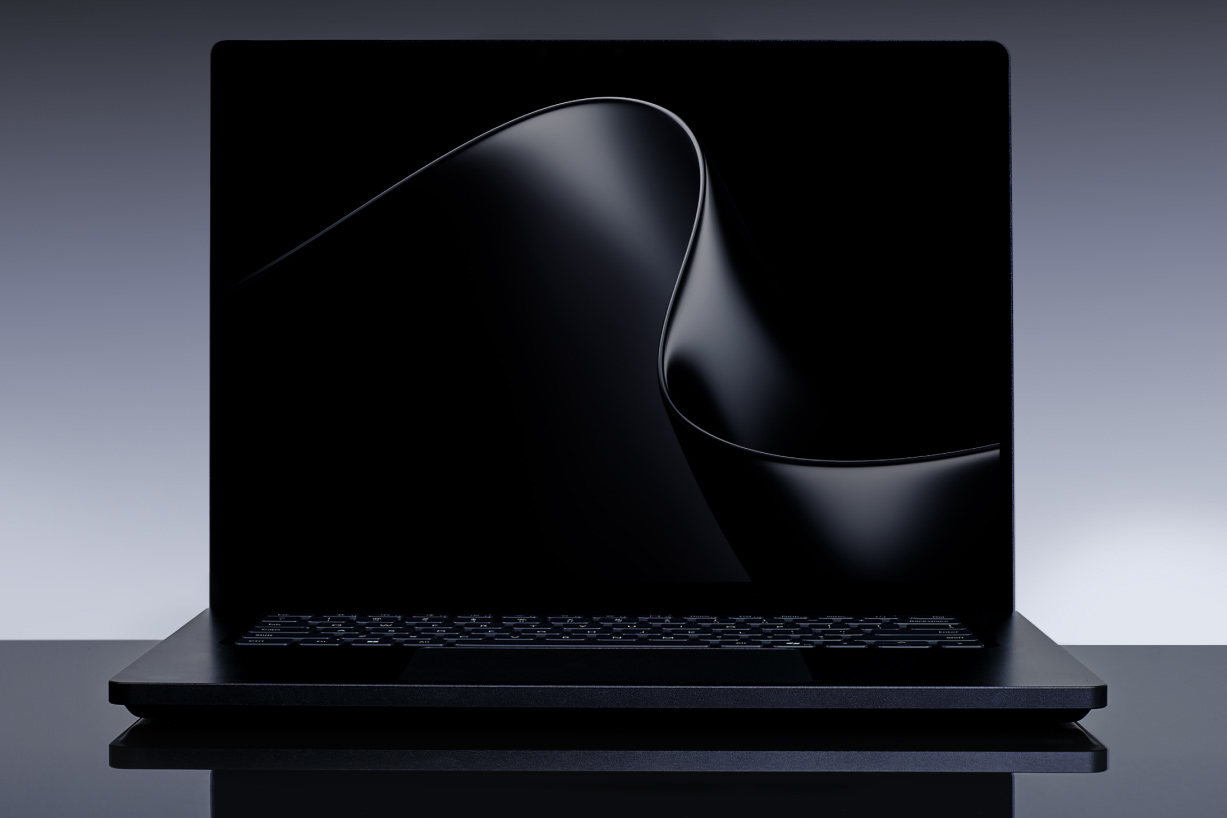
The day Microsoft and NVIDIA decided to take Apple head-on
Microsoft hosted a standalone event in San Francisco on October 7, 2026, and unveiled something that should give Apple’s marketing team a serious cold sweat: the Surface Laptop Ultra, a Windows laptop running NVIDIA’s custom “RTX Spark” (codenamed N1X) system-on-chip. Satya Nadella and Jensen Huang shared the stage together — a visual reminder that this is not a casual collaboration. This is a coordinated strike against the one company that has steadily eaten into the premium PC market with its own silicon.
The implications go far beyond a single product launch. This is a structural realignment of the PC industry.
What the RTX Spark chip actually is
NVIDIA’s RTX Spark is built on the same Blackwell GPU architecture that powers the GeForce RTX 50 series, but instead of shipping as a discrete graphics card, it’s been fused with ARM CPU cores onto a single chip. This is Windows on Arm, the platform Microsoft has been betting on for years, finally getting the kind of silicon it needed to compete with Apple’s M-series processors.
Two variants will ship. The lower-tier model carries 18 CPU cores and 5,120 CUDA cores. The top-end machine bumps that to 20 CPU cores and 6,144 CUDA cores. Memory configurations stretch from a modest 24GB all the way up to 128GB — a ceiling that signals clearly where NVIDIA and Microsoft are aiming: professional AI workloads, not casual browsing.
Japanese pricing confirms this positioning immediately. The starting price sits at 513,480 yen, and the maximum configuration climbs to 1,094,280 yen. That puts the upper model comfortably above the price of a MacBook Pro 16-inch with Max chip, which raises the obvious question: who is this for?
It’s not aimed at gamers
NVIDIA will tell you that Windows PC gaming works on RTX Spark. But at these prices, calling the Surface Laptop Ultra a gaming machine is genuinely laughable. ASUS and MSI both announced their own RTX Spark laptops on October 8, but neither revealed pricing and both framed their products as AI developer tools. The writing is on the wall — this first generation is targeting people who run large language models locally, train specialized AI workloads, or push GPU compute to its limits.
If you’re shopping for a gaming laptop, wait. A RTX Spark-based machine that can compete with AMD or Intel gaming rigs on price is likely still months or even years away.
Why this matters for Apple
Apple’s supremacy in the premium laptop space rests on a simple foundation: its own silicon delivers unmatched performance-per-watt, and the ecosystem lock-in makes switching painful. The M-series chips have convinced professionals, creators, and everyday users that Macs simply do more with less power consumption. Microsoft and NVIDIA are now building the exact counterargument.
The RTX Spark chip gives NVIDIA something Apple cannot replicate inside a Windows device: deep integration between the GPU architecture, the CUDA ecosystem, and the operating system. For AI developers who already live in NVIDIA’s ecosystem, moving from a desktop GPU workstation to a laptop with the same underlying architecture is not a compromise — it’s an upgrade in convenience.
This is Microsoft’s answer to the argument that Windows on Arm has always been a second-class platform. With a chip designed specifically for this market, built by the company with the most advanced GPU technology on earth, the “just runs x86 apps poorly” narrative finally has a real counterweight.
Who wins and who loses
NVIDIA wins by extending its GPU dominance into the mobile and laptop space, where it previously had almost no presence beyond discrete graphics cards. The RTX Spark is effectively a Trojan horse — once developers build AI tooling around this architecture, replacing it becomes expensive, and NVIDIA owns that ecosystem going forward.
Microsoft wins by proving that Windows on Arm can run serious professional workloads on silicon designed for that purpose. The Surface Laptop Ultra is a statement piece, not just a product. It tells enterprises and developers that the platform is ready for the kind of compute that previously required a desktop or a cloud subscription.
Apple loses customers — at least in the near term — from the professional AI and developer segment. These are exactly the users who care about local model inference, GPU-accelerated development, and the ability to run heavy workloads without plugging into a dock. If the RTX Spark delivers on its promises, Apple’s M-series chips will no longer be the only viable option for mobile AI compute.
Intel and AMD are the real losers here. They’ve been losing ground to Apple in the premium segment for years, and now they face a partnership that combines the two most powerful forces in personal computing. Neither company has an ARM-based Windows laptop with this level of integrated GPU capability at launch. The gap may narrow over time, but the Surface Laptop Ultra’s arrival sets a new benchmark.
The real story isn’t the laptop — it’s the architecture
What makes this announcement genuinely significant is not the hardware itself, but what it represents: a unified strategy between the two companies that dominate the AI hardware landscape. NVIDIA controls the GPU. Microsoft controls the operating system most professionals use. Together, they are building a stack that runs from silicon to OS without the compromises that have defined Windows on Arm since day one.
The question now is whether the software ecosystem can keep pace. Blackwell is impressive on paper, but Apple’s advantage has always been integration — the chip, the OS, and the apps all designed together. Microsoft and NVIDIA are attempting the same thing on Windows. If they pull it off, the premium PC market looks very different in two years. If they don’t, this remains a compelling proof of concept with limited market impact.
One thing is certain: Apple can no longer assume the premium laptop market is theirs by default.