Middle East War Spills From Tankers to refineries — and Korea feels it first
Saudi Aramco's Jizan refinery was hit as Iran and the US exchange strikes on commercial shipping, pushing Brent past $97. A conflict that started at sea is now threatening land-based processing capacity — a shift with outsized consequences for import-dependent Asia.
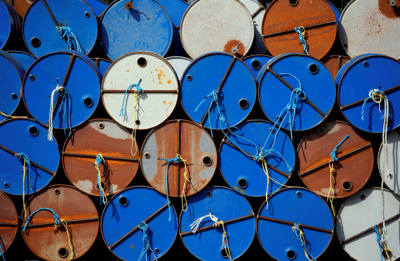
The war shifted from the sea to the shore
Iran and the United States have been trading blows at sea for days — Iranian ballistic missiles hit two US Navy vessels last Saturday, and the Pentagon responded by striking three Iranian oil tankers it says fund revolutionary guard proxies. What changed on Sunday is that the fighting touched a facility on land.
Saudi Aramco confirmed damage at its Jizan refinery complex in the kingdom’s southwest. The site processes roughly 400,000 barrels per day. Damage figures were still being assessed, and no group immediately claimed responsibility. Reuters quoted Saudi officials as saying Saudi Arabia had asked the US to help defend its energy infrastructure after receiving intelligence about imminent threats.
That distinction matters. Tankers are moving targets in international waters; a refinery is fixed, surrounded by housing and industrial zones, and far harder to shield. When commercial shipping becomes a battlefield the risk is premium — insurance spikes, reroutes, delays. When a refinery is hit the risk is structural. The world lost 400,000 barrels a day of refined product capacity overnight, at least temporarily, and no amount of rerouting replaces that instantly.
Brent breaches $97 — again
Brent November contracts closed at $97.31 a barrel, up $1.03, with an intraday high of $98.06 — the highest level since July 24. West Texas Intermediate touched $93.29. The moves came on thin holiday liquidity; US markets were closed for Labor Day. That amplification is real, not imagined. Half-volume days turn small order flow into outsized price swings.
Gold, by contrast, slipped. COMEX December gold fell 0.5% to $4,456.40 an ounce, and spot gold traded at $4,410.55. The driver had nothing to do with geopolitics and everything to do with US labor data. August employment growth came in well above expectations and the unemployment rate held at 4.1%. CME FedWatch now prices a 60% chance of a rate hike at the next meeting, up 10 percentage points from just before the jobs report. Higher rates make non-yielding assets less attractive. Ole Hansen, head of commodity strategy at Saxo Bank, noted the divergence directly: gold and silver moved opposite to energy prices, driven by the stronger dollar and rising Treasury yields rather than safe-haven demand.
Traders are now looking Wednesday and Thursday for the next data shock — US producer price index on the 10th and consumer price index on the 11th. If both stay elevated alongside already-tight employment, the Fed hike becomes less a question than a timing exercise. That keeps pressure on gold and adds another layer of uncertainty to an already jittery energy market.
What Western headlines miss about Korea’s exposure
English-language coverage of the Iran-US flare-up tends to treat the Gulf as a self-contained theater. That framing understates what happens when prices move. Korea imports roughly 97% of its energy, and more than half of its crude originates in the Middle East. A sustained Brent move above $100 does not merely raise input costs — it compresses margins across refining, chemicals, and semiconductors, Korea’s three largest export sectors, in the same quarter.
Domestically, the Bank of Korea is already wrestling with a trade deficit that widened sharply in July as import bills outpaced export receipts. Energy is the largest component of that import bill. If Middle East disruption persists and Brent stays near $97-100, the BOK faces a choice between letting the won absorb the shock or tightening into a weakening currency — either way, inflation takes the hit. Japanese and Chinese buyers are in the same boat but their central banks are further behind the curve on rate normalization, which gives them slightly more room. Korea is tighter.
OPEC+ is holding — for now
OPEC+ decided on Sunday to maintain October output policy unchanged. The cartel did not set new country-specific quotas, which means any adjustment requires fresh negotiations that are unlikely to conclude before November. In practical terms, the decision signals that the group does not see the current supply disruption as large enough to warrant an emergency boost, or that members prefer to let prices firm before offering additional barrels.
The United Arab Emirates is already acting as if the disruption may deepen. Anwar Gargash, adviser to the UAE president, said the country is building alternative export and trade corridors to prevent energy shipments from being held hostage by the US-Iran conflict. That is an admissions of vulnerability from a major producer — and a hint that even friendly Gulf states do not trust the status quo to hold.
Who wins, who loses
Iran has escalated from targeting military vessels to threatening energy infrastructure across the region. Its parliament speaker, Mohammad Bagher Ghalibaf, warned on X that attacks on Iranian assets would be met in kind. The US defense secretary, Pete Hegseth, had issued a matching threat days earlier. The danger is not rhetoric alone — Maritime Eye, a maritime intelligence firm, noted that commercial tankers are now being used deliberately as instruments of economic pressure, blurring the line between combat and commerce that existed until recently.
The immediate winners are energy producers outside the conflict zone and traders positioned on the long side. The immediate losers are end-users — refiners, airlines, chemical companies — and import-dependent economies where the exchange rate cannot do all the adjustment.
For Korea, the calculus is blunt. A Brent sustained at or above $97 adds roughly $2-3 billion per month to the import bill at current volumes, all else equal. That is not abstract. It lands directly on the trade balance, the current account, and the inflation prints the BOK is watching. The central bank will likely absorb some of it through currency depreciation, but depreciation is a tax on households and businesses that import energy-denominated inputs.
What happens next
Two near-term catalysts deserve attention. First, US inflation data on the 10th and 11th. If PPI and CPI both come in hot, the dollar strengthens and gold weakens further, but Brent could also extend its gains as real yields rise and hedge funds add to long exposure. Second, any update from Saudi Arabia or the US on the Jizan damage assessment. If the 400,000-barrel-a-day refinery is partially offline for weeks rather than days, the market reprices quickly and Korea absorbs a larger share of the shock.
OPEC+ will be forced to address the quota question at some point, but the group tends to move slowly under stress. Meanwhile, the UAE’s diversification of export routes suggests that even allies of Washington are preparing for a scenario in which the Strait of Hormuz — through which roughly 21 million barrels a day currently pass — becomes unreliable.
The conflict started with ships. It reached a refinery on Sunday. The next escalation point is unclear, but the trajectory is not.