Mitsubishi's Pajero Return Is a Signal, Not a Nostalgia Trip
Mitsubishi is reviving the Pajero after seven years and two decades between generations—a move that signals a strategy of doubling down on off-road identity at a time when Chinese EVs and Korean rivals are closing the SUV gap.
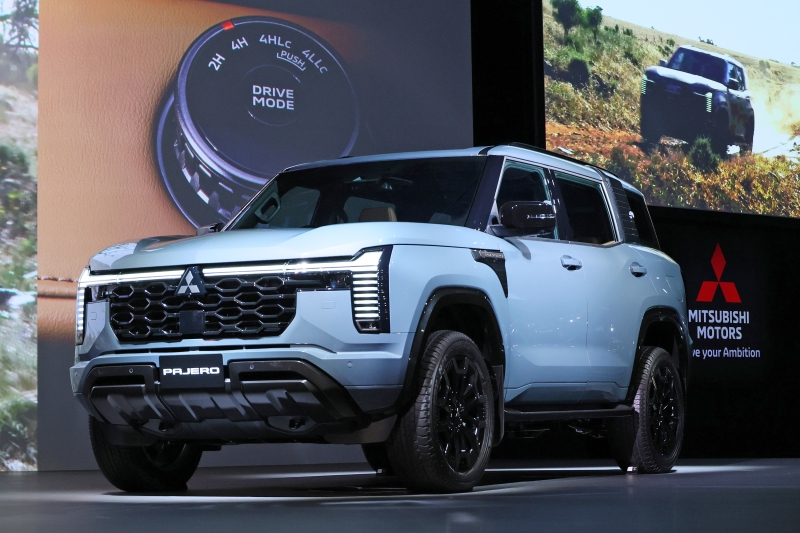
The Pajero Came Back to Say Something
Mitsubishi revealed the fifth-generation Pajero on a Tuesday in Tokyo, and the symbolism was impossible to miss. The nameplate disappeared from Japan in 2019. It returns in December, produced in Thailand and sold first at home and in Australia before rolling out to more than 100 countries from 2027 onward. Twenty years separate the fourth and fifth generations. Seven years pass between production end and restart. Something has been waiting.
CEO Keisuke Kishiura called the Pajero “the flagship model that most embodies what makes Mitsubishi, Mitsubishi.” That phrasing matters. In an industry where every automaker is racing toward the same electrified, software-defined future, Mitsubishi is drawing a line in the sand—and the line runs through muddy trails and rocky inclines.
What Everyone Misses: This Is a Statement, Not a Comeback
Most coverage will frame the Pajero’s return as a nostalgia play. It isn’t. Nostalgia moves units for a season and then fades. Mitsubishi is using this reveal to announce that its identity is non-negotiable, and that identity is built around capability that most competitors have abandoned.
The company’s design chief, Seiji Watanabe, described the revival process with a curious metaphor: a “cookie board” phenomenon. He meant that no one in the company pointed at a spreadsheet and said “let’s revive the Pajero.” Instead, the impulse emerged organically from engineers and designers who had quietly wanted the nameplate back. The Triton pickup’s derivative models prompted the thinking, and the latent desire coalesced without top-down direction.
That detail is the real story. This is a company that decided its soul matters more than its short-term profitability. In a sector where platforms are shared, brands are converging, and differentiation is increasingly a marketing exercise, Mitsubishi is betting that “Mitsubishi-ness” is itself a product.
The Off-Road Identity Gamble
The fifth-generation Pajero is a three-row SUV that prioritizes off-road competence, cabin refinement, and design quality over anything else. It launches from Thailand, which positions Mitsubishi within the ASEAN manufacturing hub that Toyota, Isuzu, and now Chinese makers like GWM and MG have made central to their global strategies. Thailand is also where the Triton is built—the same lineage that indirectly spurred the Pajero’s return.
Here’s what’s at stake: the global SUV segment is becoming the most crowded arena in automotive. Chinese brands are moving fast into Southeast Asia and the Middle East with capable, well-equipped SUVs at prices Japanese automakers struggle to match. Hyundai and Kia have already closed much of the perception gap in off-road-ready vehicles with the Tucson and Santa Fe. GM’s Chevrolet Tahoe and Ford’s Bronco hold the premium off-road crown in North America, but neither is competing in the mid-size three-row space where the Pajero sits.
Mitsubishi knows this. The company positioned the Pajero as the first product to materialize its medium-to-long-term vision. That phrasing is deliberate. This is not a one-model gamble—it’s the opening salvo of a broader strategy to rebuild the brand around capability that cannot be replicated by a software update.
The Nissan Alliance Shadow
Mitsubishi has been part of the Renault-Nissan-Mitsubishi alliance since 2016, and the dynamics have shifted repeatedly. Under recent leadership, the alliance has been renegotiated, with Nissan taking a larger stake in Mitsubishi and the Japanese companies deepening platform-sharing arrangements. The Pajero’s development is believed to involve Nissan collaboration, though specifics remain unclear. What is clear is that Mitsubishi is no longer developing SUVs entirely alone. The Triton, for example, shares engineering roots with Nissan’s Frontier. The alliance gives Mitsubishi access to resources it never had as an independent small-volume automaker, but it also means Mitsubishi’s distinctiveness must be defended more deliberately.
That defense is what the Pajero represents. If Mitsubishi becomes just another Nissan badge with different styling, the brand dies. If it uses the alliance’s scale to fund products that only Mitsubishi would make, it survives with purpose. The Pajero is the proof point.
Who Wins, Who Loses
Mitsubishi wins if the Pajero establishes a durable identity halo that lifts the entire brand. The company has been operating below its historical weight for years. A successful Pajero revival could restore dealer confidence, reignite enthusiast interest, and create a foundation for the smaller compact SUVs that the company plans to add to the “Pajero Series” lineup.
Chinese SUV makers lose a potential foothold in the authentic off-road segment. Brands like GWM and MG have the price advantage, but they lack the heritage and the credibility that comes with a nameplate that survived three decades of serious off-road use. That gap won’t close quickly, and Mitsubishi is banking on it not closing at all.
Nissan gains a differentiated partner rather than a cost sink. The alliance restructuring was controversial; some analysts feared Mitsubishi would be absorbed entirely. The Pajero return signals the opposite outcome—Mitsubishi is using shared resources to strengthen its own brand, not surrender it.
What Happens Next
The Pajero launches in Japan and Australia in December from Thai production. The 100-plus country rollout begins in 2027. Compact and subcompact variants are planned under the Pajero Series banner, which would extend the identity beyond the current three-row format. That expansion is where the strategy either compounds or fragments.
The real test will come in markets where Chinese EVs and hybrids are already reshaping the SUV landscape. Southeast Asia, the Middle East, and parts of Latin America are the battlegrounds. Mitsubishi’s off-road credibility is an edge, but edge alone doesn’t sell cars. The Pajero will need to prove that its “Mitsubishi-ness” translates into everyday value, not just weekend capability.
One thing is certain: the era of generic SUVs is ending, and Mitsubishi is placing a bet that drivers still want a car that says something about who they are. The Pajero is that statement. Whether the market agrees is the question that will define Mitsubishi’s next decade.