Miyamoto's Cultural Medal Proves Games Are Japanese Heritage
Japan honored Shigeru Miyamoto with a cultural medal—the first time a game creator received such an award. But the real story is what his press conference revealed about how mastery works.
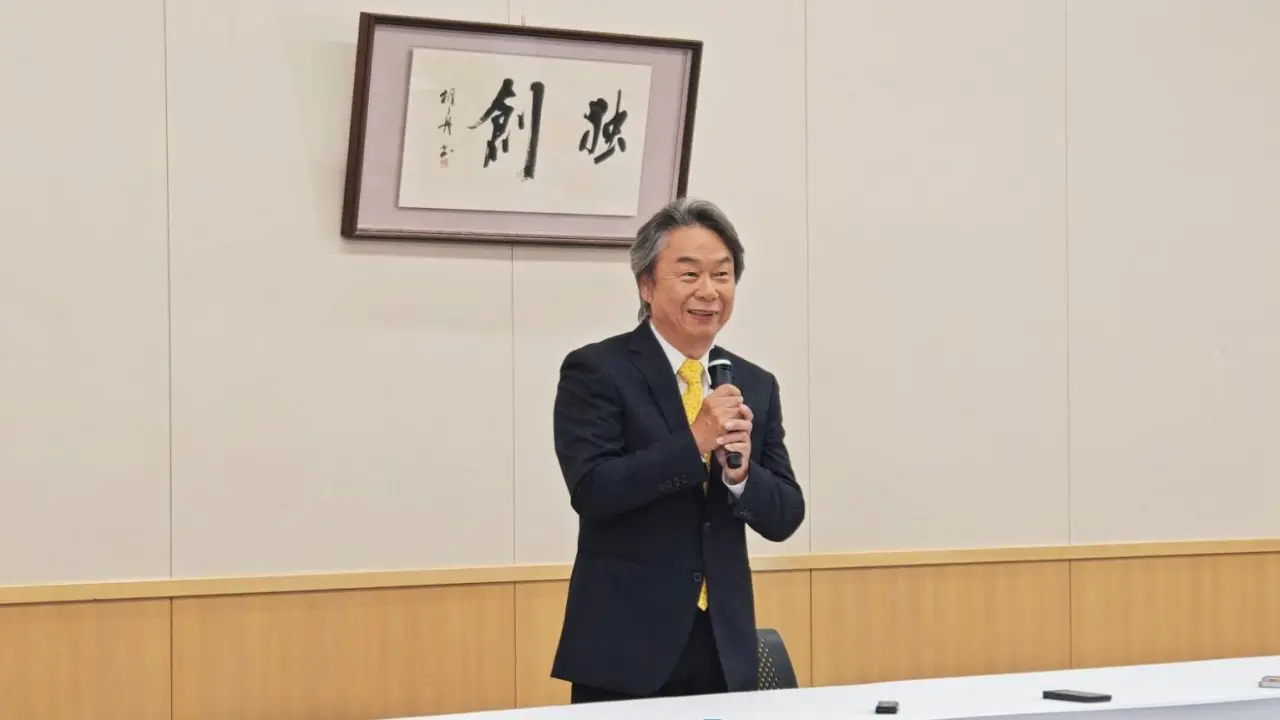
First Game Creator, Highest Honor
Japan awarded Shigeru Miyamoto a cultural medal last week — the country’s most prestigious recognition for contributions to art and culture. He is the first person in the video game industry to receive it. The announcement sent shockwaves through Japanese media and quietly confirmed what some have argued for years: interactive entertainment has arrived at the table of national heritage.
Western outlets covered this as a headline about game recognition. That misses the point. The ceremony’s significance sits in what Miyamoto said afterward — words that reveal a lifetime of disciplined thinking about what games are, why they work, and what role creators hold in an era of artificial intelligence.
The Cultural Affairs Agency, which selects recipients on the advice of a panel of academics and cultural figures, placed Miyamoto alongside painters, composers, and theater directors who have shaped Japan’s postwar identity. The category distinction matters. This was not a lifetime achievement trophy handed out for commercial success. It was an institutional placement of a game designer inside the canon of Japanese artistic tradition — a move that reclassifies interactivity itself as a legitimate medium rather than a commercial product.
A Definition of Play Most Designers Would Struggle to Produce
When asked what matters most in game development, Miyamoto did not say fun, or challenge, or storytelling. Those would be safe answers, the kind anyone can give after thirty years in the business.
Instead he said the essential quality of interactive media is the player thinking ahead — “what happens if I try this?” — and the designer’s responsibility is deciding what answer comes back. He called that exchange “authorship.”
That single sentence does something remarkable: it defines both interactivity and authorship in one breath, without jargon, in language even non-gamers can grasp. You do not produce that kind of clarity off the cuff. It requires having lived with the question long enough that the answer becomes reflexive.
His comment about generative AI carried the same texture. Rather than offering a trendy opinion, he filtered the technology through a framework he has used for fifty years — a distinction between what constitutes creation versus what qualifies as production work. New tools appear frequently. The measuring stick stays fixed. That approach lets him speak with confidence about questions that barely existed a few years ago.
He did not dismiss AI outright. He placed it inside a hierarchy of labor that game studios already understand intuitively but rarely articulate publicly. Writing a line of code that generates textures on demand is production. Deciding which textures matter, when they appear, and how they shape the player’s expectations is creation. The distinction survived every technological shift since cartridge-based memory replaced paper flowcharts. It survives now because it was never really about technology — it was always about judgment.
The Illusion of the Instant Answer
Reading Miyamoto’s remarks triggered a memory for one senior Japanese game journalist — the 2018 conversation he had with the late Satoru Iwata, who served as Nintendo’s president until his death in 2015. In that interview, Iwata discussed how a five-minute response on stage could represent either fifteen minutes of preparation or one hundred hours of accumulated reflection. The content inside those minutes differed entirely depending on which path produced it.
The journalist noticed something others probably missed: across dozens of interviews with accomplished people, the fastest answers tend to belong to those who have already solved the underlying problem. The questioner is grappling with something new; the respondent faced that same question years earlier and moved past it. Speed is not intelligence. Speed is preparation.
Iwata operated the same way. During the conversation with journalist Ryozo Kawakami, Iwata absorbed Kawakami’s concerns — issues that even a sharp mind like Kawakami’s found difficult to resolve — and responded as though those problems fell within his own domain of experience. The journalist described feeling, for the first time, the actual scale of Nintendo’s leadership. Knowing a company excels at making games and understanding what drives the people running it are two separate things.
Miyamoto works identically. His press conference answers felt effortless because they came from somewhere deep. Beneath every clear sentence sits years of failed prototypes, cancelled projects, design reversals, and re-evaluation. Simplicity in communication usually hides complicated thinking, not simple thinking.
What made the recent remarks stand out was their directness. Miyamoto has spent decades deflecting interview requests and speaking through intermediaries. The fact that he addressed the AI question on camera, without notes and without hedging, suggested either unusual comfort with the moment or a lifetime of rehearsing exactly this kind of exchange. Given his history, the latter seems far more likely. He has been building toward these answers since the Famicom era.
Why This Matters Outside Japan
The cultural medal places games alongside literature, film, music, and theater in Japan’s official cultural landscape. No other major entertainment industry has reached this level of institutional acknowledgment globally. Hollywood may be rich, but it has never held state-sanctioned heritage status comparable to what Miyamoto just received.
This designation will reshape conversations about game preservation, academic study, and funding. Museums that already treat games as exhibits will find new justification for permanent installations. Universities debating whether interactive design belongs in humanities departments will inherit fresh ammunition. The Japan Media Arts Festival, already influential in curatorial circles, gains institutional backing that could redirect grant money toward projects that emphasize craft over virality.
It signals to younger creators that their chosen field carries dignity equal to older arts. It also raises uncomfortable questions about what gets elevated and what gets left behind — cultural medals carry curatorial power, not just celebratory power. Recipients set precedents. Future applicants will measure themselves against Miyamoto’s framework, and frameworks have a way of narrowing opportunity even as they broaden visibility.
For international audiences accustomed to treating games as pure commerce, this moment offers a different lens. Miyamoto’s framework suggests games succeed when players think, not merely when they react. That distinction separates playful engagement from passive consumption in ways that should matter to anyone investing in digital media.
There is a second-order effect worth tracking: this recognition gives Japanese educators a culturally sanctioned argument for teaching game design as a discipline rather than dismissing it as vocational distraction. If the government honors a game creator at the same level as a noh playwright, schools gain cover to invest in programs that might otherwise struggle for legitimacy. The ripple could extend well beyond creative industries into engineering, architecture, and interactive theater.
What Comes Next
Miyamoto turned down direct interview requests in the past. If a journalist finally secures a sit-down, the resulting conversation will likely expose another gap between what casual observers assume and what experienced creators actually understand. The gap exists everywhere in this industry — between surface-level coverage and operational reality.
Japan’s recognition of Miyamoto will echo through policy decisions, educational programs, and creative ambitions worldwide. Independent developers watching from outside Japan may find their market access improving if institutional credibility translates into distributor confidence. Larger publishers with established relationships to cultural ministries could lobby for similar treatment, potentially diluting the very distinction that makes Miyamoto’s award meaningful.
But the lesson embedded in his remarks outlasts any award. Clarity of expression arrives only after sustained confusion. The designers, writers, and builders who produce lasting work spend years working through problems before they ever reach a public audience. When that audience encounters polished answers, the invisible labor deserves equal attention alongside the visible result.
Miyamoto will not stop creating. At eighty-plus years old, he continues to supervise projects that will define the next decade of interactive media. The cultural medal is a milestone, not a retirement. What follows will test whether Japan’s institutional commitment matches the depth of thought he displayed on the day the announcement was made.