Miyamoto's Culture Medal Signals Gaming's Final Arrival as Japanese
Shigeru Miyamoto receiving Japan's highest cultural honor marks a turning point for gaming's status in Japan—and globally. What his press conference reveals about where interactive media is headed next.
The Award That Rewrites the Rules
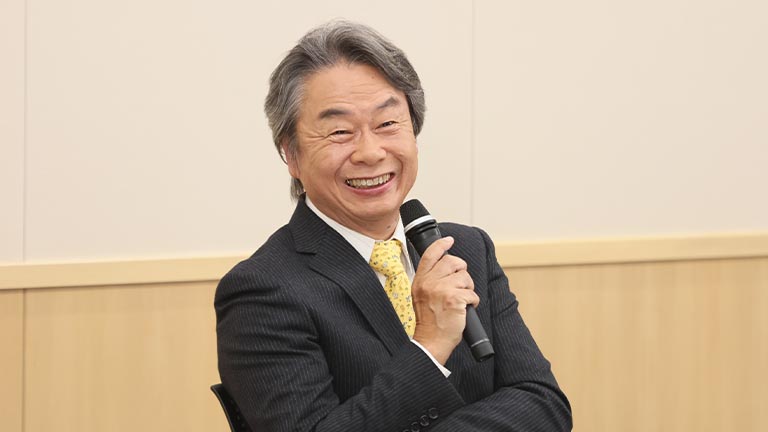
Japan has officially elevated video game design to the same cultural tier as traditional arts and sciences. Shigeru Miyamoto, the man who created Mario and The Legend of Zelda, has been selected as a candidate for the Order of Culture, the nation’s highest civilian honor for contributions to arts, science, or scholarship. The announcement came from Nintendo’s headquarters in Kyoto on a Tuesday, framed around a one-hour press conference that revealed as much about where interactive media is going as where it has been.
The selection matters more than the medal itself. Miyamoto is the first video game designer to receive this recognition. The Order of Culture, established in 1937, has historically gone to novelists, filmmakers, composers, architects, and scientists. Game designers have never sat at that table.
But Miyamoto’s words during the press conference suggested something even more significant: he sees the award not as recognition of games as culture, but as proof that games have simply become ordinary. They no longer need special cultural validation because they are already woven into daily life.
Fifty Years of Making Things People Want to Touch
Miyamoto turned 73 in November. He joined Nintendo in 1977 straight out of Kanazawa College of Art and Design, where he studied industrial design. This October marks roughly fifty years since he began working on games, though he was creating physical board games for the company before that—family board games called 家庭的盤 that families would pull out during New Year celebrations.
“I always thought it was wonderful how Nintendo connected to people’s lives,” he told reporters. “Not just when we started making video games, but even the board games—we wanted them to sit in living rooms, to be things people relaxed around.”
This philosophy explains Nintendo’s trajectory better than any business strategy. While competitors chased raw processing power and photorealism, Nintendo pursued accessibility. The Wii remote, the DS dual screens, the Switch’s hybrid form factor—all of these were designed first for people who had never held a controller. The interface had to feel like touching something familiar, not operating machinery.
“I realized that the people making games and the people who don’t play games had become separated by a wall,” Miyamoto said, reflecting on the mid-2000s. “That’s when I understood: we need to build things that dissolve that boundary.”
The Interface Argument
What made Miyamoto’s press conference noteworthy was not nostalgia—it was his case for why game developers are uniquely qualified to design digital interfaces for everyone. He argued that no other field takes user interface design as seriously as games do.
“In my opinion, there may be no industry on earth that thinks about interfaces as earnestly as games,” he said. “Reaction time, ergonomic design, what happens when someone presses the wrong button, whether the response feels natural—these are obsessive concerns in game development.”
He cited everyday frustrations: websites where the default answer to a yes-or-no question is “no,” buttons placed where thumbs naturally rest, forms that make it easy to accidentally agree to terms.
“The people who work on game interfaces carry those skills everywhere,” he said. “Mobile services today that are actually pleasant to use—they exist because game designers learned how to treat users with genuine care.”
This argument carries weight beyond entertainment. Japan has been promoting interactive design as part of its technological identity. The same attention to detail that made Nintendo controllers legendary now shapes how Japanese citizens interact with government services, hospital check-in systems, public transportation apps. Miyamoto’s worldview—that interface design is a moral practice, not just a technical one—reflects a broader Japanese design ethos that values frictionless human experience.
Kyoto as Creative Strategy
Miyamoto was born in Sonobe, a rural town in northern Kyoto Prefecture. He studied in Kanazawa but chose to work in Kyoto anyway, despite advice to move to Tokyo or overseas.
“When I was past thirty, people told me that designers who don’t live in cutting-edge cities wither away,” he recalled. “I didn’t listen. I stayed in Kyoto and kept making games.”
He credited that choice with his creative success. The rural landscape of his childhood—climbing mountains, catching fish barehanded, nearly drowning in rivers—shapes the physical intuition behind games like Super Mario Bros. and Pikmin. Players don’t just understand jumping; they remember what it felt like to jump off something as a child.
“I grew up in nature. That didn’t feel like a unique experience at the time, but when people from other countries tell me they understand these worlds immediately, I realize why it worked,” he said. “The body remembers what the mind forgets.”
This local-rooted approach contradicts the assumption that global appeal requires global centralization. Miyamoto made games that sold far more outside Japan than inside them, yet he never left Kyoto.
Three Generations of Gamers
One of Miyamoto’s most striking observations concerned family. He noted that when he started making games at twenty-six, most people his age did not play. Now, three generations of a single family can share the same cultural vocabulary.
“Fathers who played as children now watch their own children play. Grandparents recognize the characters,” he said. “That shift—from fringe hobby to shared family experience—is the real story here.”
Smartphones accelerated this trend, but Miyamoto sees games as only the beginning of interactive media’s expansion. He noted that by almost any definition, most digital interactions now qualify as games: decision-making, feedback loops, moments of surprise and satisfaction.
“If you define interactive media broadly, almost everything people do on computers today is a kind of game,” he said. “The boundary has dissolved.”
What Comes Next
Miyamoto did not frame the Order of Culture as a finale. He described it as confirmation that games have earned their place—not as specialists, but as ordinary participants in culture. He compared the progression to how computers and games once occupied separate categories at trade shows: games used to sit in appliance halls, then moved to computer sections, and eventually the hierarchy between them disappeared entirely.
“Now the people running computer companies grew up playing games,” he said. “The question of which is higher or lower no longer exists. We’re simply colleagues in the same digital world.”
He also addressed the rise of generative AI, distinguishing between creation and labor. AI can handle the labor—filling gaps, polishing edges, generating variations—but the act of imagining what should exist in the first place remains human.
“The fear is not that AI will replace designers. The fear is that we’ll mistake finished work for meaningful creation,” he said. “Tools evolve. The question of what it means to make something new persists.”
Miyamoto remains active across multiple media: films, theme parks at Universal Studios, mobile games developed with Niantic and Scopely. He called himself “a person who gets excited trying things,” noting that the spirit of dokusō—originality—remains Nintendo’s guiding principle, even as the company has grown to roughly ten thousand people worldwide.
The Larger Meaning
Japan’s recognition of Miyamoto represents more than a milestone for one designer. It signals the full maturation of interactive media as a legitimate cultural force—a shift that was decades in the making. The same society that preserved traditional arts for centuries has now placed a video game creator alongside novelists and painters in its highest honors.
For the global industry, the message is clear: games have crossed from subculture into mainstream culture. They belong to living rooms, to schools, to families. They reflect how people actually want to interact with technology.
Miyamoto’s fifty years of work did not just create franchises. It built the prototype for how humans relate to digital systems—a relationship based not on efficiency alone, but on delight, curiosity, and the simple pleasure of pressing a button and watching something happen.
The Order of Culture was established to honor those who advance Japanese civilization. In selecting Miyamoto, Japan has effectively declared that video games are part of that civilization now. Not because they conquered art, but because they became something even more durable: something people reach for every day without thinking about it at all.