Moderna's melanoma vaccine works. Will it ever scale?
A personalized mRNA melanoma vaccine cut recurrence risk by 42% in late-stage trials, but Moderna's stock fell. The science is proven—but manufacturing, pricing, and access will decide whether this becomes a blockbuster or a beautiful niche.
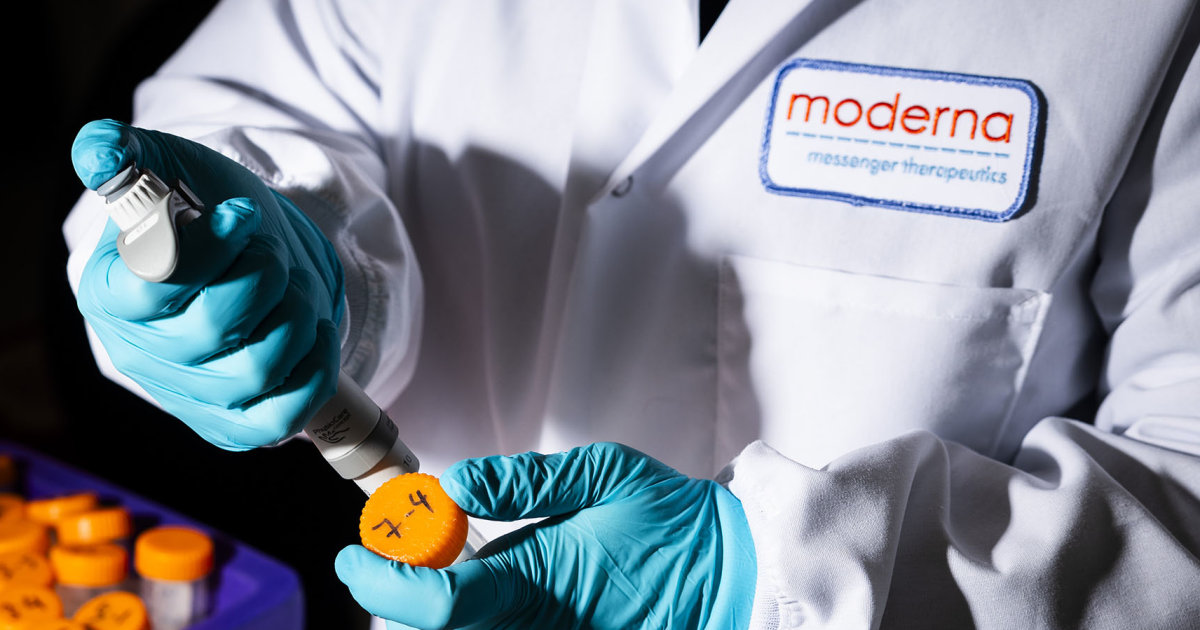
The Market Sold It Wrong
When the results leaked Thursday, Moderna’s stock dropped. It sounds absurd for a company that just announced its experimental cancer vaccine reduced recurrence and death by 42% in a late-stage trial of 1,137 patients. But the market was pricing something the press release didn’t mention: making a personalized vaccine for every single patient is hard, expensive, and slow—and nobody has figured out how to do that at commercial scale.
The data itself is strong. Patients with Stage 3 melanoma—who had their tumors surgically removed but were still at high risk of return—were split into two groups. Both received Merck’s immunotherapy drug Keytruda. One group also got intismeran, Moderna and Merck’s personalized mRNA vaccine, built from the genomic fingerprint of their own tumor. The other got a placebo. After two years, 82% of the vaccine group remained cancer-free, compared with 70% on Keytruda alone.
That difference—12 percentage points, or a 42% relative reduction in recurrence risk—is what oncologists call a meaningful step forward. Dr. Robert Vonderheide, president-elect of the American Association for Cancer Research, called it a game changer. Dr. Georgina Long, who led the trial at the Melanoma Institute Australia, put it more plainly: the vaccine mops up invisible cancer cells that surgery and immunotherapy miss.
The biology is elegant. Each patient’s excised tumor is sequenced, abnormal proteins called neoantigens are identified, and a custom mRNA vaccine is manufactured to train the immune system to hunt them down. The whole process takes roughly nine weeks. Side effects are mild—injection-site pain and low-grade fever—exactly the sort of tolerability that makes previous combinations of immunotherapy with other drugs look brutal by comparison.
But here is what the falling stock price is telling you: good data does not automatically equal a good business.
The Real Test Is Not Biology—It Is Logistics
Of the 1,749 melanoma patients screened for the trial, 17% had tumors too small to generate enough material for a vaccine. That is a filter most real-world patients will never see—they are excluded before the treatment even starts. For those who qualify, the supply chain is unprecedented. A batch of Pfizer or Moderna’s Covid-19 shots contains the same formula for millions of people. Intismeran contains a different formula for each person.
Dr. Shirin Bajaj of Mount Sinai raised this concern directly. Nothing in the trial data makes the logistics impossible, she said. But scaling them is a separate problem entirely. Building a global manufacturing network for individually tailored biologics is a task no pharmaceutical company has completed before—not at the volume oncology demands.
Consider the timeline. A patient has surgery, then needs their tumor sequenced, neoantigens identified, a custom vaccine manufactured, shipped, and administered—all within those nine weeks—while already receiving Keytruda infusions. That is a coordinated effort across pathology labs, manufacturing facilities, and oncology clinics. Most community hospitals do not have the infrastructure for any part of that process.
BioNTech’s recent failures make this constraint even clearer. The German company reported clinical trial failures for experimental cancer vaccines targeting colorectal and head and neck cancers. Vonderheide attributed part of that disappointment to timing: BioNTech tried its vaccines on patients with advanced, metastatic disease, where the immune system is already exhausted and the tumor burden is high. Moderna and Merck targeted early-stage recurrence prevention instead. The lesson is not that cancer vaccines don’t work—it is that they work best when deployed preventively, before the disease establishes deep footholds.
Who Wins and Who Loses
The winners are patients with resectable Stage 3 melanoma who can access the trial network and get timely tumor sequencing. They now have an option that meaningfully extends their disease-free survival with a side-effect profile that is dramatically lighter than prior combination approaches.
Merck is the corporate winner. Keytruda is already a multi-billion-dollar blockbuster, and the data reinforces its role as the backbone of the regimen. Adding intismeran makes the combination stickier—doctors and payers who adopt the full protocol will be less likely to switch away from Merck’s platform.
Moderna occupies an ambiguous position. The science validates its mRNA platform for oncology, which is exactly the narrative the company needed after years of living in the shadow of its pandemic success. But the stock market is not buying the notion that a bespoke, low-volume cancer therapy will compensate for declining Covid vaccine revenues anytime soon.
The losers are less visible. Patients with melanoma types that produce insufficient tumor material will be excluded. Patients at community hospitals without access to genomic sequencing and rapid manufacturing will face long delays—or no access at all. And patients with later-stage disease who were hoping this approach would translate directly to metastatic settings will need to wait. The advanced melanoma trial is ongoing, but Vonderheide cautioned that what works in the adjuvant setting does not guarantee success in the therapeutic one.
What Happens Next
The full peer-reviewed data has not yet been published, and two years of follow-up is early for a cancer vaccine. Survival outcomes—whether patients actually live longer, not just whether their cancer returns more slowly—remain unknown. Long-term toxicity data from combining mRNA vaccines with checkpoint inhibitors is still absent.
Regulatory review will be the next real bottleneck. The FDA typically demands robust safety and efficacy data before approving a novel cancer therapy, and a personalized product with an unconventional manufacturing model will face additional scrutiny. Expect questions about lot-to-lot consistency, quality control across thousands of individual formulations, and the cost structure that comes with it.
Pricing will determine whether this reaches beyond academic cancer centers. A conventional drug has a marginal manufacturing cost near zero after the first dose is designed. Intismeran requires fresh synthesis for each patient. No one has yet disclosed a price, but if the per-patient cost approaches six figures annually—a reasonable guess given the complexity—the question of who pays becomes political as much as clinical.
Meanwhile, the pipeline is already expanding. Long confirmed that researchers are applying the same neoantigen-targeting approach to bladder, kidney, and lung cancers. If the logistics can be solved for melanoma, the model could replicate elsewhere. But replication is not the same as simplification. Every new cancer type introduces new sequencing challenges, different neoantigen profiles, and potentially different manufacturing constraints.
The Bigger Question
Dr. Gino In at USC drew a sharp line between this trial and everything that came before. Prior attempts to combine immunotherapies with other drugs produced significant and sometimes permanent side effects as the immune system attacked healthy tissue. Intismeran did not. That safety signal matters as much as the efficacy signal, because it opens the door to combinations that were previously too toxic to attempt.
Vonderheide framed the most ambitious version of that future: a cancer vaccine used not just to prevent recurrence but to prevent cancer itself. He called it far-off. The melanoma data does not make it seem impossible.
What the Moderna-Merck trial proves is that personalized mRNA vaccines can work in the right setting. What it does not prove is that they can work at scale, at affordable cost, in diverse health systems. The stock market punished the announcement because it sees the gap between proof of concept and proof of business. That gap is real. Closing it will determine whether this breakthrough changes oncology or merely adds another option for a narrow slice of patients.