Why Morgan Stanley Is Called the Semiconductor Reaper
Morgan Stanley slashed its price targets on Samsung and SK Hynix despite raising near-term profit forecasts—a signal that the AI memory boom may have a harder ceiling than investors assume.
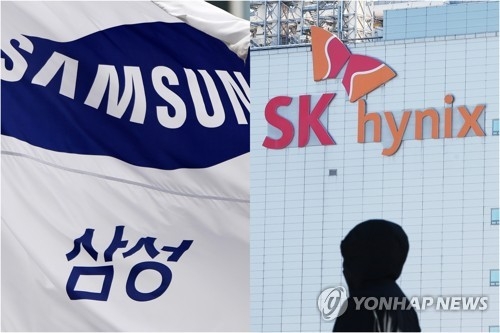
The Reaper Has Spoken Again
Shawn Kim does not get excited about semiconductor stocks. At Morgan Stanley, he has built a reputation almost entirely on telling investors when the good times are about to end. The nickname the Korean press gave him — “the semiconductor reaper” — is not flattering, and it is exactly why his latest note deserves more attention than most.
On October 10, Kim cut SK Hynix’s target price by 38 percent, from 2.6 million won to 1.6 million won. Samsung’s target dropped 19 percent, from 381,000 won to 309,000 won. Both companies carry Overweight ratings still, and Kim upgraded Samsung over Samsung Electro-Mechanics as his sector top pick. But the direction of travel matters: he sees a sharp compression in memory profitability beginning in earnest after 2027.
The Oddity No One Is Talking About
Here is the thing that makes this report unusual. Morgan Stanley did not slash its earnings forecasts for next year. It raised them. Samsung’s expected operating profit for 2026 was nudged up 9 percent to roughly 688 trillion won. SK Hynix’s rose 13 percent to about 468 trillion won. That is the opposite of a panic downgrade. It is a company saying: the peak is coming, it looks bright, and you are probably paying too much for it.
This is the subtle distinction between a cyclical warning and a structural one. A cyclical downgrade says profits will fall. A structural one says the profit curve itself is getting flatter than the chart on your screen suggests. Kim is delivering the latter. He projects that return-on-equity margins, currently elevated well above the historical average of roughly 28 percent, will revert toward that mean by 2029. The question is not whether the AI memory boom ends. It is how abruptly, and who gets caught holding inventory at the wrong time.
The 2027 Squeeze
Kim’s timeline has a specific shape. Through 2026, demand for high-bandwidth memory stays tight, driven by NVIDIA and other AI accelerator makers queuing up for HBM3e and the next generation of stacked DRAM. Then two forces converge.
First, newly built fabs in South Korea, the United States, and Japan begin running at scale from late 2027 onward. Supply, which has been constrained for nearly three years, starts growing faster than anyone expected. Second, datacenter construction in the United States slows. Kim explicitly ties this to policy uncertainty around the 2026 midterm elections, arguing that capital expenditure planning for cloud infrastructure will lose momentum once the political landscape shifts. If the assumption is wrong and election results do not slow build-outs, the supply-demand balance improves and the downgrades look premature. But the risk is priced asymmetrically: the downside is sharper than the upside.
Morgan Stanley’s baseline now calls for global datacenter equipment spending growth to drop from 21 percent to 9 percent by 2028. Nine percent is not zero. It is barely enough to absorb the additional output from the new capacity coming online. In a normal cycle, a single-digit growth rate against robust expansion in supply would trigger a mild correction. In this cycle, where the entire valuation architecture of Samsung and SK Hynix rests on the assumption that AI demand grows exponentially for several more years, the math is uncomfortable.
The HBM Margin Trap
High-bandwidth memory is the crown jewel of this story. It is where the biggest margins live and where the fiercest competition is arriving. Morgan Stanley cut its HBM operating margin forecast for SK Hynix from 78–80 percent down to 70 percent for the 2027–2028 window. Samsung’s estimate moved from roughly 80 percent down to a range of 65–72 percent. Even within those ranges, the trajectory is steep.
This matters because HBM has functioned as the psychological anchor for the entire memory bull case. Investors have tolerated lower margins on commodity DRAM and NAND precisely because HBM promised a durable premium. If that premium erodes, the erosion spreads across the portfolio. And it is not only Korean and Taiwanese firms under pressure. Morgan Stanley flagged Chinese memory manufacturers as a rising threat in its report, noting that their capability catch-up adds another layer of competitive risk precisely when capacity expansion is already straining prices.
Why the Target Cut Matters Beyond Korea
The implications reach well beyond Seoul and Suwon. Taiwan Semiconductor Manufacturing Company, the world’s largest contract chipmaker, supplies logic chips for the same AI servers driving HBM demand. If datacenter build-outs slow meaningfully, TSMC’s growth profile degrades too. Japan, which has spent billions courting TSMC’s Kumamoto fab and building its own memory capacity through Kioxia and Sony, faces a different kind of exposure: its investment thesis depends on sustained demand growth that may not arrive on schedule.
For the United States, the geopolitical angle is complicated. The CHIPS Act and related subsidies accelerated memory investment partly as a hedge against reliance on East Asian suppliers. But subsidies do not manufacture demand. If the demand side softens because AI adoption curves flatten or hyperscalers pull back on capex, the subsidy-backed capacity in Arizona and elsewhere becomes a stranded-asset risk sooner rather than later.
What to Watch Next
Three variables will determine whether Kim’s reaper has come early or simply ahead of schedule.
First, watch American datacenter capex guidance. If the major cloud providers signal continued acceleration through 2027 and 2028, the supply concern weakens considerably. If they start hedging or rationing, the 9 percent growth estimate may be generous.
Second, track Chinese memory progress. XMC and ChangXin Memory Technologies have been investing aggressively. Any acceleration in their HBM timelines increases competitive pressure precisely when Korean and Taiwanese firms need to defend margins.
Third, monitor Samsung’s HBM qualification wins. Kim upgraded Samsung to top pick because he believes the company will recover market share lost to SK Hynix in the latest HBM generations. If Samsung secures a major design win with NVIDIA or AMD, the margin compression may be less severe than feared. If it misses, the Overweight rating looks fragile.
The Real Story Is the Gap Between Earnings and Valuation
What separates Morgan Stanley’s current move from every previous “winter is coming” report is that it is not denying the present boom. The AI narrative is intact. The earnings numbers支撑 it. What Kim is questioning is whether the market has fully discounted the transition into a period where memory profitability returns to something closer to the long-run average.
That transition is not dramatic in any single quarter. It is glacial. Supply ramps gradually. Demand growth decelerates rather than collapsing. Margins compress inch by inch until the compression feels like a wall. The stocks that have run hardest on the assumption of persistent scarcity are the ones that will feel it first.
The reaper’s timing remains uncertain. His existence, according to this report, does not.