Musk's 1-Billion-Robot Bet and Japan's Demographic Time Bomb
Elon Musk's claim that 1 billion humanoid robots will be in use within a decade landed at a G20 meeting in North Carolina. For Japan, where the workforce is shrinking by the millions, the number is either a wake-up call or a warning.
The Number That Wasn’t Meant Just for America
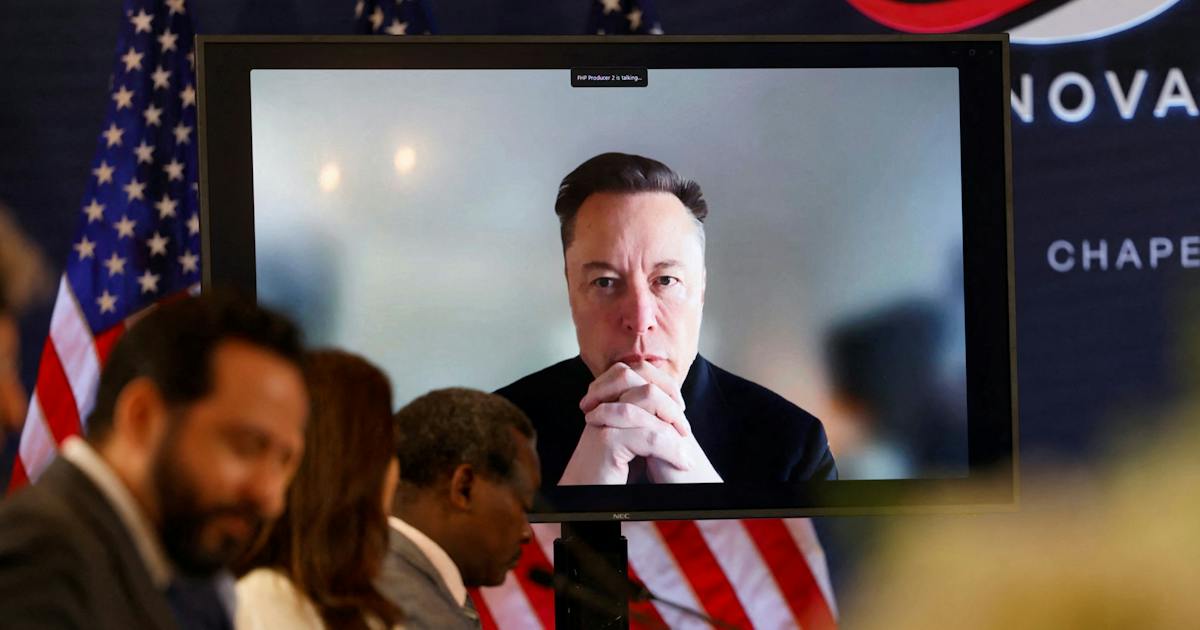
Elon Musk stood before the G20 Innovation Ministers’ Meeting in Chapel Hill, North Carolina, and dropped a figure that sounds like science fiction: one billion humanoid robots, in ten years, minimum.
The remarks came alongside a broader pitch to finance ministers about two problems that barely registered on most agendas until now — the electricity grid can’t keep up with AI data centers, and regulation is moving slower than silicon. The robot target was the headline. The infrastructure argument was the follow-up. Both point to the same conclusion: the bottleneck isn’t intelligence. It’s physical throughput.
For Japan, the announcement lands differently than it does in California or Germany. In those countries, humanoid robots are an automation question. In Japan, they are a demographic survival question.
Why Japan Cannot Afford to Ignore This
Japan is losing workers faster than any major economy in history. The working-age population has fallen by roughly 8 million since its peak in 1995. By 2050, it could shrink by another 20 million. Nursing homes are filling up. Factories in regional cities are operating with skeleton crews. The math behind Japan’s economy has been changing for three decades, and it is not improving.
A billion humanoid robots is not a luxury for a country that is actively running out of people. It is a floor.
This is the point that English-language reporting often flattens. Musk’s claim is rarely discussed in the context of who needs it most. In Japan, the equation is stark: if robots do not fill the labor gap, the economy contracts. There is no alternative path that does not involve significantly fewer people doing significantly more work — a proposition that runs into both biological and social limits.
The Manufacturing Explosion Logic
Nikkei commentator Ichio Hibari offered a useful framing inside his analysis, which appeared behind the paper’s paywall. The argument runs like this: if AI can design manufacturing equipment, and autonomous robots can then build those factories without human intervention, the entire production chain decouples from the very labor shortage that makes it urgent.
That is the core of what might be called a manufacturing explosion. The AI designs the tool. The robot builds the factory that builds the robot. The loop closes on itself, with human involvement approaching zero.
The logic is internally coherent. The timeline is not.
Where the Claim Stumbles
The gap between the pitch and the physics is physical AI. Robots like Tesla’s Optimus, Figure’s machines, and the dozens of startups racing in this space have improved at picking things up and moving them around. They have not reached the point where a single unit can reliably learn and execute the range of tasks a human worker handles across different environments.
Flexibility has increased. Generalization has not. A robot trained to assemble a car door will not automatically know how to sort recyclables, serve food, or repair a broken pipe. Each of those requires a leap in what researchers are calling general-purpose physical AI — and that leap has proven harder than most investors expected.
Hibari’s own analysis acknowledged this squarely. The risk is not that the goal is wrong. The risk is that the timeline is optimistic.
The Self-Improving AI Gamble
There is one more assumption baked into the billion-unit claim. It is that AI will eventually become self-improving — that it can rewrite its own training pipelines, optimize its own architectures, and accelerate its own development without human oversight. If that happens, the manufacturing explosion becomes plausible on a ten-year timeline. If it does not, the timeline stretches to decades, not years.
No one knows whether self-improving AI is achievable. The question has occupied researchers for years without a clear answer. Musk is betting the company’s credibility on the affirmative case. That is not unusual for him. It is still a bet.
Japan Already Has a Robot Strategy
The irony is that Japan does not need Musk to tell it this matters. The country has been planning for robotic labor for more than a decade. Honda built ASIMO. Toyota has invested in humanoid prototypes. SoftBank partnered with Boston Dynamics. Mitsubishi Motors announced in July 2026 that it would enter the humanoid robot space in collaboration with a University of Tokyo startup, with plans for domestic production and external sales.
What Musk’s G20 remarks add is a global signal that the timeline may be compressing faster than anyone anticipated. That is both an opportunity and a threat. The opportunity is that Japan could leapfrog from prototype to deployment if the supply chain scales. The threat is that the scaling will happen elsewhere first, and Japan will be importing the very technology it needed to build domestically.
Who Wins, Who Loses
If the billion-unit target holds even half of its promise, the winners are countries that can deploy robots at scale — the United States, South Korea, and potentially China, all of which have manufacturing ecosystems and capital markets capable of supporting rapid rollout. Japan could win too, but only if it converts its deep robotics expertise into production speed rather than incremental refinement.
The losers are unclear, because the alternative to robots is not stasis. It is economic contraction. Countries that fail to automate will face labor shortages that no amount of immigration policy can fully offset. The question is not whether automation wins. It is who automates fast enough to capture the value.
What Happens Next
Musk’s remarks were made at a G20 meeting focused on innovation policy. Expect follow-up pressure on governments to ease regulations around robotics deployment and to invest in the energy infrastructure that AI and automation will demand. The power shortage argument he raised is the quieter half of the story, but it may prove the harder one to solve.
In Japan, the reaction will likely be measured. The country does not often respond loudly to American tech claims. But behind the scenes, the numbers are being recalculated. A billion robots in ten years is either the future arriving early or a marketing target disguised as a forecast. Either way, Japan cannot afford to treat it as noise.
The demographic clock is ticking. The question is whether the robots will arrive in time.