Musk's $40B Chip Bet Is a Warning to Every AI Startup
SpaceX's completion of a $40 billion GPU financing round exposes who can borrow and who can't in the AI infrastructure boom. Korean and global cloud players are now feeling the squeeze.
The $40 billion signal everyone should be reading
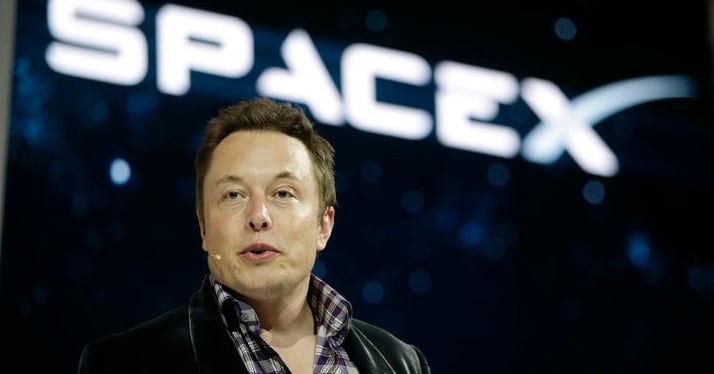
SpaceX completed a $40 billion debt raise this week. Elon Musk posted the confirmation on X, specifying that the money is earmarked for Nvidia GPU purchases in the first two quarters of next year, structured mostly as early-repayable obligations.
The headline figure sounds extreme. But the real story is not the amount. It is that the debt market still opened for SpaceX—and has largely closed for everyone else.
Musk followed the financing announcement with a blunt warning. Companies whose only income streams come from AI datacenter operations will find it nearly impossible to borrow. He predicted mass consolidation and failures among so-called neocloud providers—firms that buy GPUs, build or lease datacenter space, and then rent compute to AI developers in hopes of recouping their upfront spending.
The warning is not armchair speculation. Financial markets are already pricing it in.
Who got funding, and who did not
SpaceX is the exception that proves the rule. Its third-quarter revenue reached $14.58 billion, up 161 percent year over year. AI-related revenue alone came in at $7.56 billion, roughly ten times the prior-year figure. The company expects to deploy $35 billion to $40 billion in capital expenditures this quarter. It is borrowing heavily, yes, but it is also generating real, growing cash flows from Starlink and rocket launches that give lenders confidence.
Musk emphasized that SpaceX holds investment-grade credit and that existing revenue streams underpin its ability to take on debt. That distinction matters. The artificial-intelligence infrastructure buildout is creating a two-tier market: companies with visible, diversified revenue can borrow at scale, while pure-play GPU hosts cannot.
The contrast is already visible in public markets.
CoreWeave, one of the most prominent American AI-cloud providers, saw its stock and corporate bonds tumble in recent trading. The market has begun focusing on its roughly $50 billion debt load. Credit-default-swap premiums have risen, reflecting growing anxiety that the company may struggle to service its obligations from future compute revenue alone. Investors who once priced in unlimited AI demand are now asking whether that demand translates into actual cash flow.
Yet the door is not fully shut for everyone. On October 22, Naviguez announced a $3.5 billion financing package from Citibank to fund datacenter construction and GPU purchases. The facility carries a 364-day maturity and a pricing structure tied to SOFR plus 275 basis points. The deal shows that well-collateralized projects with credible counterparties can still raise money—but the terms are tightening, and the bar is rising.
Behind the headlines, a quieter shift is reshaping how lenders evaluate AI infrastructure deals. Credit committees are no longer accepting projections of future demand as sufficient underwriting collateral. They want signed contracts, committed hyperscaler customers, and proof that revenue will materialize before debt service comes due. This marks a decisive break from the mid-2025 lending environment, where speculative demand forecasts were often enough to secure multi-billion-dollar facilities.
What this means for Korean AI infrastructure bets
South Korea is watching closely. The country’s semiconductor and datacenter ecosystems sit at the center of the global GPU supply chain, and Korean-listed AI-infrastructure names are already moving on this news.
When Musk said the debt market has “largely cut off” lending to companies without substantial non-AI revenue, he was describing a dynamic that will hit Korean neocloud operators harder than American ones. Many of them are earlier in their revenue cycles, more dependent on project finance, and more exposed to sudden shifts in lending appetite. The financing environment that supported aggressive GPU buying through mid-2025 is no longer available at the same scale or on the same terms.
Korean investors will be tracking which local AI-datacenter projects can secure bank financing on acceptable terms and which cannot. The firms that rely on equity raises or speculative debt will find both channels narrowing. Those with contracted revenue from established cloud customers or hyperscalers will retain access.
The ripple effects extend beyond Korea’s shores. Global GPU allocation patterns may begin to shift as lenders redirect capital toward companies with diversified revenue bases. Nvidia’s biggest customers will increasingly be those that can absorb massive chip purchases without depending on single-market compute rental income. This favors vertical integrators and platform companies over standalone infrastructure providers.
The broader implication is that the AI infrastructure buildout is entering a selection phase. Capacity is expanding rapidly, but the financial architecture supporting that expansion is becoming less forgiving.
Why Musk’s comment matters beyond SpaceX
Musk could simply have kept quiet about the rest of the industry. Instead, he used his platform to telegraph a message to lenders, competitors, and customers: only companies with durable revenue streams belong in this market. He also explicitly said SpaceX has no plans to acquire struggling neocloud operators, removing one possible safety net from the equation.
That last point is significant. A wave of acquisitions by well-capitalized buyers could have softened the blow for overleveraged providers. Musk is closing that door, which means failed companies will face liquidation or restructuring rather than being absorbed.
This is a second-order consequence worth watching. Without acquisition as an exit route, defaulted AI-cloud borrowers will face distressed asset sales. GPU inventory that was priced at premium valuations six months ago could flood secondary markets, compressing margins for survivors and making it even harder for remaining operators to justify their own leverage.
The timeline for consequences is already underway. CoreWeave’s bond selloff is happening now. More Korean and global AI-cloud borrowers will face refinancing decisions in coming quarters, and those decisions will determine which firms survive and which do not.
The bottom line
The $40 billion SpaceX financing is a milestone, but it is also a mirror. It shows that AI infrastructure demand is real, that lenders are willing to bet on companies with proven cash flow, and that the rest of the market is being pruned. For Korean semiconductor and datacenter players, the message is clear: access to capital is no longer a given. It is earned through contracts, collateral, and revenue visibility.
The firms that treat this as a permanent easy-money environment will pay the price. Those that restructure their financing assumptions now—prioritizing contracted revenue, extending maturity profiles, and avoiding overleveraged positions—will be the ones standing when the selection phase settles. The AI infrastructure boom is not over. But the era of borrowing without proof of repayment has ended.