Musk Just Confirmed Bitcoin Is His Largest Holding — Here's Why It Matters
Elon Musk has named Bitcoin his top personal asset outside Tesla and SpaceX stakes, reviving the debate over whether digital currency belongs in corporate treasuries. The signal carries implications for both crypto markets and U.S. political positioning.
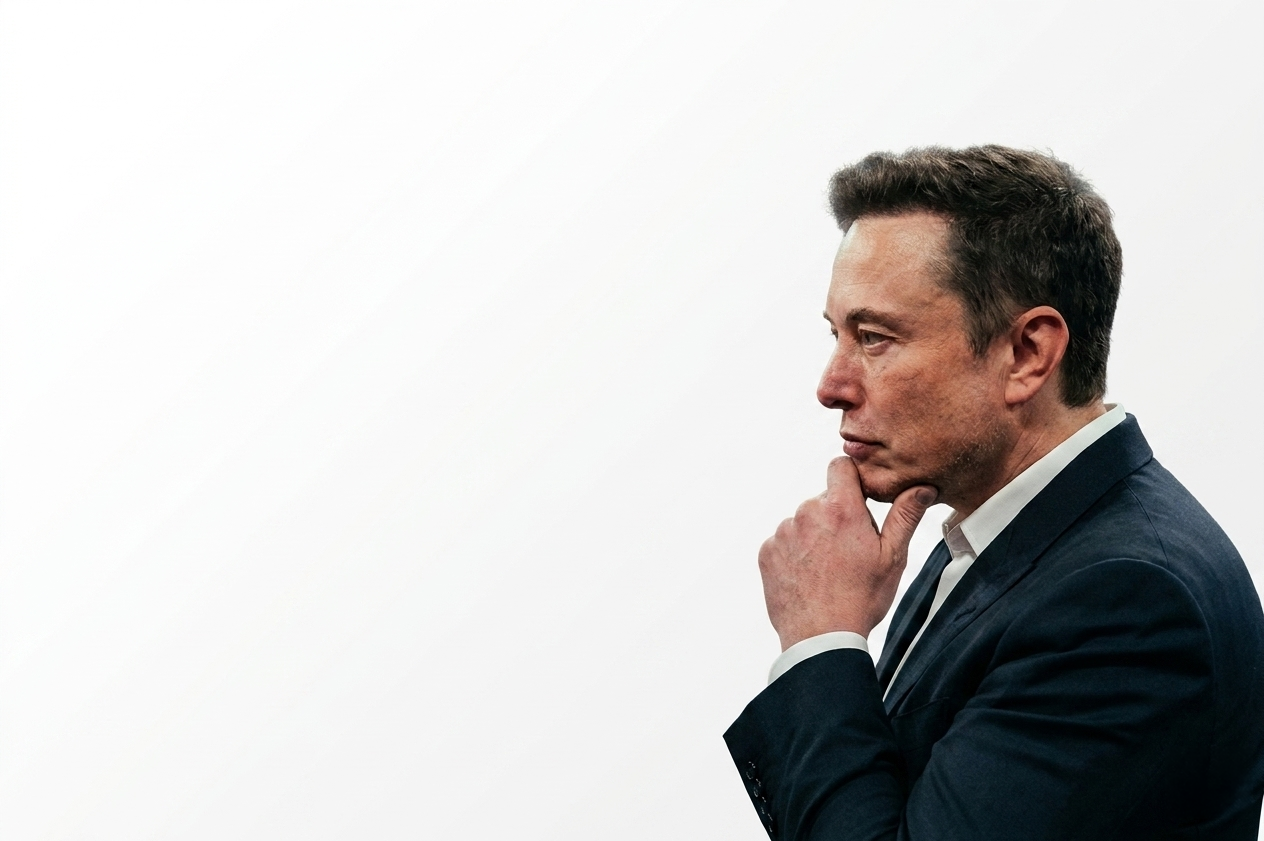
Musk just made a quiet claim with loud consequences
Elon Musk has identified Bitcoin as the single largest asset he holds beyond his stakes in Tesla and SpaceX. The confirmation, reported by Crypto Briefing and cited by Seoul-based TokenPost on August 22, 2026, is not new information on its face — Musk has held Bitcoin since Tesla first announced a $1.5 billion purchase in February 2021. What is worth paying attention to is what happens when the world’s most influential retail voice about crypto restates the position now, at a moment when the political and market context around digital assets has shifted beneath everyone’s feet.
The source and what it actually says
The underlying claim traces back to remarks Musk made at The B Word event in July 2021, alongside Jack Dorsey and Cathie Wood. He said he personally holds Bitcoin, Ethereum, and Dogecoin, that Tesla and SpaceX both hold Bitcoin, and that a decline in the Bitcoin price would mean he was also taking losses — a clear signal he had no intention of selling. Crypto Briefing has re-circulated these remarks this week after they resurfaced in conversations about corporate treasury strategy.
TokenPost picked it up over the weekend, publishing the story early Saturday morning before most English-language crypto desks were writing their week-start analyses. That sequencing matters: the claim will now enter Anglophone coverage wearing the aura of breaking news rather than the slower cadence of a three-year-old quotation. For a market that runs on narrative momentum, that framing advantage is real.
Why now is different from 2021
Musk’s Bitcoin position was always obvious. The difference today is political. In mid-2021, Bitcoin’s corporate-treasury argument was a fringe experiment. Tesla’s purchase, followed by its abrupt $600 million sale in May 2022 over environmental concerns, read as activism. By 2024 and 2025, the conversation had moved on: MicroStrategy doubled down, Apple began accepting crypto payments on its storefront, and several states built out Bitcoin-friendly reserve frameworks. The institutional case had hardened into a quiet norm. Now, in 2026, that norm is being tested again — and Musk is a willing participant in the fray.
The corporate-treasury implication is the real story
The most consequential part of the Crypto Briefing report is not the quote itself but the framing: Musk is repositioning Bitcoin as a legitimate line item on corporate balance sheets, not just as a speculative holding. The logic is straightforward. If a company CEO whose equity is tied to multiple public and private firms can point to Bitcoin as his largest personal asset outside those core holdings, the rhetorical barrier to other executives following suit shrinks. That barrier was never primarily financial — it was social. CEOs do not want to be the one who turns the pension fund into a casino. Musk has already made that move visible. Once he normalizes it, the next mover is someone without a billionaire halo to shield them.
Who wins and who loses
Bitcoin wins first. A high-profile reaffirmation from Musk keeps spot Bitcoin ETF inflows in the narrative cycle, reinforces the asset’s store-of-value positioning, and ensures that every mainstream financial story this week includes at least one Bitcoin mention. The cost to other narratives — AI infrastructure, cloud computing, semiconductor cycles — is marginal but cumulative. Markets have limited attention.
Ethereum benefits secondarily. Musk confirmed he holds ETH as well. The dual confirmation suggests he views the two assets as complementary rather than competing, which is a small but meaningful signal for investors trying to map allocation between the two largest cryptocurrencies.
Dogecoin deserves a separate note. Despite the repeated jokes, the fact that Musk holds it alongside BTC and ETH makes it a tier-one personal asset in his portfolio, not a side bet. That changes how the market prices DOGE events whenever he speaks publicly.
Tesla shareholders who feared a repeat of the May 2022 sale should feel some relief, though not total reassurance. The 2021 comment explicitly said he would not sell into a decline, which is a more durable commitment than the environmental justification that followed in 2022. Still, the market cannot fully trust any single statement from a man whose communications style treats conviction as a renewable resource.
Critics of crypto’s regulatory posture lose ground. The political environment in the United States has moved sharply in crypto’s favor over the past two years. Regulatory clarity efforts at the federal level have accelerated, and prominent politicians have repositioned publicly. Musk’s statement adds cultural weight to a legal framework that is still taking shape. The risk is that cultural enthusiasm outpaces regulatory reality, creating a false sense of security for retail investors.
What happens next
Expect a wave of commentary calling this a strategic signal. Expect some hedge funds to adjust positioning based on the assumption that institutional treasury demand for Bitcoin will accelerate. Expect Dogecoin to spike on the headline regardless of whether the fundamentals support it. Expect skeptics to dig up the May 2022 Tesla sale and frame the whole thing as hypocrisy.
The more disciplined question is whether this changes anything about Bitcoin’s supply dynamics. It does not, directly. But it does reinforce the narrative that keeps new capital flowing into Bitcoin-linked products, and in a market where narrative drives flows, that reinforcement is functionally meaningful.
For English-language outlets that have been treating this story as secondary, the Korean reporting cycle offers a reminder: crypto news moves faster when it originates outside the Anglophone ecosystem, and the framing can shift before anyone across the Atlantic has finished their morning coffee.