Why Musk's Child-Share Pledge Isn't Just Another Empty Threat
Elon Musk says he'll give every US child one SpaceX share. The economics are feasible, the philosophy is provocative, and the precedent is worrying. Here's what investors should actually watch.
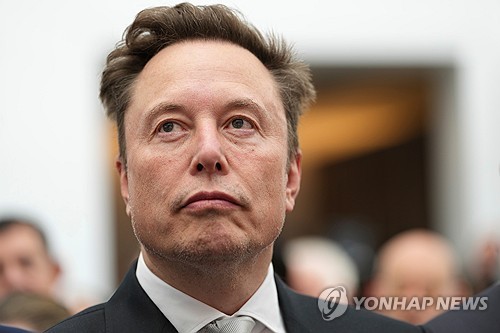
The Announcement
On October 19, Elon Musk posted on X that he intends to give one share of SpaceX to every child in the United States next year. He pinned the post to his profile. He did not explain how. Bloomberg estimated the cost at approximately $10.5 billion, based on a $146 per-share valuation and roughly 72 million US children under the Census count. Musk’s net worth exceeds $900 billion, with more than $700 billion locked in SpaceX stock. The money exists. The mechanism does not.
What happened the day before adds context most readers are missing.
The Anthropic Shadow
Anthropic announced it would reserve 5 percent of its shares for a public benefit fund — a traditional charitable structure that keeps decision-making centralized. Musk replied, recommending that Anthropic distribute shares directly to the public instead. Then, days later, he made the same proposal for himself, scoped nationally and to an entire generation.
The through-line is not generosity. It is a philosophy of ownership that Musk has been articulating in fragments for years: that wealth concentrated in foundations and trusts is inherently less democratic than wealth scattered across individual accounts, even if no one knows what to do with it.
The timing is deliberate. AI is entering a regulatory and moral reckoning. Anthropic is positioning itself as the responsible alternative to OpenAI. Musk’s reply and his subsequent pledge both reframe the conversation — not as “who controls the AI,” but as “who owns a piece of it.”
Who Actually Wins
If Musk follows through, the immediate beneficiaries are 72 million American children holding fractional stakes in a private company that does not trade on any exchange. The shares are meaningless in the conventional sense: no liquidity, no dividend, no ability to sell. They are symbolic tokens — proof of ownership in an entity whose future value nobody can price with confidence.
But symbolism is not trivial. It shifts the narrative around billionaires from extraction to distribution. It gives Musk a permanent political asset: a constituency of tiny shareholders who owe him nothing and may feel obliged to him anyway.
Corporate America will watch this closely. If a private company can distribute equity to millions of non-accredited individuals without triggering securities violations, the model could spread. Private markets have been starving retail investors for decades. A successful implementation would legitimize a new channel.
Who Loses
Musk loses credibility if this dissolves into nothing, as so many of his announcements have. Bloomberg noted that he has a pattern of proposing ambitious plans and later calling them jokes. The gap between proposal and execution is where reputations erode.
Public policy loses if the framing succeeds without substance. The real question about wealth inequality is not whether children own one share, but whether the structural mechanics of capital accumulation change. A single share distributed to 72 million people alters a headline. It does not alter a tax code, a trust structure, or a boardroom.
Competitors in the private equity and venture space lose if the narrative catches. The myth of the private market as an exclusive club gets harder to maintain when a billionaire announces he is handing out pieces of it to toddlers.
The Execution Problem
Here is what the announcement does not address, and why it matters.
First, SpaceX is private. There is no public market to register these shares. Distributing them requires a legal mechanism — likely a trust structure, a special purpose vehicle, or a regulatory workaround that has never been tested at this scale. No such framework exists today.
Second, children cannot legally hold securities in most jurisdictions. A custodial account structure would be required, managed by parents or guardians. That creates a administrative bottleneck of enormous proportions.
Third, the $146 per-share price is an estimate from Bloomberg’s billionaire index methodology, not a market-clearing price. SpaceX has not priced a new round recently. The actual number could be higher or lower, which changes the total cost from $10.5 billion to something that may or may not fit inside Musk’s available liquidity.
Fourth, even if all logistics are solved, distributing one share per child does not make anyone wealthy. At current valuations, each share is worth roughly $146. The aggregate wealth transferred is real — $10.5 billion — but it is spread so thin that it functions as a gesture, not a transfer of economic power.
What Happens Next
The most likely outcome is that Musk follows through partially. He may establish a vehicle, announce partnerships with financial institutions, and distribute shares to a subset of the population — perhaps starting with children born after a specific date, or limited to certain age ranges. The pledge will shrink to fit the feasible.
The more ambitious outcome is that he builds a new distribution infrastructure. That would make SpaceX the first private company to execute a universal equity drop at national scale. It would set a precedent that could reshape how private markets think about ownership.
The least likely outcome is that he calls it a joke. He has done it before. The pattern makes this possibility real, not speculative.
Investors should watch three signals: whether Musk establishes a legal vehicle, whether he names a partner to handle the administrative load, and whether he provides a timeline. Absent those, the announcement remains exactly what it is — a provocation, not a plan.
The Korean wire picked this up hours after it happened. That is worth noting. Emerging-market outlets often read Musk’s moves as signals about global capital flows and ownership structures, not just entertainment. The Seoul angle is not about Korea. It is about recognizing that an announcement of this scale reframes how emerging markets think about who gets to own the future — and that framing travels faster than most Wall Street analysts realize.