Nasa's First Space Telescope Rescue Failed. Here's What It Means
NASA's historic attempt to rescue the decaying Swift telescope ended in failure after the rescue craft ran out of fuel. The mission reveals how fragile our orbital infrastructure has become — and what it means for the future of satellite preservation.
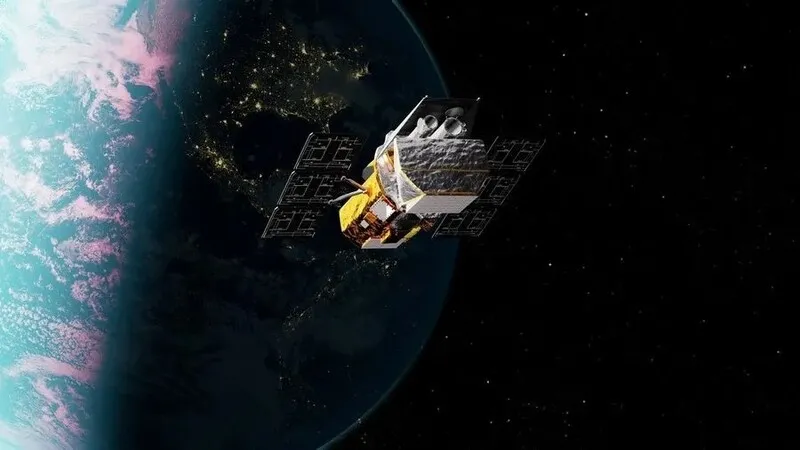
The salvage mission no one thought would happen
NASA attempted something no agency has ever done before: sending a custom-built rescue spacecraft to grapple a decaying satellite and boost it back to a safe orbit. The target was the Swift Gamma-Ray Burst Mission, a telescope that has been watching the universe’s most violent explosions since 2004. The rescue vehicle was called Link. And by late July, it was dead in the water — literally.
The failure is a stark reminder that the era of disposable satellites may be ending, not because we’ve solved the engineering problems of orbital servicing, but because those problems are harder than anyone expected.
How Swift got into trouble
Swift orbits at roughly 690 kilometers. That altitude should have been stable for years. But in late 2024, solar activity intensified beyond predictions. The Sun’s high-energy particle output increased atmospheric drag on objects in low Earth orbit, causing Swift’s trajectory to decay faster than anticipated. The telescope was not designed to raise its own orbit — its two-year design life had long expired. It was drifting.
This is not a new problem. The same solar-maximum dynamics are pressuring dozens of other satellites right now. But Swift was the first object NASA chose to fight for with a purpose-built rescue vehicle, and the choice reveals how seriously the agency views the loss of even a single science platform.
The Link mission in brief
NASA contracted Catalyst Space, a company founded by Jared Isaacman — the billionaire pilot who funded SpaceX’s Inspiration4 civilian orbital flight — to build a refrigerator-sized rescue craft capable of docking with Swift and pushing it higher. The timeline was aggressive: Catalyst completed the spacecraft in nine months, a fraction of the typical multi-year development cycle for orbital vehicles. Link launched successfully on July 3.
The plan was elegant in theory. Link would approach Swift, use three robotic arms to grasp the failing telescope, and then fire its own thrusters over three months to raise Swift’s orbit gradually. No one expected perfection. They expected a careful, mechanical dance at 17,500 miles per hour.
It never got that far.
What went wrong
By late July, Link suffered a propulsion malfunction that left it unable to control its attitude. In the process of attempting repairs, the spacecraft consumed so much fuel that it no longer had the reserves needed to perform the primary mission — raising Swift’s orbit. NASA confirmed the rescue attempt was aborted. Link will continue to test docking and proximity operations, which the agency says could inform future missions, but the Swift telescope is on its own.
Jared Isaacman, who serves as NASA’s associate administrator for the Space Technology Mission Directorate, acknowledged the disappointment publicly: “We didn’t get the result we were aiming for, but this mission was worth attempting.”
That framing — measured, forward-looking — is exactly what you’d expect from someone whose career has been built on doing the supposedly impossible. It doesn’t change the fact that the most ambitious satellite salvage attempt in history ended with both spacecraft stuck where they are.
What happens next for Swift
NASA plans to resume Swift’s scientific observations for approximately one more month before atmospheric reentry becomes unavoidable. The telescope will burn up during descent, though some fragments may reach the ground. The risk to people is assessed as very low. Swift has already delivered decades of data on gamma-ray bursts — the most powerful explosions in the universe since the Big Bang. Its final month of observations will likely produce valuable science, but the mission’s operational life is effectively over.
Why this matters beyond Swift
The Swift rescue failure is not just a story about one telescope. It is a stress test for a concept that many in the space industry have been betting will become routine: active orbital debris removal and satellite servicing. Companies like ClearSpace, Astroscale, and now Catalyst Space are building the foundation for an entirely new orbital economy. If a $300-million-class rescue mission can fail after a successful launch, the bar for what counts as “mission accomplished” in on-orbit servicing needs to be recalibrated.
Korea’s space community has been watching closely. South Korea has invested heavily in its own satellite infrastructure — from the Danuri lunar orbiter to Earth-observation constellations — and the Swift incident underscores a vulnerability that every orbiting nation shares: once a satellite is in trouble, there is rarely a lifeboat. The international space station has always been an exception, not the rule. Most satellites are built to die in place.
The deeper lesson
Solar weather is becoming a more significant threat to low-Earth-orbit infrastructure than most planners accounted for. The 2024–2025 solar maximum has already demonstrated that coronal mass ejections can accelerate orbital decay across entire constellations, not just individual aging satellites. This is a systemic risk, and it will only grow as more companies flood LEO with internet and Earth-observation platforms.
The Swift rescue was NASA’s attempt to write a different ending for a satellite that had already outlived its warranty. It didn’t work. But the attempt itself — the willingness to spend nine months and millions of dollars trying to save a 20-year-old telescope — signals that the space industry is taking the problem of orbital longevity seriously. That shift in mindset matters, even when the engineering doesn’t cooperate.
Swift will fall this year. Link will keep testing in orbit. And the next satellite that starts drifting will be the one everyone watches to see if the industry has learned from this.