Why Navi Pillay's Nobel Matters More Than You Think
The Nobel Committee chose a jurist over activists, signaling a turn toward international law when courts face unprecedented political attacks. Here's what the pick reveals about peace prize strategy.
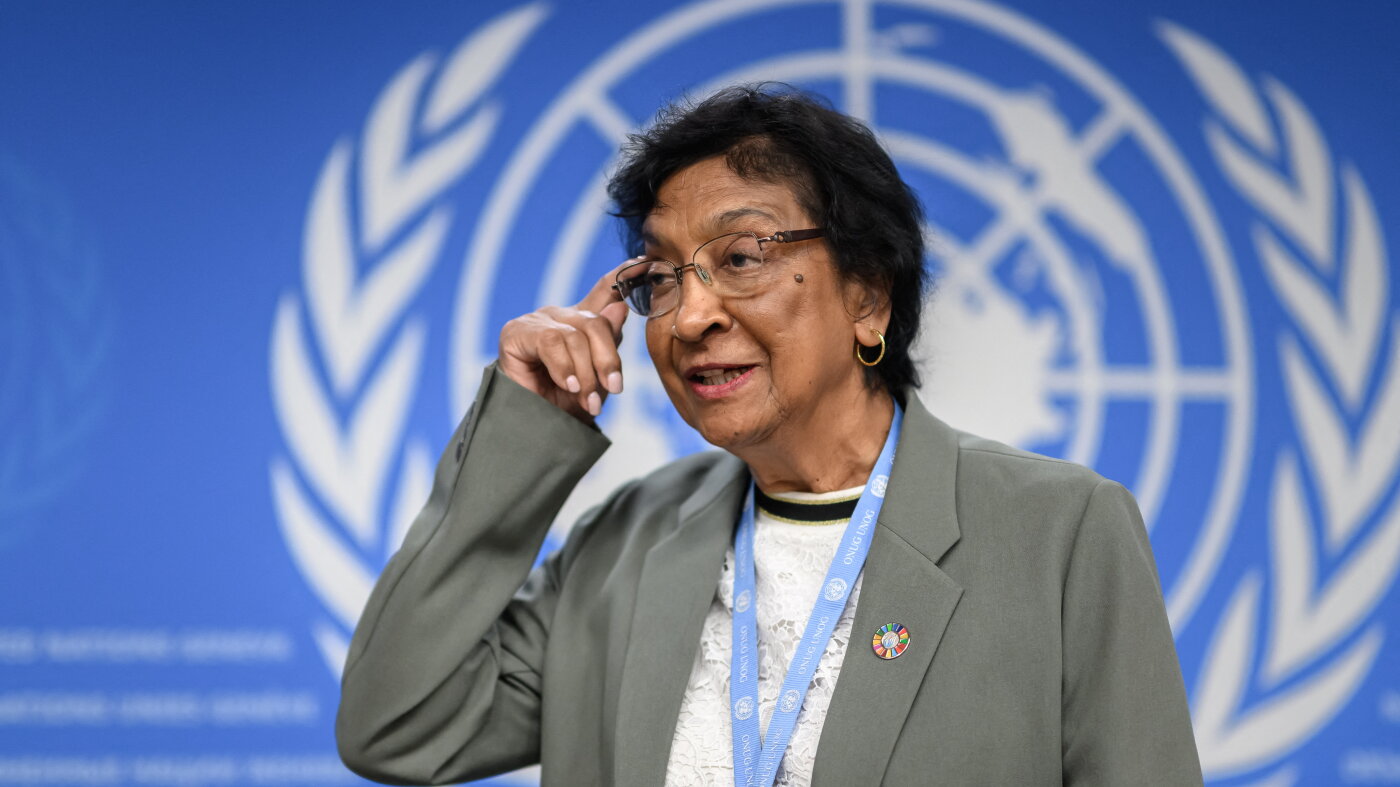
The Nobel Committee Is Talking to Judges, Not Protesters
Navi Pillay is not the candidate most outlets expected when they started filling their shortlists. She’s 85, she’s a career jurist, and her career has largely unfolded inside institutions — the U.N., the International Criminal Tribunal for Rwanda, the International Criminal Court. You won’t find her leading a march or organizing a hunger strike.
That’s precisely why the committee picked her.
The 2026 Nobel Peace Prize, awarded on October 8th, marks the committee’s most deliberate institutional turn in recent memory. At a moment when the number of armed conflicts worldwide is climbing and judges operating under international law are facing sustained political attacks, the committee chose to honor someone who has spent her career building and defending the architecture of legal accountability rather than a figure whose power derives from street-level mobilization.
It’s a message about what kind of peace work the committee now considers most endangered — and most worth defending.
Who Pillay Actually Is
Born in South Africa, Pillay built one of the most consequential careers in international criminal law over four decades. She served as a judge on the ICTR, the tribunal established by the U.N. Security Council in 1994 to prosecute genocide committed during Rwanda’s 1994 killings. That tribunal convicted key figures and helped establish that rape and sexual violence could constitute acts of genocide — a legal standard that still influences how courts treat wartime sexual violence today.
She later sat on the ICC, the world’s first permanent court designed to prosecute individuals for genocide, crimes against humanity, war crimes, and the crime of aggression. And in a particularly charged assignment, she chaired the U.N. Independent International Commission of Inquiry on the Occupied Palestinian Territory — a role that placed her at the center of one of the most politically explosive legal questions of the decade.
None of those positions are comfortable. Each one invites criticism from governments that prefer their conflicts adjudicated elsewhere.
The Signal Embedded in the Pick
The committee’s official statement didn’t mince words. It noted directly that “judges and institutions of international law are under political attack” and framed the prize as a reminder that resolving conflict without violence depends on the international rule of law.
Translation: the committee sees the courts as the fragile front line, not the rallies.
This matters because the alternative reading of this year’s nomination field was clear. The 287 nominations — a substantial pool — almost certainly included activists, grassroots organizers, and civil society figures whose work centers direct action and public pressure. By selecting Pillay instead, the committee elevated legal institution-building over protest-driven diplomacy.
That’s not a value judgment on which approach is more effective. It’s a judgment about which approach is currently under the most threat and therefore most in need of protection through symbolic reinforcement.
Who Wins and Who Loses From This Choice
Pillay wins, obviously. The 12 million Swedish kronor prize — roughly $1.2 million — comes with global visibility and moral authority that she can deploy however she chooses. At 85, she’s unlikely to be chasing another judicial appointment, but the prize gives her a platform that no courtroom provides.
International criminal institutions also win. The ICC, the ICTR’s legacy, and the broader ecosystem of U.N.-backed tribunals have all faced funding pressures, political marginalization, and outright hostility from member states. A Nobel laureate wearing their intellectual lineage carries real weight in budget debates and diplomatic rooms where those questions get decided.
Governments that have publicly attacked the credibility of international courts lose. The committee’s statement functions as a corrective — a rejection of the argument that judicial independence is an obstacle to peace rather than a foundation for it.
Activists and protest movements lose something subtler but important. The prize frames legal expertise and institutional work as the highest form of peace contribution, which implicitly devalues the kind of pressure politics that activists wield. Whether that’s fair is debatable. That it’s a deliberate framing is not.
Why This Year’s Timing Is Anything But Accidental
The 2026 prize marks the 125th anniversary of the Nobel Peace Prize. That milestone gives the committee latitude to make a statement about the prize’s direction rather than simply rewarding the year’s most visible act of peacemaking.
It also explains the institutional tilt. Anniversaries invite retrospection, and the committee appears to be using this moment to assert that the Nobel’s most durable contribution to peace has come through law, not through the charisma or courage of individual activists.
That’s a thesis worth testing against the prize’s own history. The committee has awarded activists before — Aung San Suu Kyi, Malala Yousafzai, Wangari Maathai — and those picks often generated more immediate global attention than institutional honors. But those earlier choices also carried risks: winners who later fell from grace, or whose movements produced outcomes the committee couldn’t celebrate.
Pillay carries none of that risk. Her record is documented, her reputation is stable, and her institutional affiliations are public and verifiable. She’s the committee playing it safe on principle, not on instinct.
What Happens Next
Pillay will deliver the traditional Nobel lecture, where she’ll likely expand on the committee’s framing of international law as the last viable mechanism for conflict resolution. Expect her to reference specific cases — possibly including her work on the ICTR or her commission on Palestine — as proof that courts matter even when politics doesn’t.
The prize money should be directed toward a cause that extends her institutional legacy. Whether she funds legal training programs, supports war crimes documentation efforts, or establishes a fellowship for young international lawyers, the decision will signal how she views her own post-Nobel identity.
The bigger question is whether the committee’s institutional turn reshapes future picks. If 2026 is treated as a turning point rather than a one-off, expect shorter activist shortlists and longer consideration of jurists, investigators, and legal scholars in coming years.
That would be a significant shift for a prize that has historically celebrated visibility over procedure. The Nobel Peace Prize has always been as much about what the committee wants peace to look like as it is about who deserves recognition this year. This year, it wants peace to look like a courtroom.
That’s a bet worth watching.