Nidec's 844 Quality Frauds Expose the Cost of Breakneck Expansion
Nidec's independent probe found 844 quality-improper acts across its group, most involving unauthorized changes to materials and processes. The findings go beyond individual misconduct — they point to a structural rot in how a creator-led company scaled faster than its quality systems could hold.
The Scale Wasn’t the Shock — the Culture Was
Nidec’s independent investigation committee released its report on September 4, 2026, confirming 844 cases of quality-improper conduct across its group. The headline number is staggering, but the real alarm lies beneath it. These were not isolated incidents by rogue employees. The committee described the organization as being in an “unhealthy state” — a polite way of saying quality violations had been woven into daily operations across multiple business units and sites for extended periods.
Of the 844 cases, 805 — 95.4 percent — fell under what the report calls 4M change violations. That is the Japanese manufacturing term for altering material, method, machine, or manpower without customer approval. Nearly every improper act was the same sin: someone changed something on the line, bypassed a check, or reworked a product off-spec without telling the buyer. Twenty-two cases involved outright falsification or fabrication of test and inspection results. Sixty cases met the threshold for what Nidec classified as important quality incidents, including instances involving executive or site-manager participation, suspected regulatory violations, and products with potential recall risk.
Three divisions accounted for roughly 90 percent of the total: Nidec Instruments (NIST) with 585 cases, Nidec Mobility (NMOJ) with 125, and Nidec Techno Motor (NTMC) with 57. The concentration is telling. These are precision instrument and motor businesses where quality assurance is not a formality but the product itself.
Creator Culture Hits Its Brakes
Nidec was founded on a different mythology than most Japanese manufacturers. Toshio Iue built the company around engineering boldness and speed — a culture that rewarded people who made things happen. That ethos drove extraordinary growth through acquisition and diversification. But the investigation committee pointed directly at the cost of that momentum: rapid group expansion outpaced the development of management and control systems, while business units faced performance targets and cost-reduction demands that did not match operational reality. Quality assurance lacked sufficient staffing and, critically, independent check-and-balance functions.
In plain terms, the company grew faster than its quality infrastructure could scale. When targets became unrealistic and oversight stayed thin, workers and managers found workarounds. The workarounds became routine. Routine became organizational.
This is not unique to Nidec. It is the central tension of Japanese manufacturing today. Many of the firms that built the postwar reputation for quality did so through a model of gradual, incremental improvement — kaizen, monozukuri, the slow accumulation of discipline. Nidec’s model has been different: acquire, integrate fast, push hard, expand globally. That model delivers results until it doesn’t. And when it doesn’t, the failures are systemic, not accidental.
The Broader Reckoning
This report follows Nidec’s earlier accounting irregularities, which surfaced through internal investigation and prompted the creation of the current committee. The two problems share an origin story: a growth strategy that ran ahead of governance. Together, they suggest something deeper than operational slip — they point to a corporate structure where the incentives for speed and cost-cutting structurally outweighed the mechanisms for saying no.
The survey data adds weight to that reading. Of 97,663 employees across 305 sites, 89,973 responded to the committee’s questionnaire. About 4 percent — 3,731 people — said they were aware of quality-improper conduct. That means thousands of workers saw something wrong and either stayed silent or accepted it as normal. Awareness without recourse is a culture problem, not a compliance problem.
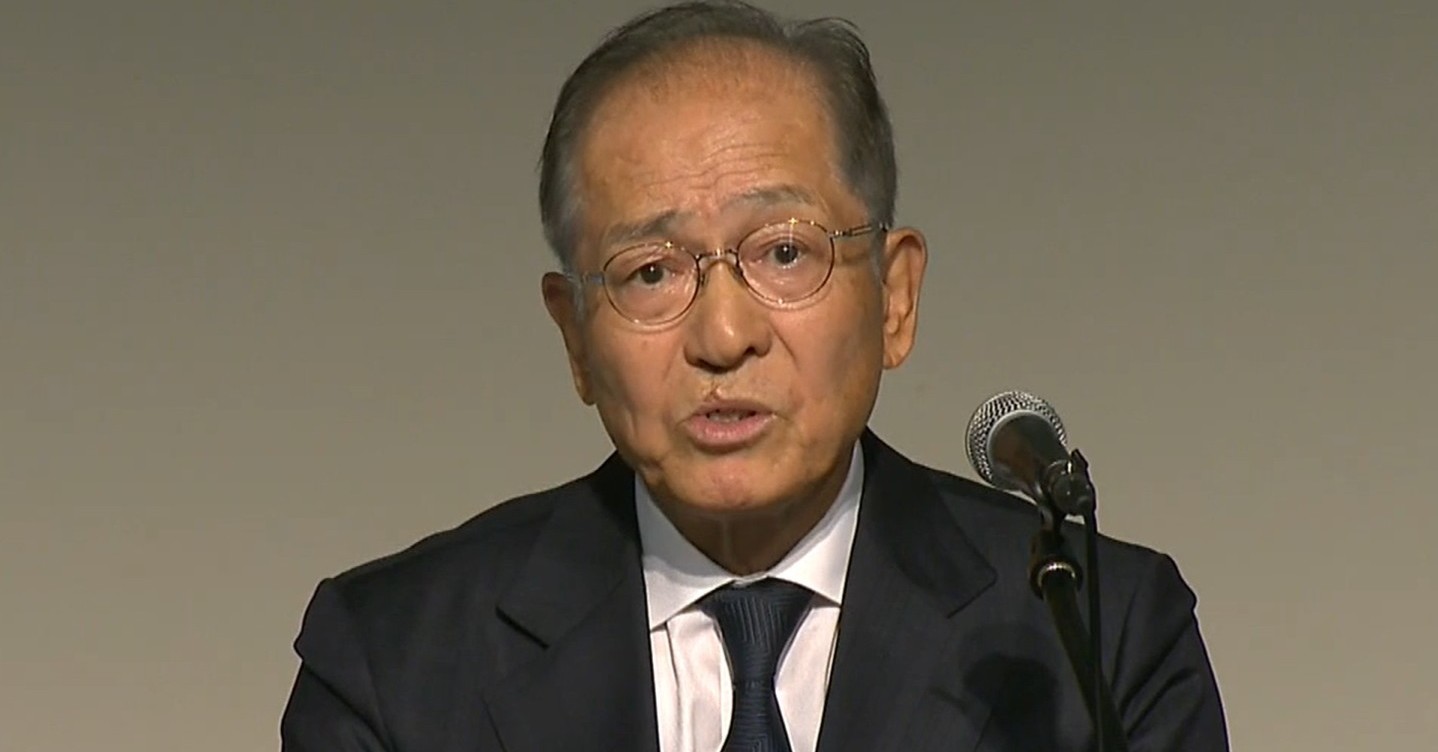
Committee chairman Toshihiko Itami called the findings extremely serious, explicitly linking them to the prior accounting scandal. He did not mince words about what needs to happen next: the company must implement the report’s improvement recommendations. The question is whether recommendations will survive the incentive structure that produced the failures in the first place.
What Global Buyers Should Watch
Nidec supplies components used in industrial equipment, electric vehicles, and consumer appliances worldwide. Its customers include major automotive and electronics manufacturers who built their own reputations on supplier quality. The 844 cases raise questions about how deeply affected products have reached end consumers and whether any triggered recalls.
The committee clarified that it did not assess legal violations, recall necessity, or product safety directly. However, Itami did say that regarding cases involving overseas public institutions — government agencies or regulated bodies — no such cases currently exist. That is a narrow reassurance. It does not address whether privately purchased products with unapproved changes have been shipped to global OEMs or end users.
For supply-chain managers, the immediate practical task is traceability. Nidec’s customers should be demanding full disclosure of affected batches and sites. For investors, the longer question is whether Nidec’s governance overhaul can rebuild the trust that decades of Japanese manufacturing reputation took to establish — and that 844 cases in a single report have now eroded.
The Market Structure Question
Nidec faces Tokyo Stock Exchange pressure to meet listing requirements while simultaneously executing a credible turnaround. That dual demand creates its own distortion: the need to show market compliance can become another performance target, one that competes with the very governance reforms the committee is asking for. How Nidec balances those pressures will signal whether Japanese industrial firms can reform their structures without falling back into the old growth-at-all-costs logic.
The 844 cases are a number. The story behind them is what matters — a company that scaled past its ability to control itself, and now has to prove it can slow down enough to get it right.