Nigeria Ebola Case Tests WHO Protocols and Africa's Pandemic
A confirmed Ebola case in Nigeria's capital marks a critical escalation in the fastest-spreading outbreak on record. The Bundibugyo virus is testing WHO emergency protocols and exposing gaps in Africa's pandemic response infrastructure.
A Virus That Won’t Stay Put
Nigeria confirmed its first Ebola case on October 11 inside the capital, Abuja. The patient — a woman who had been on a business trip to eastern Congo and transited through Uganda — arrived with symptoms already four days old. She was admitted to a hospital on October 11 and diagnosed shortly after.
What makes this case alarming is not the patient herself but the geography behind her. She moved across three countries before falling ill. And Nigeria, home to 220 million people and the continent’s largest economy, is precisely the kind of transit hub where a virus like Ebola can slip through the cracks of even the best surveillance systems.
The Outbreak in Context
This is the Bundibugyo strain of Ebola, one of the deadliest variants. Dr Jean Kaseya, director general of the Africa Centers for Disease Control, described the current outbreak as “extremely serious” with a fatality rate hovering near 50 percent. More than 9,500 people have been infected and over 4,600 killed since it began.
The World Health Organization has said the outbreak is on track to exceed the 2014–2016 West Africa epidemic, which killed roughly 11,000 people and remains the deadliest on record. This one is spreading faster than any previous Ebola outbreak. It is also the most geographically extensive, touching multiple countries across three distinct regions of Africa.
Kenya reported its first case earlier this month and has since recorded nine infections. Uganda had its own cases but later declared itself free of the virus. Now Nigeria is on the list. Each new country adds a layer of complexity to containment efforts that are already stretched thin.
Why Nigeria Changes the Calculus
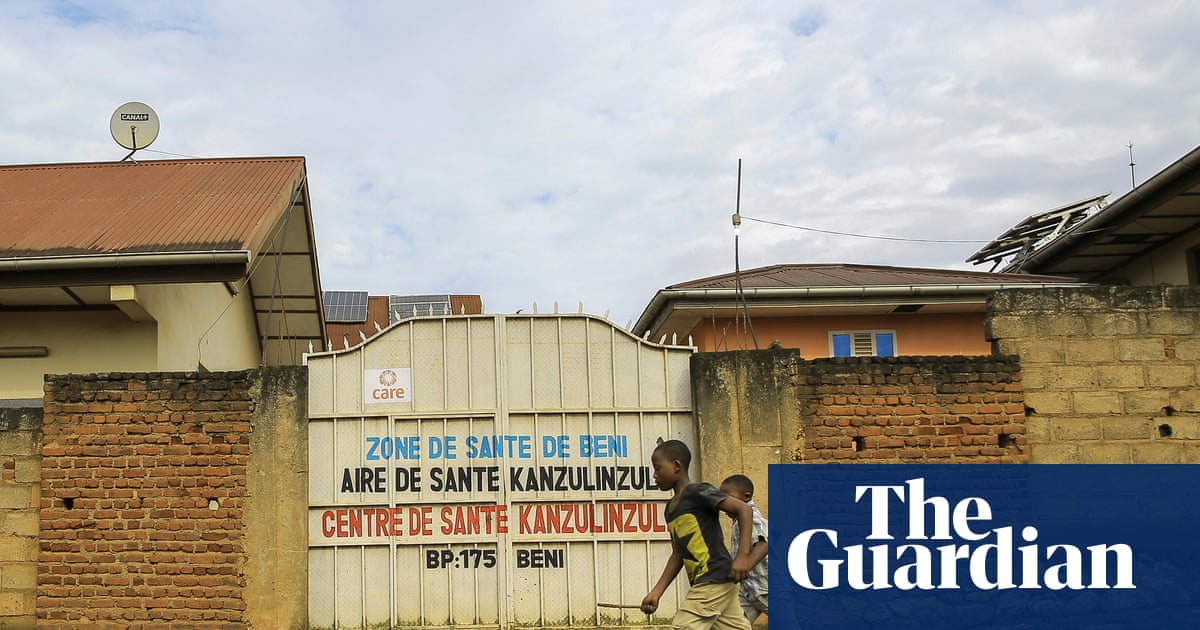
Nigeria is not Congo. It is not a rural area with limited health infrastructure where Ebola has circulated quietly for years. Abuja is a city of millions with international airports, bustling borders, and a population density that makes contact tracing exponentially harder than in the DRC’s Beni region, where most previous cases have clustered.
Nigeria’s health minister, Muhammad Pate, said authorities have identified 44 contacts of the patient and are tracing them all. That is a small number — which is either encouraging or worrying, depending on whether you think the patient has been moving through the community for days without anyone noticing.
The Nigerian Centre for Disease Control acknowledged two weeks ago that it was stepping up surveillance following the detection of Ebola in Kenya. It established an Ebola taskforce back in June after the Congo outbreak began in mid-May. Those were preparatory measures. The arrival of a confirmed case in Abuja turns preparation into crisis response.
Who Wins and Who Loses
The immediate winners in this scenario are not people — they are logistics companies, vaccine manufacturers, and diagnostic labs with the capacity to scale fast. The NCDC has been preparing for early detection, isolation, referral, laboratory diagnosis, infection prevention, contact tracing, and risk communication. All of those sound good on paper. What matters now is whether they work under pressure in a city of Abuja’s size and mobility.
The losers are clearer. Healthcare workers on the front lines face the highest exposure risk. Communities in transit hubs — airports, bus stations, border towns — are vulnerable to silent spread. And regional economies that depend on movement, from Nigeria’s trade networks to the broader African aviation system, will feel the disruption whether travel restrictions are imposed or whether people simply choose to stay home.
The WHO Protocol Stress Test
This outbreak is testing WHO emergency protocols in real time. The agency’s frameworks were designed largely after the 2014–2016 West Africa epidemic, when the world watched helplessly as response efforts lagged behind the virus. Since then, there have been improvements — faster diagnostic deployment, vaccine stockpiles, and better coordination mechanisms.
But improvements on paper do not guarantee speed in practice. The Bundibugyo variant is moving through multiple countries faster than previous strains. Each new border crossing multiplies the number of contact-tracing operations needed. Each new confirmed case in a densely populated urban center increases the risk of secondary transmission before the virus is detected.
The WHO’s emergency protocols assume a certain tempo of outbreak response. This outbreak is moving faster than that tempo allows. That is the gap the world needs to see clearly before it closes the gap.
What Happens Next
The next two weeks will be decisive. If the 44 identified contacts in Nigeria remain free of symptoms, that is a positive sign. If additional cases emerge — especially in locations that suggest community transmission rather than a single imported case — the scope of the response will need to expand quickly.
Regional cooperation will be essential. Kenya, Uganda, and the DRC are all part of the same outbreak chain. Surveillance data, case information, and vaccine distribution need to flow freely across borders. Fragmented national responses are how outbreaks become pandemics.
The international community also needs to pay attention. The 2014–2016 epidemic was not a failure of science — it was a failure of political will. Vaccine candidates existed. Treatment protocols were available. What was missing was funding, coordination, and urgency. The same ingredients are available now. Whether they are deployed with the necessary speed remains to be seen.
The Bigger Picture
Ebola has always been a threat that the world treats as distant until it becomes immediate. The Bundibugyo outbreak proves that distance is an illusion in a connected continent. A woman can fly from Congo to Uganda to Nigeria, fall ill along the way, and arrive in one of Africa’s largest cities before anyone knows the virus is moving.
The question is not whether the next outbreak will test the world’s preparedness. It already is. The question is whether the world responds fast enough to matter.