Why the Nikkeis Historic Sell-Off Signals More Than Panic
Japans third-largest single-day Nikkei drop is not just noise — it is the first real stress test for AI-growth valuations under a new geopolitical regime, and every major allocator is recalculating.
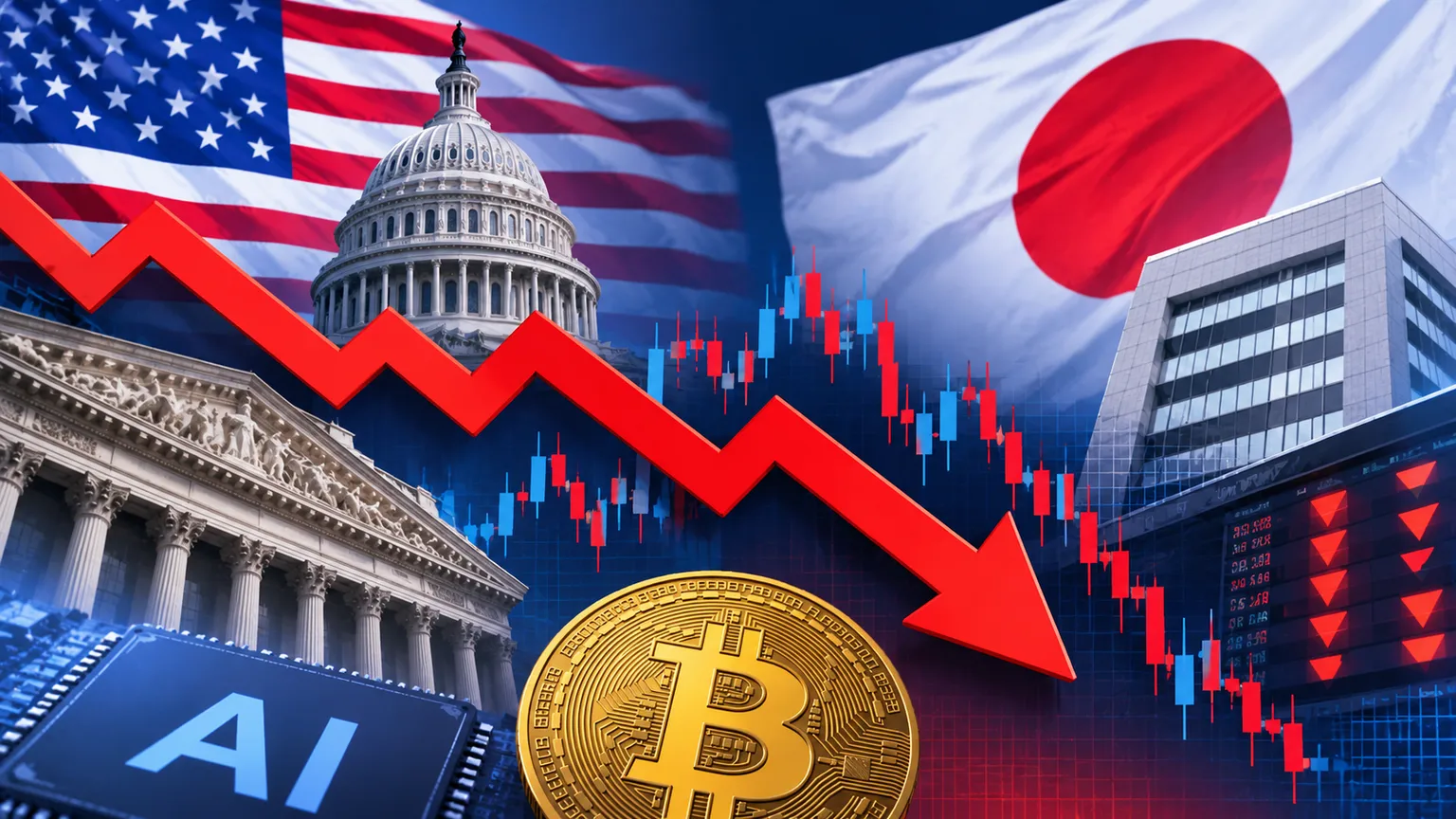
The Third-Largest Drop Is a Signal, Not a Spike
On November 6, the Nikkei average closed at 57,434 yen, sliding 3,643 points — a 5.96 percent single-day loss that stands as the third-largest decline in the indexs history. Only the August 5, 2024 intraday shock and the October 1987 global crash exceeded it. The closing price also marked the first time since May 20 the index had settled below 60,000, a psychological threshold that has anchored Japanese investor sentiment for half a year.
But reducing this to a headline number misses the architecture of what actually happened. The sell-off was not driven by a single catalyst. It was a sequence — a democratic sweep in US midterms, a four-hour relief rally, and then a panic replay across every corridor where artificial intelligence capex plans are budgeted.
How the Week Unfolded
The chain began on November 3, when Democrats captured both chambers of Congress. Overnight, short-covering and risk-on positioning pushed the Dow above 51,500 — a level not seen since April 2025. Markets interpreted unified Democratic control as regulatory predictability after months of policy ambiguity.
Then, on November 5, the narrative inverted within hours. Reports emerged that AI data-center construction could face tightened oversight. The reaction was immediate and indiscriminate. The Philadelphia Semiconductor Index — the SOX — dropped 12.25 percent, wiping out every constituent stock. That single-index decline erased far more dollar value than any other moving part in the session.
The Nasdaq Composite fell 5.52 percent to 24,315, confirming a correction from its October 6 high — a ten percent drawdown by the standard definition. The S&P 500 lost 4.36 percent to 7,353. By close, the previous days gains were gone. Not eroded. Gone.
November 6 brought faint relief in Tokyo. Some heavyweight names like Advantest and SoftBank Group opened sharply lower — one hour earlier than usual — amplifying volatility at the open. Twenty-one stocks on the TSE Prime gained, roughly the ratio of losers to winners you see during a flight-to-quality episode rather than a broad sell-off. Still, the net result was decisive.
What Japan Lost in Five Days
From the October 30 close, the Nikkei shed approximately 9.3 percent in five trading sessions. On a peak-to-trough basis measured against the June 25 closing high of 72,366 yen, the decline exceeds 20 percent — the textbook threshold for bear-market classification.
TOPIX mirrored the breadth. Down 5.9 percent, all thirty-three TSE sectors declined simultaneously. That kind of sector-wide compression rarely appears outside of liquidity-driven episodes or macro regime shifts, not ordinary sector rotation.
The yen-denominated math matters less than the portfolio-level implication. Japanese institutional investors — life insurers, the Government Pension Investment Fund, regional banks running treasury books — hold equities that are now priced for growth. A twenty percent mark-down is not a correction. It is a valuation reset.
The Second-Order Effects Are Already Loading
What makes this episode structurally different from prior pullbacks is the velocity at which positions unraveled. Algorithmic desks flagged the SOX breach simultaneously. Cross-asset hedging desks in Singapore and London triggered stop-losses before the opening bell in Tokyo even started. By the time Japanese domestic investors processed the news, many had already been flushed out by overnight American flows.
This is the new market rhythm — Asia no longer sets its own terms. When US regulatory headlines break, the Nikkei reacts as a derivative position rather than an independent index. That structural dependency explains why the TSE Prime saw only 21 gainers despite being geographically distant from Washington.
Insurance companies face a particularly acute problem. Life insurer reserves are heavily allocated to equities and equity-linked products tied to the Nikkei. A sustained bear market compresses policyholder surplus ratios. If regulators require additional capital buffers, insurers will sell into the market — creating a feedback loop that amplifies downside pressure beyond what fundamentals alone would justify.
The government pension fund carries similar exposure. GPIF controls roughly $1.4 trillion in assets, with nearly 55 percent allocated to domestic and international equities. Mandate changes or conservative rebalancing triggered by a bear-market designation could redirect tens of billions out of equities and into bonds over a single quarter — a flow magnitude that would reshape yield curves globally.
Why AI Regulation Changed Everything
The semiconductor collapse was not random. It traced directly to legislative language leaked from Washington that proposed permitting reviews for large-scale AI infrastructure projects. Data centers consuming more than 50 megawatts of grid capacity would face environmental impact statements lasting eighteen months or longer. Construction timelines for hyperscale facilities currently booked through 2027 would be disrupted.
Every AI-capex model that Wall Street built on assumptions of two-year build cycles collapsed in hours. Companies pricing revenue based on accelerated deployment schedules now face margin compression that cannot be absorbed through operational efficiency. The overhang sits not just on semiconductor manufacturers but on cloud providers, energy utilities, and real estate investment trusts dependent on data-center leasing.
Tokyo-based chip equipment makers carry outsized sensitivity because they sit upstream of the entire supply chain. Advantest, screen solutions, and东京電子 became focal points not because of company-specific deterioration but because they represent the leveraged bet on sustained AI acceleration. When that premise fractures, they lead the descent.
Where the Floor Might Be
Historically, Nikkei bear markets originating from external shocks have found technical support near the 52,000 to 54,000 range — levels last tested during the March 2020 pandemic crash. Currently those zones remain untested in this cycle. If momentum selling continues, the gap between current prices and historical support creates room for further erosion before stabilization emerges.
However, several counterweights exist. Yen weakness that accompanied the selloff should eventually attract foreign buyers on re-entry. The Bank of Japan retains rate-cut flexibility if deflationary pressures intensify. And corporate buyback programs announced throughout 2025 — totaling over three trillion yen across listed companies — may resurface as defensive tools once management committees reconvene.
The critical variable remains whether US regulatory action hardens into binding legislation. Current reports indicate discussions rather than finalized rules. If that characterization holds through winter, the worst-case scenario softens considerably. If enforcement proceeds regardless of electoral outcome, the Nikkei may already have understated the economic damage still ahead.
The Closing Frame
The Nikkei did not simply experience another violent week. It experienced its first stress test under conditions where geopolitical signals transmit instantly across time zones, where algorithmic execution removes human hesitation, and where AI-growth valuations collide with regulatory uncertainty for the first time at scale. Every pension fund, sovereign wealth vehicle, and insurance reserve manager watching this move now carries a revised assumption set.
Market closures provide temporary breathing room. Structural reallocation does not pause. The question facing allocators is no longer whether the Nikkei will recover — recovery is a function of time and liquidity, both available — but whether the valuations that justified the climb to 72,000 can survive a regime where AI acceleration faces friction instead of tailwinds.