Nintendo's Ocarina Remake Is a Masterclass in Controlled Nostalgia
Nintendo's Ocarina of Time remake reveals a strategy of careful calibration—faithful to the original but modernized just enough to feel fresh. The microphone-playing ocarina and retained loading screens show where the line between authenticity and innovation gets drawn.
The Chest Opens, But Nothing Really Changes
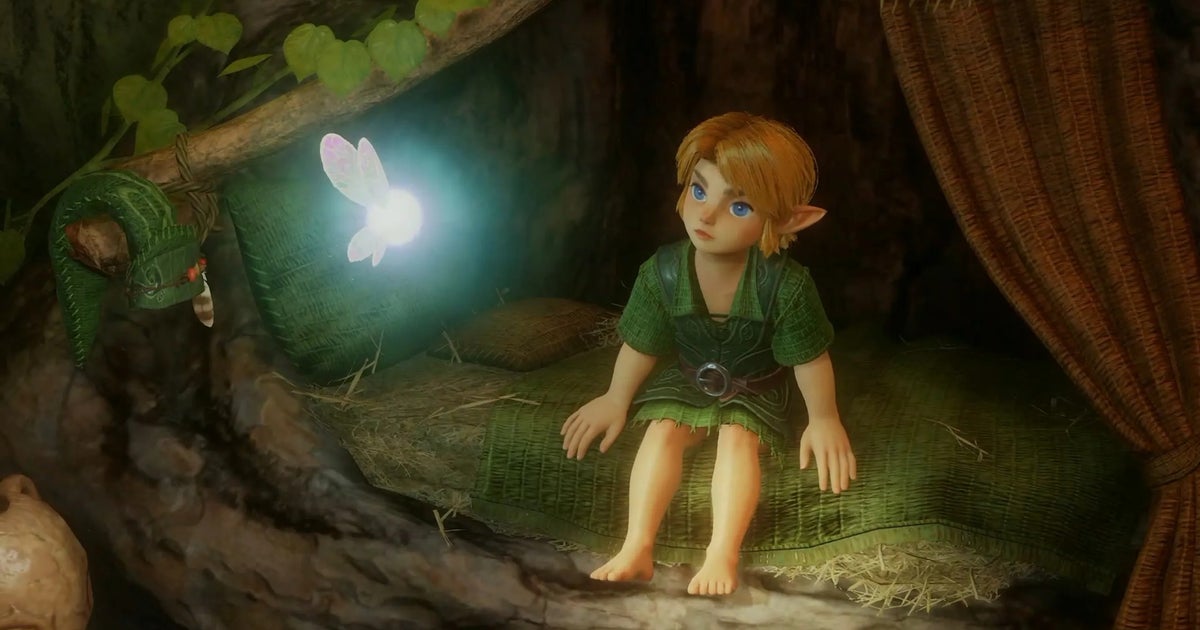
The most striking moment in the Ocarina of Time remake gameplay reveal isn’t a new feature or a graphical upgrade. It’s the chest opening animation. Link reaches for the latch, pulls it back, the lid creaks upward—and for a split second, every person who played this game in 1998 felt something click into place. Nintendo didn’t redesign the iconic moment. They preserved it, rendered in a new engine, and that deliberate choice says more about their remake philosophy than any press release ever could.
What makes this moment resonate isn’t just nostalgia—it’s the sheer audacity of restraint. In an industry where “remastered” has become a euphemism for texture swaps and resolution bumps, Nintendo’s decision to leave one of gaming’s most replicated animations completely intact communicates a thesis statement: this is not a reinvention. It is a preservation project dressed in modern clothing. The chest doesn’t behave differently. It doesn’t get a new particle effect, a revised sound cue, or a camera move that draws attention to itself. It simply opens the way it always did, which in 2026 is arguably the more radical creative decision.
Why the Loading Screens Matter
Perhaps the most telling detail from the reveal: Nintendo confirmed the remake will still have loading screens. In an era where seamless streaming is the technical benchmark and open-world titles prrize uninterrupted traversal, this is a conspicuous refusal. Nintendo is not treating loading screens as a problem to solve. They are treating them as an atmospheric artifact—something that belongs to the memory of the original game. The black screens that separated temples, that gave you a moment to breathe between dungeons, that framed each area as its own self-contained world—these are being kept intact.
The implications extend beyond sentimentality. Loading screens in Ocarina of Time weren’t merely technical necessities; they were pacing devices. They created distance between encounters, between biomes, between the pastoral and the horrifying. Removing them would fundamentally alter the game’s rhythm, compressing emotional distances that the original carefully calibrated. By retaining them, Nintendo is making a case that some friction is functional—that the pause between moments is part of the architecture of memory itself.
This is the pattern across the entire reveal. Real-time day progression, dash mechanics, single-button item swaps, newly accessible areas in Hyrule Castle Town—these are modernizations, yes. But they are incremental, applied at the edges. The core loop remains untouched. Voice-acted cutscenes replace the text boxes, but the scenes themselves play out identically to how they did on N64. The game breathes differently now, but its heartbeat is unchanged.
The Microphone Ocarina: Quirky or Strategic?
The most discussed feature is also the most unusual: players can use their Switch 2 microphone to hum, whistle, or sing the game’s melodies, and the in-game ocarina will respond. It sounds like a gimmick at first—a novelty that might frustrate more than it delights. But it is actually a smart piece of design thinking that operates on multiple levels.
Ocarina of Time’s magic system is built on the idea that music is power. You play a song, the world changes. Time rewinds. Rain stops. Enemies fall into slumber. The original game required you to press button combinations on a D-pad to replicate melodies—a system that was always slightly awkward, a bridge between the romantic ideal of playing music and the reality of mashing four buttons in sequence. The microphone feature returns that intimacy, that sense that you, the player, are the one producing the magic, without demanding dexterity that the N64 controller never really offered.
The second-order effect is worth noting: this feature lowers the barrier to entry for younger players who may never have encountered the original’s input scheme, while simultaneously deepening the experience for veteran players who can now engage with the game’s central mechanic in a more embodied way. It also reframes the ocarina from a menu-driven tool back into an instrument, which is closer to what the game always claimed it was. There’s a subtle philosophical consistency here that many observers may miss—that Nintendo is not just modernizing controls but returning to the romantic conceit that drove the game’s design in the first place.
Who This Remake Is For
The release date—November 5th on Switch 2—suggests Nintendo is positioning this as a launch-window anchor, not a casual afterthought. A November launch window for a next-generation console is ambitious. It signals that Ocarina of Time is meant to be a system seller, a reason to upgrade built on the back of cultural certainty rather than risk. This is hardware strategy wearing the mask of game development.
That is a strategy older than Nintendo itself. When the Super Mario Bros. movie arrived in 2023, it proved that legacy IP could carry a cultural moment. When Final Fantasy VII Remake dropped, it showed that a faithful-but-modernized classic could convert a new generation without alienating the old one. When The Last of Us Part I got its PC and console remaster treatment, it demonstrated that the market for reassurance—a version of something you loved that looks better but behaves the same—remains remarkably robust. Nintendo is following the same playbook: use the weight of nostalgia to drive hardware adoption, then deliver an experience that satisfies both the memory and the present.
The economic logic is unimpeachable. A original IP carries no pre-existing audience obligation. A remake of one of the highest-rated games in history carries only upside, provided it doesn’t spoil the memory. The risk calculus favors caution every time.
The Split That’s Already Forming
Fan reaction, even in these early moments, is already fracturing along predictable lines. Traditionalists will celebrate the preserved chest animation, the retained loading screens, the refusal to overhaul what worked. Modernizers will point to the real-time clock, the voiced cutscenes, the new explorable areas, and argue that these are exactly the kind of updates a 27-year-old game needs to remain relevant.
Both sides are right. That is the point. Nintendo is not asking players to choose between authenticity and innovation. It is asking them to accept that the two are not mutually exclusive—that a remake can be both a time capsule and a living game. The deeper truth, however, is that this division is somewhat manufactured. Most players who experience this remake will likely land somewhere in the middle, appreciating the modernizations while feeling the comfort of familiarity. The loudest voices on either side will always dominate the conversation, but the actual player base tends to be far less polarized than the discourse suggests.
What’s more interesting than the split itself is what it reveals about our relationship with old games. We want them to feel new because we are new people. But we also want them to feel the same because the memory of playing them was formative. The tension between those desires is the engine of the remake industry, and Nintendo has found a way to ride it without tipping in either direction.
What Comes Next
The Zelda Notes companion app, the Nintendo Music integration, the two new amiibo masks—all of these suggest Nintendo is building an ecosystem around this release, not just shipping a game. The remake is a product in a franchise strategy that extends across platforms, devices, and physical merchandise. This is not a single game launch; it is a platform play disguised as a nostalgia trip.
The companion app alone represents a significant investment in layered engagement—extra lore, concept art, and developer commentary that rewards deep-dive fans while giving casual players optional depth. Nintendo Music integration suggests they’re thinking about how the game’s soundtrack will circulate beyond the game itself, turning iconic compositions into standalone listening experiences. The amiibo masks extend the revenue stream into physical collectibles, creating another touchpoint between the brand and the consumer.
But the question hanging over everything is whether this cautious approach will generate the kind of cultural momentum that a more ambitious redesign might. A fully reimagined Ocarina of Time would have divided fans more sharply, but it also would have generated more conversation, more coverage, more risk. The Shadow of the Colossus remake, the Dead Space remake, even Resident Evil 4—these projects took bigger swings and created bigger moments. Nintendo chose the safer path. Whether that safety pays off will become clear when the game launches on November 5th.
There is also the longer-term question: what does this strategy do to the franchise’s creative trajectory? If Ocarina of Time proves that cautious remakes are commercially dominant, will Nintendo feel less pressure to take risks on truly original Zelda titles? The Tears of the Kingdom was a bold sequel; the question is whether its commercial success will be overshadowed by the safer bet of a remake that guarantees returns without requiring creative courage.
Until then, the image that will linger is simple: a hand reaching for a chest latch in a world that looks different but feels exactly the same. That is the promise. The execution is what remains to be seen. And for a company that has spent decades understanding that the space between expectation and reality is where delight lives, that hesitation may be the most honest thing about this entire project.