North Korea Uses Beer, Cigarettes to Circumvent Sanctions via New
After 12 years of delays, the new Sino-North Korean bridge has opened, and Pyongyang is rushing to flood China with beer, fake cigarettes, and sanctioned seafood to earn hard currency. The loophole is already working.
The Bridge Opened. So Did the Beer.
The new bridge between China’s Dandong and North Korea’s Sinuiju sat idle for twelve years. Construction began in 2010. It was structurally finished in 2014. And on October 15, it finally opened to traffic — coinciding with what amounts to a quiet escalation in North Korea’s sanctions-evasion playbook.
According to reports cited by Yonhap News, North Korea is now using the bridge as a funnel for beer, counterfeit cigarettes, and sanctioned seafood into China. The strategy is ruthlessly pragmatic: target goods that fall outside UN Security Council sanctions lists and maximize hard-currency returns at scale.
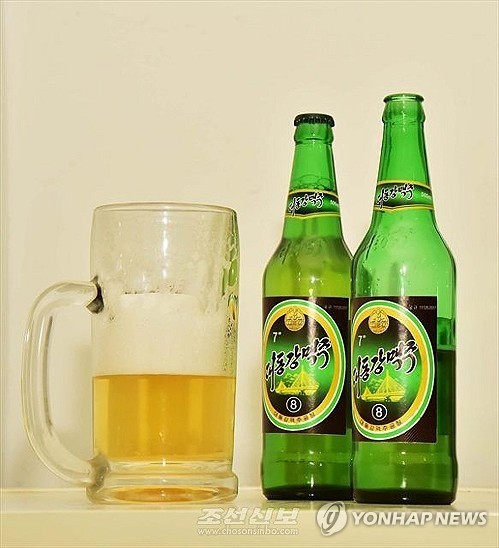
Beer is the centerpiece. North Korea imported just 540,000 liters of its own beer into China in 2024. By 2025, that figure had nearly doubled to approximately one million liters. The January-through-August 2026 data shows another 920,000 liters already moving north-to-south. That trajectory, if sustained, would push annual imports close to two million liters — a remarkable volume for a product North Korea itself barely produces enough to satisfy domestic demand.
The brands tell the story. Taedonggang beer, the regime’s flagship export, has long been served on draft in Dandong’s Korean restaurants. But Ryongsong beer — previously treated as a domestic-only product — is now appearing on menus alongside it. Signs for Pyongyang beer, North Korea’s first domestically brewed brand, have started showing up on Chinese street corners. Online marketplaces are circulating Bonghak, Geumgang, and Eunsuhoso beers, all routed through Dandong.
This is not incidental trade. It is deliberate, state-directed revenue generation.
Why Beer Works as a Sanctions Loophole
The UN Security Council has imposed sweeping restrictions on North Korean exports — coal, iron ore, seafood, textiles, and labor remittances are all banned or tightly controlled. But beer is not on any sanctions list. It carries no dual-use risk, no strategic military application, and no political toxicity in Beijing.
That makes it ideal.
Pyongyang is applying a simple arithmetic: if you cannot export arms or minerals without triggering sanctions, export what the sanctions framework ignores. Beer is cheap to produce, lightweight to transport, and carries a novelty premium in China that far exceeds its production cost. A six-pack of Taedonggang in Dandong costs significantly more than it would in Pyongyang — and that markup is pure hard currency for the regime.
The same logic applies to counterfeit cigarettes. North Korea has long produced inferior tobacco products branded as Western or Japanese names — Marlboro, Winston, and others — sold at steep discounts to Chinese consumers who may not notice the difference. These carry no sanctions restrictions either. And with the new bridge enabling higher freight volumes, customs inspectors in Dandong are likely to face a surge of goods to process, creating natural capacity for increased contraband flow.
The Seafood Complication
Seafood is where the picture gets legally thorny. UN Resolution 2397 (2017) explicitly bans North Korean seafood exports. Yet according to the Mainichi report, North Korean caught and processed seafood is being openly traded at Dandong’s aquatic markets.
This suggests either a enforcement gap at the China-North Korea border or deliberate tolerance by local Chinese authorities who benefit from the revenue stream. Either interpretation is damaging to the sanctions regime.
What makes the new bridge particularly concerning for enforcers is that it replaces what was historically a low-capacity crossing point. Before the official opening, trade between Dandong and Sinuiju relied on an older, slower bridge with limited truck throughput. The new structure was designed for modern freight traffic — and now that traffic is flowing.
Who Wins, Who Loses
The winners are clear: North Korea’s hard-currency pipelines get a major upgrade. The bridge cuts transit time and increases cargo capacity, which directly translates into more beer, more cigarettes, and more seafood crossing per day. Local Chinese operators in Dandong also benefit — restaurants, market stalls, and logistics firms that handle North Korean goods stand to gain from increased volume.
The losers are the sanctions regime itself. Every liter of North Korean beer that enters China without inspection is a precedent. Every counterfeit cigarette that slips through reinforces the pattern of selective enforcement that has plagued the UN controls for years. And every shipment of sanctioned seafood that moves across the new bridge erodes the credibility of Resolution 2397.
China’s central government has every incentive to appear compliant with sanctions while its Liaoning province benefits economically from cross-border trade. That tension is unlikely to resolve itself — and the bridge makes it harder to ignore.
What Happens Next
The data through August 2026 already shows beer imports climbing toward two million liters annually. If the bridge continues to operate at full capacity and China’s customs apparatus does not tighten screening, that number could double again within a year.
Counterfeit cigarette seizures in the region are likely to increase in parallel, though enforcement will remain sporadic. Seafood violations are the most concerning indicator: they represent direct sanctions breaches, not gray-area exploitation, and they suggest that local enforcement has effectively caved to economic reality.
The bridge’s十二-year delay is itself a signal. Pyongyang and Beijing both had reasons to stall — political hesitation, funding disputes, environmental reviews. Its opening now, paired with an aggressive commercial push from North Korea, suggests both sides have recalibrated. The calculation appears to be that the economic benefits of increased cross-border flow outweigh the diplomatic costs of loose sanctions enforcement.
For Pyongyang, beer may seem like an undignified export. But in a regime that survives on hard currency and has mastered the art of sanctions evasion, dignity is a luxury it stopped affording itself long ago.