North Korea's Drone Unit in Russia Signals a New Phase of the Ukraine War
Ukrainian intelligence reports 8,500 North Korean troops in Russia, including a 400-soldier drone unit and 1,000 combat engineers — a deployment that reveals Pyongyang's role is shifting from symbolic support to operational capability, with direct implications for how the West assesses the Russia-North Korea alliance.
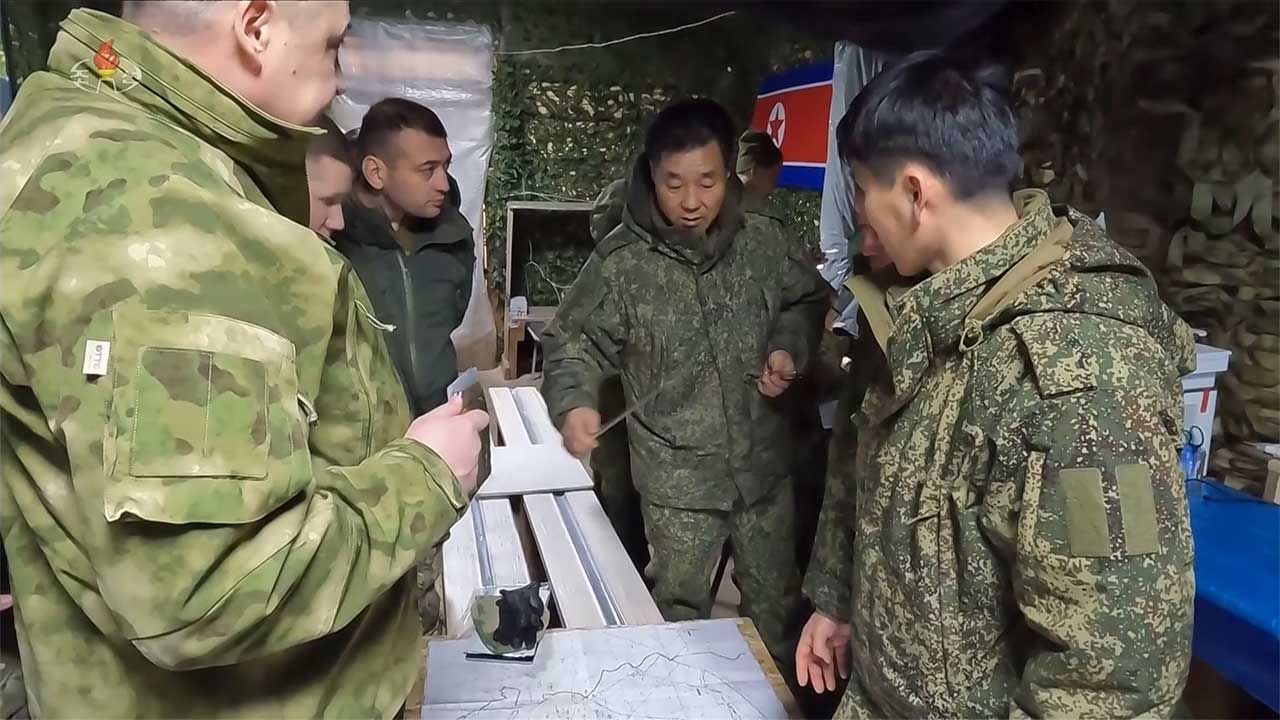
The drones are the story
When Ukraine’s Defense Intelligence reported on August 21 that 8,500 North Korean troops are currently deployed in Russia, the headline number drew attention. But the detail that matters more is buried two sentences later: among those 8,500 soldiers are 400 drone operators and 1,000 combat engineers.
This is not an infantry reinforcement. It is a force structure upgrade. The presence of a dedicated drone unit — not just regular troops lending symbolic weight to Putin’s war — signals that Pyongyang’s involvement has crossed a threshold from political solidarity into operational capability. And that changes how the West should read the entire Russia-North Korea alliance.
The distinction matters because it reframes everything that follows. A regime sending infantry battalions to fight a proxy war is one thing — a regime importing drone-warfare specialists, people who can accumulate real-time tactical data against a adversary that has been honing unmanned systems since 2022, is something else entirely. North Korea is not merely filling slots. It is upgrading its own military by osmosis.
What the deployment actually looks like
According to Vadym Skibitsky, deputy head of Ukraine’s main intelligence directorate, the North Korean contingent is concentrated around the Kursk region, where it is tasked with bolstering Russian rear positions rather than engaging directly on the front lines. The logic is straightforward: North Korean troops hold the static defensive work so that Russian units can rotate forward to fighting positions against Ukrainian forces.
The deployment follows a pattern that mirrors Soviet-era practices in Afghanistan and Chechnya — using politically reliable but combat-inexperienced forces for garrison duty while regular troops take the offensive. Except this time, the reliable force brings a specialized capability that the Russians themselves have struggled to scale fast enough: drone operations.
The cumulative picture is even starker. Ukraine estimates that roughly 25,000 North Korean soldiers have been deployed to Russia in rotation since the first contingent arrived in October 2024. That is a sustained, institutionalized military commitment — not a one-off gesture. Rotational deployments of that magnitude require logistics chains, training pipelines, and political cover that only a regime willing to make this alliance structural could sustain. Pyongyang has signaled that willingness repeatedly.
Skibitsky said the drone operators in particular have accumulated practical experience during their time in Russia, learning to operate against Ukrainian positions and refining their tactics in real combat conditions. The engineers, meanwhile, are clearing minefields and constructing fortifications — tasks that would otherwise consume Russian combat troops. Both roles are force multipliers, but the drone operators carry a second-order payoff that goes well beyond Kursk.
The missile exchange is equally consequential
The arms flow runs both ways, and the numbers are significant. Ukraine claims that North Korea supplied Russia with at least 150 ballistic missiles before August of last year, and has agreed to deliver another 120. That is a volume of ordnance that materially affects Moscow’s strike capacity against Ukrainian cities and infrastructure. Each missile is a warhead that does not need to be assembled domestically, a launch cycle that does not strain Russian manufacturing, and a psychological weapon that keeps Ukrainian air defenses perpetually on edge.
But the intelligence assessment goes beyond quantities. Skibitsky noted that North Korean forces have been present during actual missile launches against Ukraine, capturing real-world firing data that can be used to improve missile accuracy and warhead performance. This is not abstract knowledge transfer — it is a battlefield feedback loop between two authoritarian states that have little exposure to modern combat dynamics. For North Korea, watching a Russian Iskander or cruise missile arc toward Kyiv is worth more than a dozen simulation exercises. The telemetry, the trajectory data, the terminal guidance observations — all of it is actionable intelligence for a missile program that has long operated in informational isolation.
In return, Ukraine reports that North Korea has received an S-400 air defense system from Russia — the same system that has proven effective at disrupting Ukrainian air operations. Ukraine also confirmed that Russia has transferred at least one Parshir surface-to-air missile system to Pyongyang. These are not spare-parts transactions. They represent a genuine technology swap between two militaries that have historically operated in isolation from each other’s capabilities.
The S-400 in particular is a trophy of strategic significance. North Korea’s own air defense network is antiquated by design — built to deter aerial incursions, not to track and engage modern multi-role aircraft or cruise missiles. Operating an S-400 system gives Pyongyang a laboratory for understanding integrated air defense architecture, data-link integration, and multi-layered interceptor tactics. Ukrainian operators have spent months mapping how these systems behave under fire. That knowledge will eventually become available to a wider audience — including those who share missile technology with North Korea.
Why the drone unit changes the equation
A drone unit of 400 operators may sound small next to the 8,500 total troop figure. But its inclusion reveals something important about the trajectory of this alliance. Drones are the defining weapon of the Ukraine war — cheap, effective, and democratizing precision strike in ways that artillery never could. By embedding drone operators within the North Korean deployment, Moscow and Pyongyang are signaling that they understand the war’s technological character and are adapting their cooperation accordingly.
This is also a training pipeline. North Korean soldiers who deploy to Russia gain combat experience against a technologically advanced adversary. Those operators then return to Pyongyang with firsthand knowledge of drone warfare tactics — information that would be impossible to replicate in exercises or simulations. The longer this deployment continues, the more operational competence North Korea will accumulate, and the more dangerous it becomes as a potential flashpoint beyond the Ukraine theater.
Consider the geographic implications. North Korea has been quietly developing long-range drone capabilities for years, with public demonstrations of UAVs reportedly capable of reaching Guam. What it lacked was real-world validation — the ability to test navigation, communication resilience, and payload delivery under conditions that approximate actual combat. Ukraine’s skies have provided that laboratory at scale. Every drone operator who has flown against Ukrainian positions is a node in a knowledge network that extends far beyond Kursk.
Second-order effects the West is underweighting
Western assessments have largely focused on the immediate military calculus — how many troops, how many missiles, what does this mean for the next offensive cycle. But the secondary effects are where the longer-term danger lives.
There is the normalization question first. When North Korean troops are visibly operating on European soil alongside Russian regulars, the psychological barrier that has separated the Korean peninsula from other conflict zones erodes. Pyongyang is no longer a regional spoiler. It is a global participant in great-power proxy warfare, and the optics matter for deterrence calculations in East Asia as much as in Eastern Europe.
Then there is the doctrinal contamination. North Korean military planning has been insular for decades, shaped by Cold War-era assumptions about conventional invasion and nuclear brinkmanship. Exposure to Ukrainian-style drone warfare, electronic countermeasures, and decentralized tactical decision-making will reshape how Pyongyang thinks about its own force structure. The operators coming home will not just bring stories — they will bring a new operational vocabulary. That vocabulary will influence procurement decisions, training doctrines, and ultimately the posture North Korea projects toward South Korea and Japan.
There is also the proliferation risk that most analysts treat as background noise. North Korea’s missile and drone programs have always had export clients — Iran, Syria, various African and Middle Eastern regimes. Combat-proven operators returning from Russia will expand the quality of advice Pyongyang can offer those clients. The feedback loop goes both ways: Russian experience improves North Korean capability, and North Korean distribution networks spread that capability to third parties who may one day use it against Western interests.
What the West is missing
Western assessments of the Russia-North Korea alliance have largely treated it as a political alignment between two pariah states — convenient for each other, limited in depth. The Ukrainian intelligence report upends that reading. An 8,500-troop deployment with organic drone and engineer units, sustained over two years, involving real combat experience and major weapons transfers, is not a political gesture. It is a functioning military partnership with institutional memory and operational expertise.
The cumulative 25,000 troops rotated through Russia, the 270 ballistic missiles exchanged, the S-400 systems transferred — these numbers add up to something the West has been slow to grasp. This is not a side relationship. It is a second front being opened through proxy deployment, and it is reshaping the material balance of the Ukraine war in real time.
The lag in Western recognition is not trivial. Intelligence communities on both sides of the Atlantic were slow to confirm the initial deployments, and even slower to communicate the operational significance to policymakers. Sanctions regimes that target North Korean labor export have failed to account for the military dimension. Diplomatic channels that once treated Pyongyang as a negotiation problem about denuclearization now have to account for a state actively participating in a European war.
Who wins, who loses
Russia wins immediate force multiplier effect: thousands of troops absorbing rear-area duties while its own soldiers fight on the front. Pyongyang wins combat-proven expertise, advanced weapons technology, and geopolitical leverage it could never achieve alone. Ukraine loses on both dimensions — more enemy troops available to Russia, and a more competent North Korean military that will eventually project power beyond the Korean peninsula.
But the longest-term loser may be the international nonproliferation architecture itself. The Russia-North Korea exchange demonstrates that a sanctioned pariah state can acquire sophisticated defensive systems and real combat experience through a bilateral deal that bypasses every multilateral safeguard. If this model proves viable for one pair of pariahs, it becomes harder to deny to others.
The West’s task is no longer about detecting the alliance but about responding to an alliance that is now operationally mature. The drone unit is not a footnote. It is the signature of a new phase — one in which the Ukraine war and the security dynamics of East Asia are no longer separate theaters but linked chapters in the same confrontation between authoritarian coordination and the liberal order.